
2026 College World Series Finals: North Carolina vs. Oklahoma, Tale of the Tape and Predictions
The 2026 College World Series culminates in a matchup between North Carolina, vying for its inaugural national title, and Oklahoma, aiming to end a 32-year championship drought.
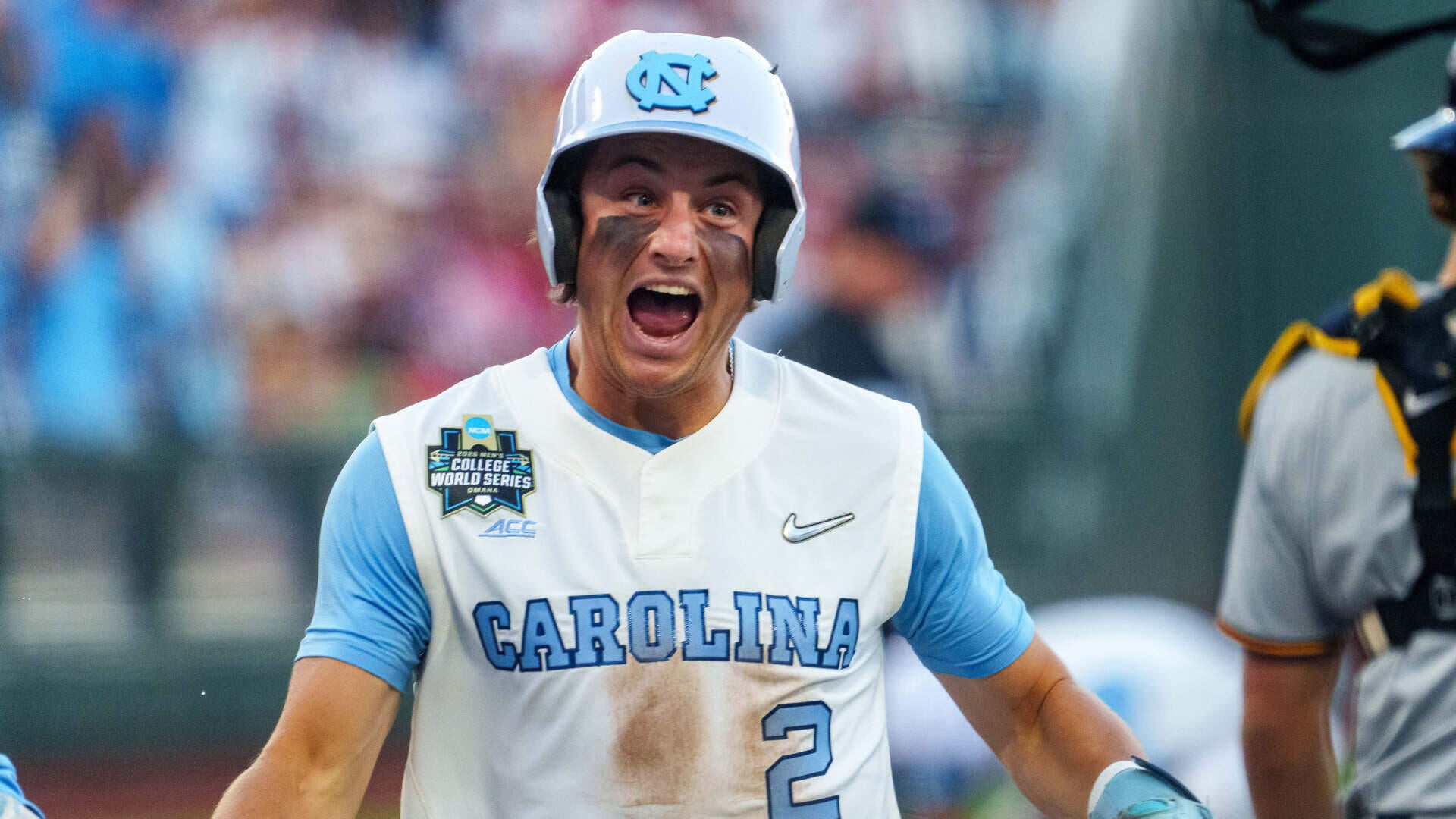
The 2026 College World Series finalists could not have taken much different paths to a best-of-three series that will crown this year's national champion. No. 5 North Carolina was a preseason darling that lived up to expectations as its nationally renowned stars led the way to a second-place finish in the ACC and a nearly spotless run through a difficult NCAA tournament draw. Oklahoma, on the other hand, was a middle-of-the-road SEC squad until it made key lineup changes and caught fire at the start of the postseason.
One of those blueprints will produce a national championship. For the Tar Heels, it would be the first in program history. For Oklahoma, it would be the first since 1994. And if the Sooners stay scalding hot and hoist the trophy, they will provide the SEC with its seventh consecutive title and become the conference's sixth different team to win the CWS since 2019.
While the Tar Heels' veterans made them one of the most consistently outstanding teams in the nation this year, the Sooners will go as far as their breakout freshmen take them. So far, that group of newcomers has taken down numerous college baseball giants. Could North Carolina be the next victim of a young team that turned the corner at the right time?
In predicting which of the two title contenders emerges victorious in this weekend's championship series, we will take a position-by-position look at the matchup. After determining which side has the most important advantages in this tale of the tape, we will crown a projected winner.
Here is how North Carolina and Oklahoma match up in the CWS Finals.
Starting pitchers
Heading into the season, the expectation was that both North Carolina and Oklahoma would excel on the mound thanks to a pair of highly regarded draft prospects apiece. That came to fruition for the Tar Heels with Jason DeCaro and Ryan Lynch delivering on the hype as a tremendous one-two punch. The former boasts a sparkling 2.31 ERA, which is good for eighth-best in college baseball and gives North Carolina the edge over essentially anyone it plays in series openers. The one glaring hole on this staff is the No. 3 job, where Folger Boaz has been lit up and rarely goes deep into games despite his track record as a frontline starter earlier in his career.
If the championship series goes to a third game, Oklahoma should feel as though it has the run-prevention advantage. No. 1 starter Cord Rager has not allowed a run in 13 innings and could hang with DeCaro in the opener. Xander Mercurius figures to toe the rubber on Sunday and is fresh off the best of his four career starts. Nick Wesloski, who made his starting debut in the regional round, has been the better of the two teams' third starters since joining the rotation. That freshman trio is a revelation for the Sooners this postseason and a primary reason why they stand one win away from a title, but North Carolina is more trustworthy on Saturday and Sunday. Advantage: North Carolina
Bullpen
The beauty of inserting new arms into the rotation is that Oklahoma can now bring starting-caliber pitchers out of its bullpen. LJ Mercurius twice came on in relief in the Sooners' first two CWS games and is suddenly another potent high-leverage arm to pair with Jason Bodin, who holds nine saves on the year.
Not even that infusion into the bullpen is enough to bring Oklahoma's relief staff up to par with that of North Carolina, though. First-team All-American Caden Glauber puts out fires at a nearly unmatched level in college baseball and is flexible enough to work as a closer, middle reliever or starter. That kind of weapon is invaluable in the CWS. He is not alone in what might be the sport's best pitching staff. Freshman lefty Jackson Rose fills a very similar role with a nearly identical ERA at 2.15, and Walker McDuffie leads the nation in appearances (37) for good reason. Advantage: North Carolina
Catcher
After spending most of the year splitting starts between two players, both North Carolina and Oklahoma settled in with an everyday catcher in the postseason. Colin Hynek received the Tar Heels' tremendous pitchers in all but one game since the start of May, and Deiten Lachance served as the Sooners' starting backstop in every NCAA tournament game except one in the Atlanta Regional.
Both are locked in those roles, thanks in large part to their powerful bats. Hynek, a veteran transfer, has 10 home runs on the year. Lachance, a junior from Canada, is the most dangerous bat on the Oklahoma roster with his 16 home runs, team-leading 65 RBI and 1.011 OPS. Four of the latter's round-trippers have come since the start of the tournament -- and all but one of them came in the second half of the campaign -- as he has been one of the faces of a postseason power surge from an Oklahoma team that leveled up its offense over the last month. Advantage: Oklahoma
First base
As is the case at numerous positions, the first-base matchup is one where North Carolina boasts a big name who has been consistent all year, while Oklahoma features a red-hot postseason standout. Picking the edge between them is a matter of personal preference: consistency versus the "what have you done for me lately?" factor.
Erik Paulsen was an offseason-defining pickup for the Tar Heels last summer, as he was a two-year star at Stony Brook who has transitioned quite well to the power-conference level. The everyday first baseman is a top-three hitter on the North Carolina roster by most measures and remains reliably productive in the tournament after being named the Chapel Hill Regional Most Outstanding Player. Dayton Tockey was not nearly as steady for Oklahoma during the regular season and ceded playing time while hitting below the Mendoza Line, but he is on a power binge with five home runs in the tournament (including a mammoth walk-off in the regional final) and four multi-hit games in that span. Advantage: North Carolina
Second base
It has been a disappointing sophomore year for Oklahoma's Kyle Branch, at least at the plate. He made major strides as a defender, but is not nearly the same threat offensively as he was a year ago. The tides looked like they could be turning in the Atlanta Regional when he logged three consecutive multi-hit games, but he is back in another drought, having gone hitless since the regional final. With his minimal power and contact regression, Branch remains a drag on the Oklahoma lineup.
Gavin Gallaher, on the other hand, mans the keystone with the best in college baseball. Like his Oklahoma counterpart, his biggest strides over the last year came in the field, leading him to the 2026 Gold Glove. But he remains a plus bat, as well. A 4-for-5 day against West Virginia in the Bracket 1 championship was the latest terrific effort in what is now a 13-game hitting streak. Advantage: North Carolina
Third base
Cooper Nicholson has more swing-and-miss in his game than anyone else in the North Carolina lineup, but such is life as a power hitter. His 16 home runs on the year are a Tar Heel-best. In that regard, he was a terrific find from the junior college ranks last offseason. The tournament has not been kind to him at the dish, however, and some of Nicholson's defensive deficiencies reared their head in the super regional when he committed two errors in three games. For a player who has started every game at the hot corner, there is a lot of room to grow with his glove.
Camden Johnson has his own issues in the field at times, but he made two of the best defensive plays by a third baseman in the CWS, including a dazzling web gem against No. 3 Georgia to help Oklahoma clinch a spot in the championship series. Offensively, he gets on base at a higher clip than his North Carolina foe and is a menace on the base paths with 29 steals. There is some sneaky power in his bat, too. Advantage: Oklahoma
Shortstop
Both shortstops in the CWS Finals will hear their names called in the early rounds of next month's MLB Draft. Jaxon Willits' last name is associated with baseball royalty, and he is destined to become the next star in his family to make the leap to the pros. Jake Schaffner, meanwhile, is the higher-rated prospect of the two ( per MLB Pipeline ) and boasts an even more refined bat.
Schaffner joined North Carolina ahead of his junior season after winning the Summit League Defensive Player of the Year award at North Dakota State. He has not disappointed in his first year in the ACC, with his athleticism making him a terrific defender, the second-best hitter on the squad, and a stolen-base machine with 26 on the campaign. Willits offers all of the same skills, just to a slightly more modest extent. He has been better of late, though, with at least one hit in all but one postseason game and three multi-hit efforts in Omaha. Advantage: North Carolina
Outfield
What Owen Hull achieved in the Bracket 1 championship was highly emblematic of the monster season he put together in his first year as a Tar Heel. The junior center fielder went 4-for-5 against No. 16 West Virginia with four extra-base hits and finished a home run short of the cycle. He is the 14th-best hitter in the nation by batting average and does the heavy lifting for the North Carolina outfielders at the plate with the three-man rotation in right and left (Carter French, Tyler Howe and Rom Kellis V) delivering much more pedestrian production.
The star power in Oklahoma's outfield is not as bright, but it is a deeper unit. Dasan Harris leads the crew as a versatile defender who has started at least a handful of games at each outfield position and who stands atop the Sooners' offense as the best pure hitter. Harris and Jason Walk unlocked new power in the tournament, as both homered twice in the Bracket 2 final and both launched half of their season-long home run total since the start of the postseason. Trey Gambill rounds out the surging group as a do-it-all weapon. Advantage: Oklahoma
CWS Finals pick
The value of momentum in the college baseball tournament cannot be overstated. This is one of the toughest tournaments to win in all of sports, and often catching fire at the right time proves more valuable than carrying more pure talent than one's opponent. Oklahoma is a prime example; 43 of its 91 home runs this year have come in the last 16 games. The insertion of two freshmen into the rotation this postseason helped the pitching staff stymie many of the best offenses in America. All it takes is two more games of this blazing play.
And yet, North Carolina is the favorite for good reason. This team is constructed perfectly for postseason success. The starting pitching is elite. The bullpen is overwhelming and just deep enough. There are hardly any holes in a lineup that features good-to-great power from the top to nearly the bottom. Beating the Tar Heels twice is so difficult that only one team pulled it off all year, and that was way back in the first week of March. While Oklahoma slayed some real giants in recent weeks, this one is a different breed. Pick: North Carolina
Add CBS Sports on Google Join the Conversation comments
_Originally reported by [CBS Sports](https://www.cbssports.com/general/news/college-world-series-2026-north-carolina-oklahoma-picks-cws-finals/)._
Comments
Loading comments…