
Agent's Take: Spotlighting 2026 NFL Rookie Contract Projections
With the 2026 NFL Draft concluded, agents are now tasked with analyzing and projecting rookie contracts ahead of training camp.
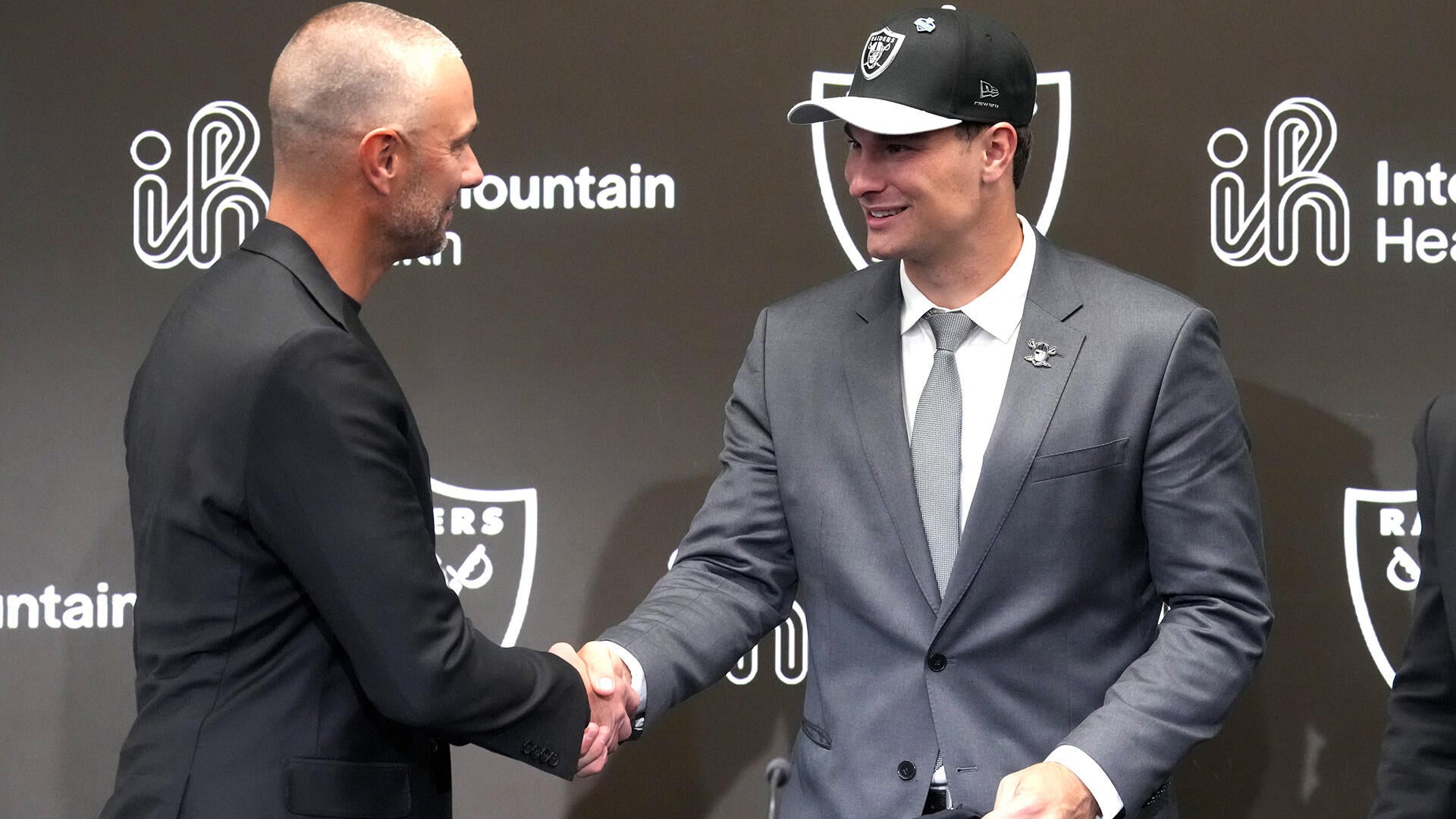
Agent's Take: Previewing the NFL's 2026 rookie contracts
The 2026 NFL Draft is in the books, but now it's time for agents to get to work and crunch the numbers before training camp
By Joel Corry
May 1, 2026 at 11:16 am ET • 11 min read
- - -
The NFL Draft's 2026 picks have begun signing their contracts. The fast signings coincide with the start of rookie minicamps. NFL teams hold three-day rookie minicamps over the next two weekends in May.
If last year is any indication, expect approximately 70% of draftees to sign contracts within two weeks of the NFL Draft .
Two first-round picks already signed. The Philadelphia Eagles got the ball rolling with the 20th overall pick, Makai Lemon . His fully guaranteed four-year rookie contract should be worth $20,810,383, including a $11,594,824 signing bonus. No. 14 overall pick Vega Ioane's fully guaranteed four-year rookie deal with the Baltimore Ravens is expected to be worth $24,232,230, which includes a $14,083,440 signing bonus.
Here's a look at the deals a select group of first-round picks, other than Ioane and Lemon, are expected to sign. An explanation of how the rookie wage scale operates, as well as a discussion highlighting important considerations or issues relating to the first-round contracts, follows.
Pick Name Team 2026 Cap Number Signing Bonus 4-Year Total 1 Fernando Mendoza Raiders $10,412,836 $38,111,344 $57,270,598 2 David Bailey Jets $9,940,859 $36,223,436 $54,674,724 3 Jeremiyah Love Cardinals $9,640,512 $35,022,048 $53,022,816 4 Carnell Tate Titans $9,297,257 $33,649,028 $51,134,913 5 Arvell Reese Giants $8,696,557 $31,246,228 $47,831,063 6 Mansoor Delane Chiefs $7,623,884 $26,955,536 $41,931,362 7 Sonny Styles Commanders $6,765,744 $23,552,976 $37,211,592 8 Jordyn Tyson Saints $5,907,604 $20,090,416 $32,491,822 9 Spencer Fano Browns $5,864,696 $19,918,784 $32,255,828 10 Francis Mauigoa Giants $5,628,708 $18,974,832 $30,957,894 11 Caleb Downs Cowboys $5,263,998 $17,515,992 $28,951,989 13 Ty Simpson Rams $4,620,392 $14,941,568 $25,412,156 16 Kenyon Sadiq Jets $4,062,061 $12,708,244 $22,341,335 25 Dillon Thiemann Bears $3,547,720 $10,650,880 $19,512,460 28 Caleb Lomu Patriots $3,440,450 $10,221,800 $18,922,475 32 Jardarian Price Seahawks $3,051,590 $8,686,360 $16,783,745
How the rookie wage scale operates
The way NFL draft picks are compensated dramatically changed with the 2011 NFL Collective Bargaining Agreement. A rookie wage scale, which drastically reduced salaries for early first-round picks, was implemented.
Quarterback Sam Bradford , the final first overall pick before the rookie wage scale in 2010, received a six-year, $78 million contract (worth up to $86 million through incentives and salary escalators) with $50 million in guaranteed money from the St. Louis (now Los Angeles) Rams. It's taken 16 years for the average yearly salary and guaranteed money of the top pick in the Draft to finally exceed Bradford's.
The rookie wage scale is essentially a salary cap within the overall salary cap. The increases in rookie salaries from one draft class to another are primarily tied to the growth of the salary cap.
There's a league-wide limit on the total compensation for rookies, with specific salary parameters for each draft slot. Teams have maximum and minimum spending limits for their picks based on draft position.
All contracts for draft choices are four years. Each draft pick has a salary floor and ceiling in the first year and over the four years of the contract. There are very few negotiable items with rookie contracts anymore. The salary components of a deal are restricted to signing bonus, base salary, roster bonus, reporting bonus, workout bonus and select incentives. The type of salary escalators and incentives that used to be responsible for salaries skyrocketing at the top of the draft, like with Bradford, are prohibited under the rookie wage scale. A majority of picks only have signing bonuses and base salaries in their deals.
An extremely important aspect of these deals is the first-year salary cap number (also known as the rookie pool number) because it helps determine the overall value of a contract. The first-year cap number, or rookie pool number, consists of the player's prorated signing bonus and the rookie minimum base salary, which is $885,000 in 2026.
The maximum annual increase in each of the four years of a deal is 25% of the first-year cap amount. To illustrate this concept, 2025 first overall pick Cam Ward's cap numbers were limited to a $2,219,982 increase each year of his deal because his first-year cap number was $8,879,928. Since all of these deals have minimum base salaries in the first year, the remainder of the contract is derived within these constraints.
This is why most of the growth in rookie contracts from the previous year is in the signing bonus. Signing bonuses are going up 18.51% for the 2026 draftees.
Draft pick contracts can't be renegotiated until the conclusion of a player's third NFL regular season. This means the earliest Ward's deal can be redone is in January 2028.
Teams have an option for a fifth year with first-round picks that must be exercised after the third year of the deal. The period for exercising fifth-year options begins after a player's third NFL regular season ends (January 5, 2026, with the 2023 first-round picks). These options must be picked up no later than May 1.
The 2020 CBA changed how fifth-year options operate. The fifth-year salary is fully guaranteed when the option is exercised. A player's fourth-year base salary becomes fully guaranteed when the option year is picked up if it wasn't already.
Fifth-year salaries are no longer strictly tied to where a player was drafted (i.e., top 10 or outside the top 10). Performance dictates the option year salaries. With two or more Pro Bowl selections on the original ballot during the first three seasons of contracts, the fifth-year salary is the franchise tender, which is the average of the five highest salaries, for a player's position in the fourth year of his contract. For example, the Philadelphi a Eagles' fifth-year option for 2027 ninth overall pick Jalen Carter is the 2026 franchise tender for defensive tackles, which is $27.127 million, because he was selected to the Pro Bowl on the original ballot in his second and third NFL seasons (2024 and 2025).
One Pro Bowl selection on the original ballot during the first three seasons of deals puts the fifth-year salary at the transition tender, which is the average of the ten highest salaries, for a player's position in the fourth year of his contract. Atlanta Falcons running back Bijan Robinson falls into this category. Robinsons's fifth-year option in 2027 is $11.323 million, the 2026 transition tag for running backs.
Participating in 75% of offensive or defensive plays, whichever is applicable, in two of the first three seasons of deals or an average of at least 50% playtime in each of their first three seasons sets the fifth- year salary at the average of the third through twentieth highest salaries at a player's position. For first-round picks that don't fall into any of these three categories, the fifth-year salary is the average of the third through twenty-fifth highest salaries at a player's position.
The Proven Performance Escalator increases the fourth-year salary for picks in Rounds 3-7, and now also applies to second-round picks.
Picks in Rounds 3-7 still have a salary escalator for their fourth year based on participating in a minimum of 35% of the offensive or defensive plays, whichever is applicable, in two of the first three seasons of their deals or an average of at least 35% playtime in their first three seasons. The salary equals the original draft-round restricted free-agent tender in the fourth year. The number is $3.674 million this year. With second-round picks, the required playtime is 60% in two of the first three seasons of their contracts in order for the fourth-year salary to be at this level.
The fourth-year salary for second through seventh round picks increases to the original draft round restricted free agent tender in that specific year, plus $250,000, with at least 55% offensive or defensive playtime in each of their first three seasons of the contract. The number for this year is $3.924 million. The second-round restricted free-agent tender is $5.767 million in 2026.
Negotiable items
There are very few negotiable items with rookie contracts anymore. There are two primary negotiating issues, particularly at the top of the draft. The first is the payment schedule for the signing bonus. The second is whether salary guarantees will be offset. Another important consideration is the language outlining the voiding of salary guarantees.
A majority of rookies didn't sign contracts until the latter part of July as training camp approaches, before the rookie compensation system was overhauled in the 2011 CBA. In 2010, no player selected in the first two rounds had signed by July 4. First-round picks holding out wasn't unusual either. For example, 2007 first overall pick JaMarcus Russell held out for 47 days before signing with the Oakland (now Las Vegas) Raiders. Rookie holdouts are largely a thing of the past.
The Los Angeles Chargers and third overall pick Joey Bosa engaged in the longest contract dispute for an incoming NFL player under the rookie wage scale in 2016. Bosa was the first rookie since 2013 that didn't show up to training camp on time. He missed 31 days before signing his contract.
The Chargers and Bosa weren't disagreeing over the amount of money in his contract because the total value was dictated by the rookie wage scale's constraints. The dispute was largely over the payment schedule of Bosa's signing bonus, the inclusion of roster bonuses and related language if the deal contained offsets. A major concession the Chargers made to Bosa was a better payment schedule than they typically offer players with large signing bonuses.
Linebacker Roquan Smith , 2018's eighth overall pick, missed the first two weeks of training camp because he and his agents objected to language where the Chicago Bears had the right to void his guarantees for an ejection or suspension from a game for violating NFL playing rules. A compromise was reached on the number of games in a suspension necessary to trigger voiding.
A first-round pick didn't make it to training camp on time for the first time since Smith last year. Edge rusher Shemar Stewart , 2025's 17th overall pick, signed three days after Cincinnati Bengals veteran players reported to training camp.
The holdup was over the language in Stewart's contract that would trigger the voiding of his salary guarantees in the event of a breach or default by him. The Bengals wanted to tighten up the language to remove any ambiguity over whether all remaining guarantees in the contract would be voided with a default. Stewart's camp preferred the language the Bengals used with their 2024 first-round pick, Amarius Mims . The Bengals got their desired language by giving Stewart a better signing bonus payment schedule than their most recent first-round picks.
An offset clause allows a team to reduce the guaranteed money owed to a player when he is released by the amount of his new deal with another team. The player receives his salary from the team that released him, in addition to the full salary from his new contract with another club, when there isn't an offset (also known as "double dipping").
Agents have essentially lost the battle on offsets. Teams with early first-round picks in 2013 were adamant that contracts contain offsets after largely conceding the issue the previous year. As a compromise for top 10 picks, teams structured deals with minimum base salaries in the final three years, where the remainder of a player's salary is in annual fully guaranteed third or fifth day of training camp roster bonuses.
N
_Originally reported by [CBS Sports](https://www.cbssports.com/nfl/news/2026-nfl-draft-agents-take-rookie-contracts/)._
Comments
Loading comments…