
Dolby Theatre GM Emilio Grijalva on Embracing LA's Diversity and Niche Crowds
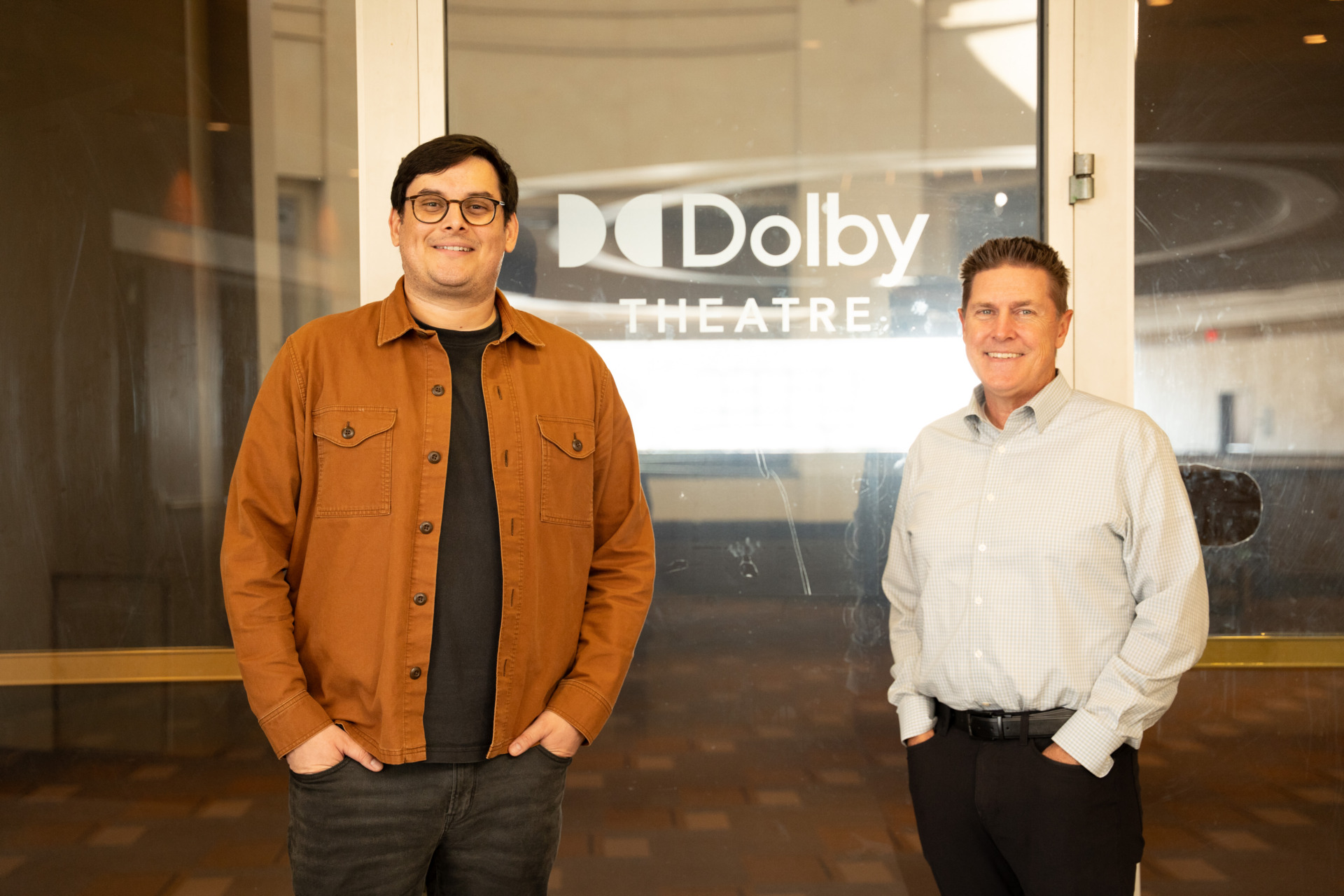
Emilio Grijalva, Co-General Manager of the Dolby Theatre, discusses attracting diverse and niche audiences to Hollywood, and the "Blue Dot Fever" phenomenon. The iconic Capitol Records building, a historic landmark that has hosted legends l
As one approaches Hollywood driving down the 101 freeway, one view that always stands out is the iconic Capitol Records building, a historic structure resembling records stacked on each other that has hosted legends like The Beatles, Frank Sinatra, Nat King Cole, Pink Floyd and Michael Jackson.
Such a building in Tinsel Town encapsulates the union of two industries, film and music, that shaped Los Angeles culturally and established the city as the entertainment capital of the world.
There are a number of structures that push forward that notion, honoring both art forms, and one of them is the Dolby Theatre, located in the heart of Hollywood and standing near other iconic institutions like the TCL Chinese Theatre, El Capitan Theatre and the Hollywood Bowl. The Dolby Theatre is a place the film industry and live entertainment have called home for the past 25 years, hosting high-profile events such as the Academy Awards, ESPN’s ESPY Awards, the iHeartRadio Music Awards, movie premieres and Netflix Is A Joke Festival, as well as concerts from Stevie Wonder, Alicia Keys, David Byrne and Celine Dione.
Dolby Theatre is as L.A. a building can get, and the venue’s new ownership is embracing that identity, celebrating its 25 th anniversary by offering programming that caters to the city’s diverse population.
Leading the charge at the 3,400-seat theater located within Ovation Hollywood are Executive Director and General Manager Hugh Cadden and General Manager and Vice President of Booking Emilio Grijalva, and they’re ramping up bookings from all genres to give L.A. music fans the variety they want, from international music to live orchestral scores of beloved movies.
Grijalva, who grew up in L.A. before moving to Houston, has attended concerts since he was 15. He studied music business at Loyola University New Orleans and worked at venues such as Tipitina’s and Webster Hall before becoming an agent for The Agency Group, which was acquired by United Talent Agency. Grijalva then worked as a consultant and found his way back to the venue business, taking a chance with Dolby Theatre.
Looking forward to a new era for the building, Grijalva recently spoke with Pollstar about the transition of leadership in April, the diverse L.A. landscape, blue dot fever and what the future holds for the venue.
Pollstar : I remember seeing a show at the Dolby before the pandemic and having a great time there. I saw the same act at the Greek Theatre a few years later, and not all of the seats were sold. I imagine they might want to return to theaters, given today’s market. We may see some artists scaling down, which is good for theaters. Emilio Grijalva: Hopefully. It’s funny you say that. I was meeting with one of the investors here who’s working on a really cool project, and he’s in the food and beverage space. I was telling them about the blue dot map thing that’s happening. I started sending him articles, and he was like, “I haven’t heard about this.” And I was like, “You’re going to continue to hear about this because it’s getting hard and expensive to sell tickets.”
I think artists who are playing amphitheaters and arenas should start looking at theaters and having those difficult conversations with their manager and agents, saying, “Maybe instead of one night at the forum, could we do a smaller theater, a residency, do three or five nights?” There are a few things I’m working on like that, but it’s a good opportunity for a venue of our size and in our location to capitalize on that.
You’ve worked on just about every side of the business, from promotion to the agency to the venues. What made you want to come back to venues? What is it about that part of the business that stands out for you? It’s so different. I love a lot more respect for my venue friends now. It’s a very thankless gig. You’re here for 14 hours, and it’s pretty tough, but it’s fun. But I like bringing in different shows, putting deals together, going after award shows because we do a lot of different things. The things that I get to book here are different than any other building in the U.S. because we do about five major televised award shows a year.
Obviously, the Oscars is our marquee. We do about four movie premieres, high-level Disney movie premieres, a year. Also, a lot of private corporate events, concerts, comedy, and I’ve been trying to diversify the booking. We’ve brought in drag shows, which were never a thing here, and we’re looking at shows for every type of person that lives in Los Angeles to make sure they’re represented, whether it’s Broadway or ballet with “The Nutcracker,” children’s programming, anything like that.
For me, I feel like it’s more hands-on than being an agent. No disrespect to any of them, but it’s very transactional. At the height of my time, I was booking 800 shows a year. You’re not thinking; you’re just doing. Here, it’s more intentional, and you’re really developing relationships with different clients that you work with and help them put it together. I find it more rewarding. Honestly, it’s harder work than I thought, but I did it because I love seeing people when they walk in the door, and they disconnect for two hours. They come in here, they see the show, they have a good time and leave happy. When I was an agent, I didn’t get to see that. You’re just like, ‘OK, my band’s in Boston, in New York, Philly,” and so on and so forth.
There’s so much to consider for a venue. How do you approach bookings? What’s the strategy behind them, and how do you balance your vision with that of your bosses? I’ve had my vision since I’ve been here, and once ownership changed about a year and a half ago, I tried to understand what they were looking for. And we were aligned on it pretty quickly: book more shows, book better shows, sell as many tickets as we can, but make sure that we are building solid relationships with the Live Nations and AEGs of the world, the independent promoters and the local community. We’ve been doing Armenian and Persian shows here for 20-plus years.
It’s a delicate balance. You’re managing a calendar, which may sound easy, but you’re working with different communities: the Indian community, then you have Russian shows and they’re all different. You have to know what you’re working on and where the conflicts lie and how to navigate the politics within. … You’re tapped into this local market that doesn’t really exist in other cities. It’s very specialized and unique.
Speaking of the community, the Dolby Theatre is entrenched in Hollywood. It’s next to the Chinese Theatre and across the street from the El Capitan. There’s so much on your block alone. What can you tell me about the relationship you have with Hollywood? I never worked in Hollywood until I started working here in Beverly Hills. I was a little disconnected from the area. I would go to the Bowl, but I hadn’t been to Dolby until I started working here, in all honesty. I still approach this place—how I program it, build it, manage it—from an outside perspective of the person sitting in Beverly Hills. What are they thinking when routing a tour? How do I make sure that they are thinking about this theater when they’re talking about the Greek and YouTube and the Orpheum and so on?
The relationships here in Hollywood are vital. The Chamber of Commerce is a huge asset. I’ve gotten to know a lot of the local community, not just the Chinese Theatre or the El Cap. The Chinese Theatre is actually owned by the same owner, so we have a close relationship with the booker and the team over there. We work together. If there’s a premiere coming over there, we say, “OK, what do we have here to share red carpet costs? How do we make sure that there’s not too much traffic on the boulevard?”
And that goes to talking to Ryan [Blank], GM at the Palladium, saying, “Hey, are you having issues with these things?” Or, “How did you navigate this, where there are a couple of ballot measures that are being voted on for raising taxes in this district?” We’ve all banded together with the people from Musso and Franks and different establishments within a mile of here. It’s important to understand the community and to be able to book this building and figure out how we work together.
It’s an important building for studios and networks. … It’s still a great place for them to be able to put on a live televised show, and that’s why we do quite a bit of them. It’s a very intimate space, and the capacity works well. It’s one of the largest theater stages in the U.S., and it’s a union team that has experience working 25 Oscars already. There isn’t a show we haven’t done here that we can’t put together.
Though the Oscars are moving downtown in a few years, I’ve heard a few groans about traffic over there because the area can be difficult to navigate. I can see how award shows like the Dolby Theatre. Hollywood Boulevard is a busy street, but Ovation Hollywood’s infrastructure offers plenty of parking. It’s close to the freeway, to West Hollywood, Beverly Hills and downtown. If there’s a show at the Bowl or a premiere or a street closure, it gets congested. That’s a part of Hollywood, but we have amenities here. We have the space and partnerships with the Roosevelt Hotel across the street and Loews. There’s a community here that you don’t really find in other entertainment districts in L.A. or outside of L.A., in my opinion.
To go back to the Oscars thing, the takeaway for me is that we will still be able to celebrate the 100 th Oscars. That’s huge, and it’s in two years. It’s going to be a spectacle, and we’re still the longest-running venue that’s hosted the Oscars. We’ve done 23, so we got a couple more to go and we’re looking forward to that.
You seem to have a good relationship with other buildings in L.A. What distinguishes the Dolby Theatre from the others? I would say two things: location, and the fact that there are no other venues in Los Angeles that are 3,400 seats. YouTube could scale down to about the same capacity and Peacock could scale down, too, but another true 3,400-seater doesn’t exist. The Shrine has about 5,000-plus. All beautiful rooms. I booked shows at each of them when I was an agent, and I’ve been to them.
It’s competitive, but the people who book these buildings and run them are good friends. We want to make sure that we succeed. We’re not here trying to undercut each other, take each other’s business. There’s enough to go around. I don’t know if other people would say that, but that’s my approach.
I’m friendly with Chris [Diaz], who’s at the United Theater. He used to be a promoter, and I used to sell shows to him as an agent. If I get a call, and I don’t have the date or the event may be looking for something that is smaller, I kick it over to him or the guys over at the Novo. If someone’s looking for something that doesn’t make sense for us, I refer people. We rely on each other, even though we do compete with each other. And if there’s a show in their building and they put me down as a reference, I give them the truth about what the show is like. Did it sell? Was it difficult? To make sure they’re not set up for failure and they’re in the best place possible.
Going back to what makes us stand out, its capacity and location. I had Natalia Lafourcade here recently, and she was like, “This is beautiful. I did not know this was here. I’ve only seen it on paper, and now seeing it in person, it’s a great size. Not too big, not too small. You still get a good view from the cheap seats.” And we’re really flexible with stage dimensions, so artists can put on any show they want— a comedy show or a large 80-piece orchestra.
The venue really does cater to those niche audiences, including those who love film and video game scores. That’s my personal fingerprint. When I was an agent, I didn’t want to be tied down to any genres. I worked for agents that represented comedians, French artists, rock bands and metal bands
_Originally reported by [Pollstar](https://news.pollstar.com/2026/06/22/venuesnow-dolby-theatre-co-gm-emilio-grijalva-on-embracing-las-diversity-drawing-niche-crowds-to-hollywood-and-blue-dot-fever/)._
Comments
Loading comments…