
Japan Denied Goal by Millimetres
A goal was disallowed for Japan by a matter of millimetres, recalling their winning goal against Spain in the 2022 World Cup.
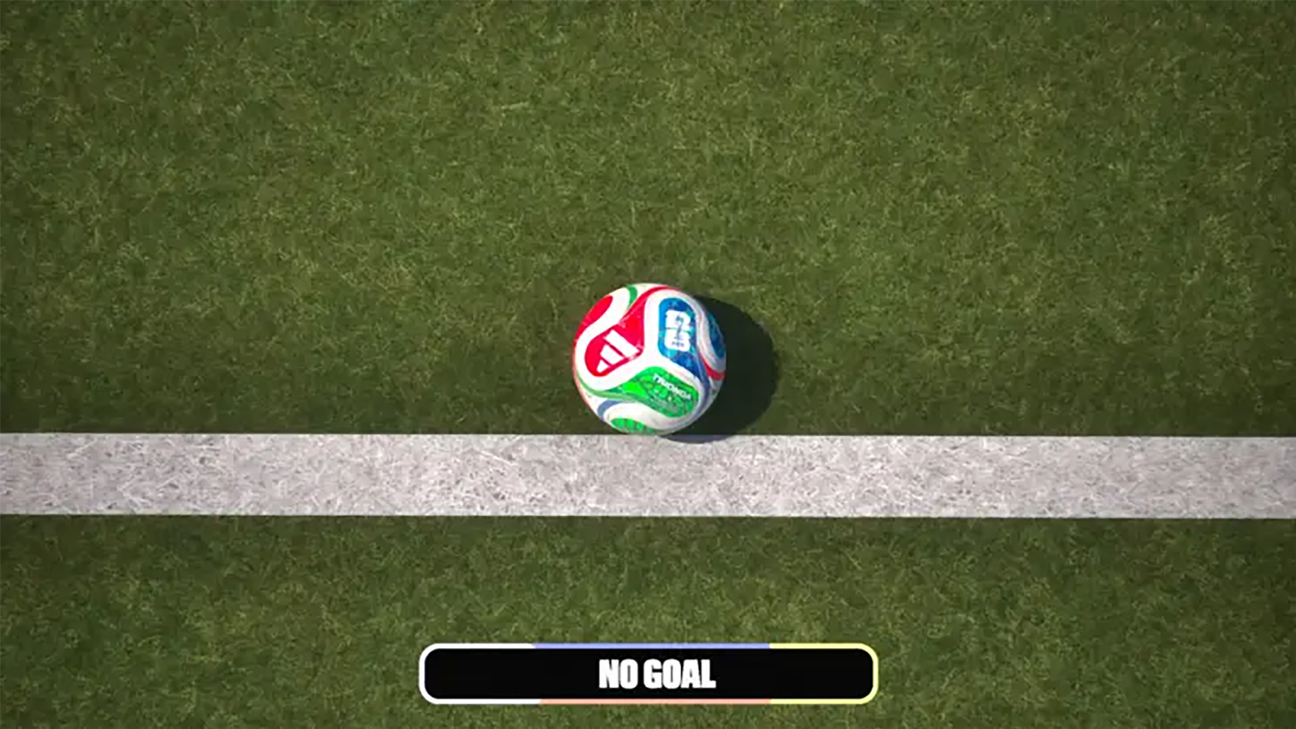
Japan have previous at a World Cup when it comes to decisions decided by mere millimeters.
The Samurai Blue were denied a goal against Tunisia on Sunday at Monterrey Stadium in the 1,000th World Cup match by the tiniest of margins thanks to goal-line technology, but fans might remember a similar story when VAR got involved four years ago .
With Japan 1-0 up at the time, Tunisia goalkeeper Aymen Dahmen made a wonderful save after a header from a corner was tipped onto the post and across the line, but the ball came incredibly close to going in.
Goal-line technology was used to determine whether the ball had actually crossed the line, and it hadn't. Just.
No VAR needed this time, as the technology is handed by a chip in the ball, and it didn't matter as Japan won 4-0 anyway. But in 2022, Japan were at the center of a goal-line controversy in the 2-1 win against Spain that saw Germany knocked out of the tournament.
What happened: Japan thought they had scored a second goal against Spain in the 51st minute when Ao Tanaka scored as Kaoru Mitoma cut the ball back from the goal line, but the referee disallowed the goal for the ball being out of play.
VAR decision: Goal, ball in play.
VAR review: For the VAR, Fernando Guerrero of Mexico, to overturn the decision of the assistant, he has to have definitive evidence that part of the ball is on the line. Importantly, this isn't just about the ball touching the ground. The curvature overhanging the line also counts, even if a very small part of the ball is doing so. (FIFA's new tracking technology cannot be used to determine the ball being in or out of play.)
The goal-line camera was used to make the decision, but television companies were left to guess over the evidence used to prove the ball was in play; FIFA should be providing guidance to inform fans.
A photograph from a camera level with the goal-line also appears to prove a small amount of the ball was overhanging the line. That would give the VAR the proof he needs to overturn the on-field decision and award a goal. But this image appeared on the Associated Press' picture service over an hour after the game. The evidence was not provided by FIFA, and that's one of the inherent problems of VAR -- communication with the fans.
Until this point we'd not seen any clear proof that the ball was touching the line when Mitoma cut it back to Tanaka -- even though it actually had on the goal-line camera; we just didn't know.
The lack of communication from FIFA over VAR overturns in this tournament has fully highlighted the disconnect between the system and the watching fans; there is never any clarity offered at any juncture. Unlike in the Premier League, where the VAR feed is shared to broadcasters throughout a review, FIFA controls the output. If VAR is to be truly accepted, this has to be vastly improved.
Some 18 hours after the incident happened, FIFA finally tweeted out the goal-line camera angle used to make the decision. This could have been done at the time.
Japan's second goal in their 2-1 win over Spain was checked by VAR to determine if the ball had gone out of play.
The video match officials used the goal line camera images to check if the ball was still partially on the line or not. pic.twitter.com/RhN8meei6Q
It proved to be the goal that knocked Germany out of the World Cup. -- Dale Johnson
_Originally reported by [ESPN](https://www.espn.com/soccer/story/_/id/49132412/japan-denied-goal-millimeters-remember-2022-vs-spain)._
Comments
Loading comments…