
Knicks' Championship: A Unique Roster
The 2026 Knicks ended a 53-year drought without a once-in-a-lifetime superstar, making their roster potentially the most anomalous in NBA history. Other teams can learn from their unconventional path to a title.
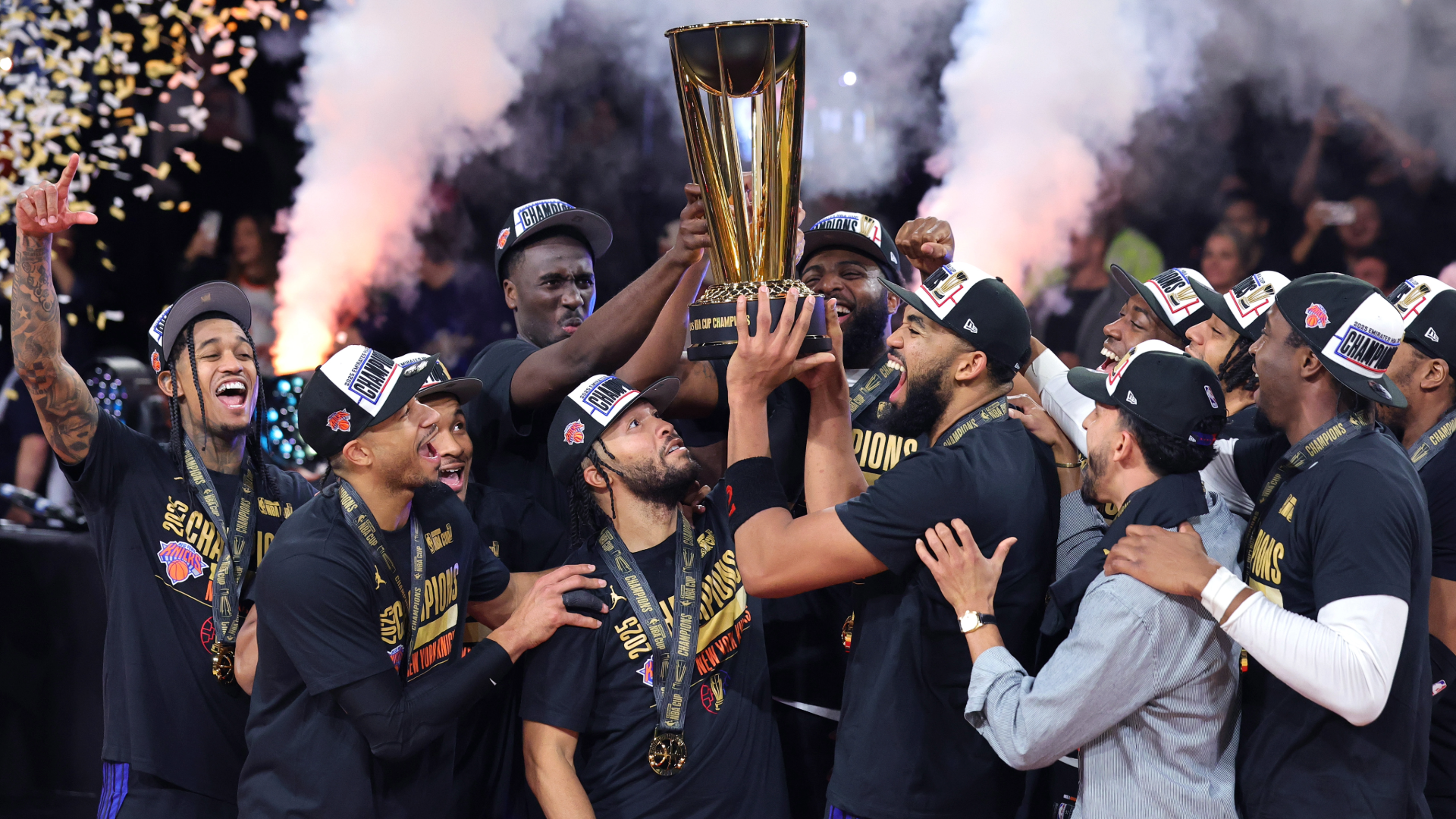
Every NBA champion hoists the same trophy. That doesn't mean they're made equal. We know what most of them look like. This is a dynasty league, and the downside of dynastic runs is the degree to which they blend together. How much of a historical distinction is ever drawn between, say, the 1992 and 1993 Chicago Bulls ? The '90s are more or less boiled down to Michael Jordan and the Jordanaires.
The NBA tends to subscribe to the "great men" theory of history. Some alpha takes over the league for a period of time before a successor wrestles the belt away from him. Even our recent streak of non-repeating champions has followed this formula to an extent. Kawhi Leonard won in 2019 and was briefly hailed as the NBA's best player. LeBron James won it all in 2020 and took his crown back. Giannis Antetokounmpo climbed the mountaintop in 2021. Stephen Curry got back there in 2022. Nikola Jokić rose in 2023.
There's nothing wrong with champions like this. They're the baseline. We're used to contextualizing teams in that manner, and that's what makes it so special when we get a champion that doesn't fall into that bucket. Every now and then, the league hands us an anomaly.
These champions take on an almost sacred place in NBA lore. The 2014 San Antonio Spurs . The 2011 Dallas Mavericks . The 2004 Detroit Pistons . They can share surface-level similarities with their dynastic counters. The Spurs technically were a dynasty and still employed a top-10 all-time player in Tim Duncan. The 2011 Mavericks were built around a single superstar in Dirk Nowitzki.
But Duncan was well beyond any illusions of alpha status at that point, and Nowitzki's run is remembered mostly for the generations of alphas he beat. There was no illusion after his run that he had somehow passed Kobe Bryant or LeBron James in any sort of all-time pecking order, but it's nice to be reminded every now and then that even such titans of the game are vulnerable.
The 2004 Pistons are the most visceral example of that phenomenon. Their Finals opponent had perhaps the most accomplished starting lineup in NBA history: Bryant, Shaquille O'Neal, Gary Payton and Karl Malone were all Hall of Famers. The Pistons were their historic opposite. They had no traditional superstars. Their only All-NBA player was Ben Wallace, a single-digit scorer. They won with a historic defense. They were greater than the sum of their parts. The Spurs achieved the same effect on the other side of the court, reaching basketball nirvana with the most beautiful ball movement the NBA has ever produced. The Mavericks were Nowitzki's team, but no championship run has ever been as generous with role player memories. Whether it was Peja Stojakovic's 6-of-6 3-point barrage in the clincher over the Lakers , Jason Terry's clutch shots, Brian Cardinal's out-of-nowhere Finals minutes, or the adventures that Deshawn Stevenson and J.J. Barea had guarding LeBron, practically everyone on the roster got to have a capital "m" Moment.
The champions like this are the ones that give normal fanbases hope. They're the ones that tell us that you don't have to have your era's Michael Jordan to win it all, that if you do everything else right and build the perfect team, a magical run really is possible. No playoff run has ever been quite as magical as the one that just crowned the 2026 New York Knicks as NBA champions.
The Knicks entered the postseason in the midst of a 53-year championship drought. They were pushed to the brink in the first round by their weakest playoff opponent, the Atlanta Hawks . After their second consecutive one-point loss in Game 3, something clicked. The talent was more or less identical to what it was a year ago, when the Knicks lost the Eastern Conference Finals with home-court advantage to the Pacers , but the approach changed drastically. They didn't lose another Eastern Conference playoff game. The offense was completely reoriented around Karl-Anthony Towns as a passer. The bench Tom Thibodeau ignored became a central character.
They were still dismissed in favor of those more traditional contenders. The common refrain throughout the Western Conference Finals was that the series between the Spurs and the Oklahoma City Thunder was the true NBA Finals. The Thunder were a budding dynasty looking to break the NBA's streak of non-consecutive champions. The Spurs had Victor Wembanyama , the player we presume will eventually become this era's Jordan.
The Spurs are so historically loaded that the NBA literally changed the rules to make sure the mechanism that built them couldn't be repeated. After San Antonio got Wembanyama, Stephon Castle and Dylan Harper in consecutive lotteries, the league passed draft reforms in May that included a provision preventing teams from making three consecutive top-five picks moving forward.
It therefore feels appropriate, especially in the year in which the NBA essentially killed tanking, that the Spurs lost to a Knicks team that didn't draft a single starter. The only other champion in NBA history that can say the same is the 2020 Lakers, but they're not really a fair comparison here because that team was little more than a staging ground for LeBron's return to the top. The Knicks didn't sign perhaps the greatest player of all time in his prime. Their build started with a tiny point guard drafted in the second round and available in free agency only because his prior team, the Mavericks, didn't sign him to a long-term extension when given the chance.
Jalen Brunson is a New York icon , but he's not the typical leader of a champion. He's never made First-Team All-NBA. No member of the 2026 Knicks has, and that's an extreme rarity among champions. Only one other title team can say the same: the 2004 Pistons. Little about the 2025-26 regular season suggested that the Knicks were headed here. Former Knick Phil Jackson coined the popular "40-20" rule that states that a typical NBA champion wins 40 games before it loses 20. Entering the 2026 playoffs, only four teams during the 3-point era had ever won the title and defied that rule. The Knicks are now the fifth.
Basically nothing about the 2025-26 Knicks has a real, historical precedent. How many teams can you ever remember changing their playing style as drastically as New York did on the fly? Maybe the 2015 Warriors going to the Death Lineup in the middle of the Finals? But Golden State looked the part of a champion for that entire season. Those Warriors won 67 games. The Knicks came out of nowhere.
Their two modes were, essentially, blowout and historic comeback. They close the 2026 postseason with the greatest playoff point-differential in history by a mile. Over the past two seasons, teams besides the Knicks that have trailed a playoff game by 20 or more points are 4-71. The Knicks under those same circumstances are 5-3, including the greatest comeback in Finals history: their 29-point stunner over the Spurs in Game 4.
No team should ever realistically expect to replicate what the Knicks did, yet the Knicks showed the entire rest of the basketball world that the impossible can, under the rarest of circumstances, become possible. That if you get the right sort of players together, if they buy in and build an uncommon collective character, your team might be able to defy expectations in a similar way.
The NBA needs champions like this occasionally because there simply aren't enough Jordans and Wembanyamas to go around. How often over the past two decades have we heard the idea that some team is trying to build off of the 2004 Pistons model ? That's how good teams without superstars have justified their continued existence essentially ever since Detroit won it all.
The 2026 Knicks are going to become the modern equivalent. When a team has a single, flawed superstar, especially now that it can no longer tank its way to more of them, they are going to operate as the Knicks did: by trying to make smart trades and slowly accumulate the right sort of supporting cast over time. If they do so, maybe they can get lucky and stumble into a Karl-Anthony Towns-esque secondary star trade-off of circumstances and fly off to the races.
Whether or not such replications succeed (and I'm very dubious that anything about these Knicks are replicable), the attempts alone are a testament to the place in history the 2026 Knicks now occupy. They are one of those sacred champions, the ones that can't be boiled down to the presence of a single, legendary superstar, the ones that say something deeper about the sport itself.
We cherish champions like that because we understand how rare they are. Even in the parity era, we have a realistic idea of what's coming next. The Thunder will pick up where they left off. The Spurs will only get more dangerous with age and experience. We're probably headed for another dynasty of some sort in the near future. But teams like the Knicks are why that isn't an outright inevitability. They remind us that this sport is still capable of surprising us. We've never seen a champion quite like them before, and they'll be forever revered for the run that got them there.
Add CBS Sports on Google Join the Conversation comments
_Originally reported by [CBS Sports](https://www.cbssports.com/nba/news/knicks-champion-roster-building-anomaly/)._
Comments
Loading comments…