
Live Nation CFO Dismisses "Blue Dot Fever" Concerns, Cites Strong Ticket Sales Data
Live Nation's President & CFO addressed concerns about "blue dot fever" at MoffettNathanson's investor conference, stating there is "absolutely no data that supports any issues" with ticket sales.
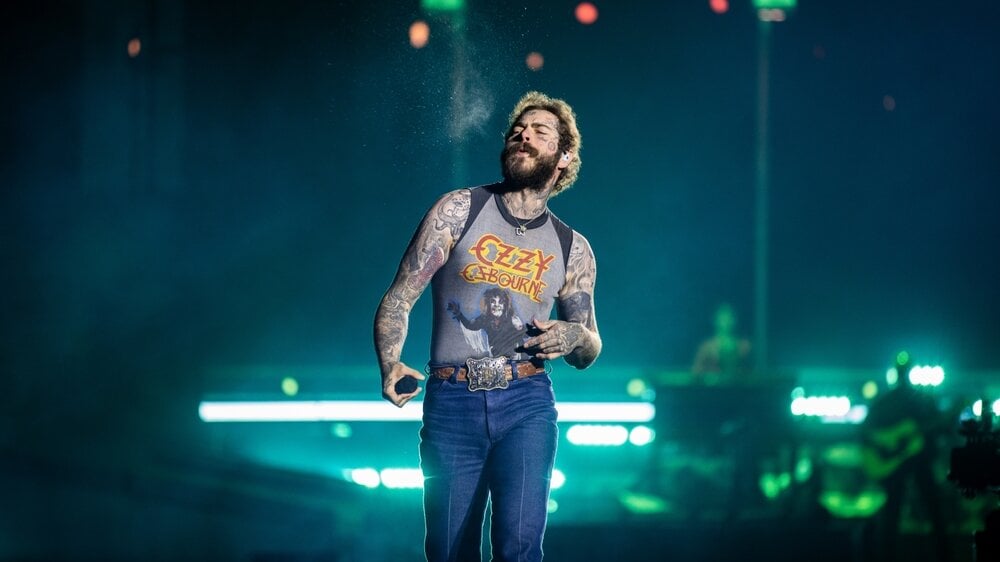
What ‘blue dot fever’? Live Nation CFO says ‘There is absolutely no data that supports any issues’ with ticket sales.
May 14, 2026 By Murray Stassen
Joe Berchtold, Live Nation ‘s President & CFO, has a message for anyone worrying about the firm’s concert ticket sales: Don’t.
Speaking at MoffettNathanson’s investor conference on Thursday (May 14), Berchtold addressed the recent wave of headlines about so-called ‘blue dot fever’ – a phrase used to describe tour cancellations linked to poor ticket sales – as “a nice catchy phrase that is absolutely devoid of facts.”
Berchtold attributed the narrative to ticket scalpers frustrated by artists pricing their tours more efficiently.
“I give credit to the scalpers. It’s a good marketing program they have,” Berchtold joked.
“I think [the ‘blue dot fever’ coverage on socials] is heavily driven by scalpers who are frustrated by the fact that artists are much more effectively pricing tours. They want to try to scare them that if they continue to price their tours efficiently, ‘Oh, you’re not going to sell tickets, it’s going to be embarrassing.'”
The term “blue dot fever” – named after the blue dots representing unsold seats on Ticketmaster ‘s website – has gained traction in recent weeks after cancellations from acts including Meghan Trainor, Zayn, Post Malone, Jelly Roll, and the Pussycat Dolls.
Berchtold pointed to one news report citing six canceled shows and contrasted that with the scale of Live Nation’s operation.
“Well, we did 50-odd thousand shows last year,” he said.
“Everybody likes the headline, nobody likes the context.”
He added that cancellation rates in 2026 are “running probably same or a little better than last year, which are in line with historical numbers.”
Berchtold pointed to several metrics to support his case: Live Nation has sold double-digit more tickets at this point in the year than the same time last year; deferred revenue on both concerts and ticketing is “pacing north of 20% up”; and sell-through rates across amphitheaters, arenas, and stadiums are “all doing as well as they were last year.”
“There is absolutely no data that supports any issues,” Berchtold said.
> “Everybody likes the headline, nobody likes the context.” Joe Berchtold
Live Nation President and CEO Michael Rapino made a similar case on the company’s Q1 2026 earnings call last Tuesday (May 5), offering more granular data on the company’s cancellation rate.
“We tend to have a 1% to 2% cancellation rate historically, both at Ticketmaster across the industry and at Live Nation,” Rapino said.
“We’re tracking slightly below the industry, so we see no challenges at all in that.”
“We have about 15,000 shows on sale; 100 will be canceled. That would be typical.”
On that same call, Live Nation reported Q1 2026 revenue of $3.8 billion , up 12% year-over-year , with over 107 million tickets sold for 2026 events through the end of April – up 11% YoY – and event-related deferred revenue hitting a record $6.6 billion.
Meanwhile, at the MoffettNathanson’s event, Berchtold also addressed ticket affordability, saying the average price for an entry-level ticket is “up less than 3% this year, less than inflation.”
“If you go back to 2019, it’s up dramatically less than inflation since 2019,” he added.
On broader demand, Berchtold said fan attendance is expected to grow in the high single digits in 2026, with the majority of growth coming from international markets.
“The US has added more fans, but international is growing faster,” he said.
Rapino echoed the sentiment on last week’s earnings call, saying the company has “seen no demand pullback anywhere” – from club shows to amphitheaters to stadium dates.
“Consumers still consider that live show very, very important in their social calendar for the year,” Rapino said.
World Cup, Venue Nation, and international expansion
Berchtold said the company had successfully navigated the 2026 FIFA World Cup by starting its booking process early – working to schedule shows before stadiums were handed over to the tournament, lining up events for immediately after, and expanding into soccer and baseball stadiums.
“I certainly didn’t enter this year, frankly, or maybe six months ago, wasn’t thinking, wow, we’re going to be up in all three of those categories while I’m sitting here in May,” he said, referring to stadiums, arenas, and amphitheaters.
On Venue Nation – Live Nation ‘s venue development and acquisition division – Berchtold reiterated the company’s target of 48 new venues within five years, generating a $600 million AOI run rate by 2032 , as outlined at the company’s investor day presentation late last year.
He described the company’s 20% return-on-investment target for venue projects as “a threshold” rather than an expected outcome, and said results have more frequently outperformed projections than underperformed them.
The company recently completed acquisitions of Movistar Arena in Santiago , Unipol Forum in Milan , and IMPACT Arena in Bangkok , and in January acquired Paris La Défense Arena , Europe’s largest indoor venue.
Berchtold also detailed the company’s new venue securitization structure, a financing mechanism in which Live Nation bundles its real estate assets into a separate collateral pool, allowing it to raise debt at higher leverage and lower interest rates than its operating business.
In April, Live Nation raised approximately €610 million in long-term debt at 5.5% through this vehicle, which is backed by a portfolio of venues in the US , the Netherlands , and Ireland .
“It’s a great structure. I think it’s the first time it’s certainly been done in our business,” Berchtold said.
“It just sets us up for the flexibility we want to have over the next several years so that when we see that great acquisition opportunity or we see the build opportunity, that we’re not constrained.”
Antitrust update and Ticketmaster
On the legal front, Berchtold addressed the aftermath of the April 15 jury verdict in which Live Nation and Ticketmaster were found to have illegally monopolized the US ticketing and amphitheater markets.
He said the judge has established a “relatively sequential process” – first ruling on Live Nation ‘s post-trial motions, then reviewing whether the DOJ settlement is in the public interest, followed by a remedies phase.
Berchtold said the DOJ settlement “substantively addresses” the two core issues from the trial: exclusivity in ticketing and the closure of Live Nation ‘s amphitheaters to rival promoters, and noted that the judge “has publicly stated that he thinks the DOJ settlement is a good framework.”
He acknowledged, however, that political pressure could influence the outcome.
“Everybody should expect that for the same political reasons, there will be a lot of cries [of] ‘you got to break them up, you got to break them into eight pieces’,” he said.
On Ticketmaster , Berchtold said international expansion will be a major growth driver over the next five years, and confirmed that the platform will sell its first tickets in Japan this year, a market he said would previously have taken three years to enter but was accomplished in one, partly through the use of AI tools.
Asked whether Live Nation is just getting started, Berchtold was unequivocal.
“I absolutely believe we’re just getting started,” he said. Music Business Worldwide
News United States Live Nation
Related Posts
Live Nation Q1 revenue hits $3.8B, up 12% YoY, but $450M legal accrual drives $371M operating loss
_Originally reported by [Music Business Worldwide](https://www.musicbusinessworldwide.com/what-blue-dot-fever-live-nation-cfo-says-there-is-absolutely-no-data-that-supports-any-issues-with-ticket-sales/)._
This story is summarized from coverage by Music Business Worldwide.
Read full story →Comments
Loading comments…