
Most Questionable 2026 NFL Draft Picks: Five First-Rounders Included
Every team made at least one questionable pick in the 2026 NFL Draft, with some teams reaching for players and others making gambles based on their team philosophy. Five first-round selections are among those raising eyebrows.
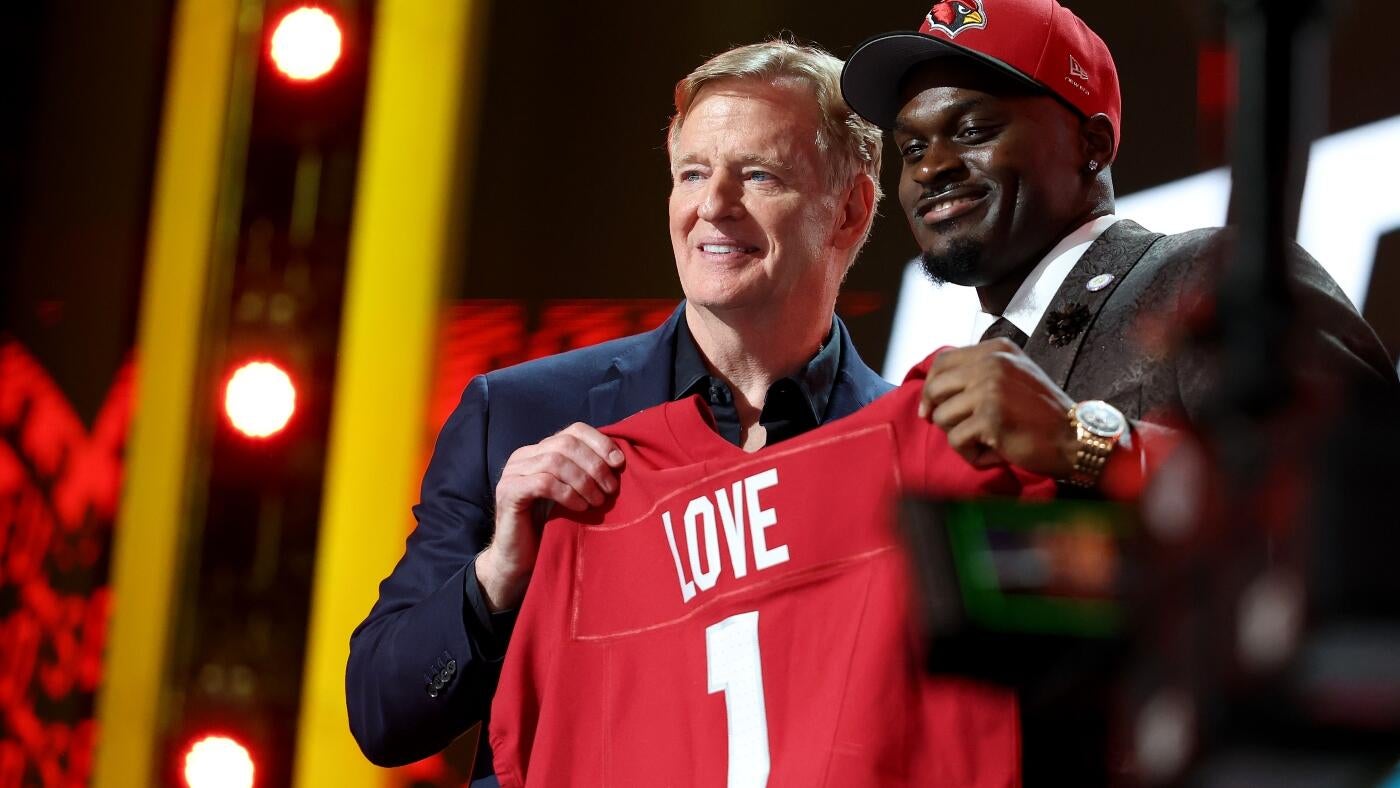
Five first-rounders headline most questionable 2026 NFL Draft picks for every team
Some teams reached, and others made gambles based on their philosophy, and that led to questionable picks for every team in the NFL Draft
By Josh Edwards
Apr 30, 2026 at 8:51 am ET • 13 min read
- - -
The days following the conclusion of the NFL Draft are the best. They help us envision how a prospect fits with his new team and offer hope for a brighter future. The order in which these former college stars come off the board is then cross-referenced with my personal rankings to determine value and fit.
To determine each team's most questionable pick, value, as well as other factors, such as injuries, team fit and philosophical beliefs were taken into account. These are not meant to suggest I have a crystal ball or that my opinion carries any more or less weight than the teams making the selections. Rather, it is a mere talking point.
Without further ado, each team's most questionable selection:
AFC North
Cincinnati Bengals: WR Colbie Young, Georgia (Round 4, No. 140 overall)
Cincinnati did a good job finding value throughout the draft. Young is a prospect with great size and potential, but No. 140 overall was early. The one-time Miami transfer landed in a favorable position learning from Ja'Marr Chase, Tee Higgins and catching passes from Joe Burrow.
Cleveland Browns: LB Justin Jefferson, Alabama (Round 5, No. 149 overall)
Cleveland's first two days were fantastic, but the team strayed a bit from personal rankings on Day 3. There were no egregious reaches, but Jefferson is more of a vision than a finished product. He is undersized and more likely to be a key part of special teams operations early in his career.
Baltimore Ravens: WR Ja'Kobi Lane, USC (Round 3, No. 80 overall)
The Lane selection was a bit too early. He admittedly was a player with whom I struggled to box throughout the process. Initially, he jumped off the page as a tall, highlight reel-making pass catcher, but concerns about his ability to consistently create separation emerged the more I watched. However, Indiana's Elijah Sarratt was good value on Day 3, so if those had been flipped, it would have made more sense, but it all comes out in the wash.
Pittsburgh Steelers: QB Drew Allar, Penn State (Round 3, No. 76 overall)
Pittsburgh did a good job throughout the week, especially on Day 3, finding tough, accountable players. The next step for Allar as a quarterback was long-awaited, but never came. He offers the ideal size and the requisite arm strength, but was too robotic. The accuracy was spotty, and he heads to the NFL coming off an injury at Penn State.
AFC South
Indianapolis Colts : EDGE George Gumbs Jr., Florida (Round 5, No. 156 overall)
The Colts accomplished a lot without a first-round pick. They found good players at positions of need, such as safety, guard and linebacker. There is a functional role and clear vision for each of the players added on Day 3, even Gumbs, but it was earlier than expected.
Jacksonville Jaguars : TE Nate Boerkircher, Texas A&M (Round 2, No. 56 overall)
The tight end run on Day 2 felt like an overcorrection by the league after seeing the impact of Jackson Hawes and others on the run game. Boerkircher has a high floor as a run blocker and his tape is indicative of higher capabilities in the pass game. However, using a near top-50 overall pick on that profile is risky.
Houston Texans : IOL Febechi Nwaiwu, Oklahoma (Round 4, No. 106 overall)
Houston emphasized getting trench aid from players who are not afraid to punch opponents in the mouth. It began with Georgia Tech offensive guard Keylan Rutledge and Ohio State defensive tackle Kayden McDonald, but continued throughout the draft. Nwaiwu has a technically sound base, but the explosiveness and lateral foot quickness are a concern.
Additionally, I thought I was high on Klein at No. 91 overall, but the Texans put me to shame.
Tennessee Titans : OL Fernando Carmona, Arkansas (Round 5, No. 142 overall)
Tennessee's draft class is another that I personally enjoyed, but Carmona was more of a seventh-round consideration. The Titans needed some offensive line help, and Carmona has a bit of positional flexibility, having played tackle in his career.
AFC East
Buffalo Bills : CB Davison Igbinosun, Ohio State (Round 2, No. 62 overall)
Buffalo went defensive heavy for the second consecutive year. I liked a lot of what they did, but Igbinosun was more of a fourth-round type. He is a bigger body who gets a bit loose in coverage.
Miami Dolphins : WR Caleb Douglas, Texas Tech (Round 3, No. 75 overall)
Miami's receiver depth chart was barren prior to the draft, so they had to get some bodies in the room. Douglas was not high on my board, so Chris Brazzell, Ted Hurst or even Bryce Lance would have been more worthwhile swings. It is worth noting that the Giants jumped directly in front of the Dolphins and took Notre Dame's Malachi Fields.
The Chris Bell selection has a high approval rating as a prospect with high upside.
New York Jets : OG Anez Cooper, Miami (Round 6, No. 188 overall)
Cooper's selection was probably the biggest departure from the personal board. There may not be a lot of versatility with this pick, which is an important consideration at this stage of the festivities. He played nearly 3,000 snaps at right guard over the course of his collegiate career and 18 total between left guard and tackle.
The Kenyon Sadiq selection is interesting because the team took Mason Taylor early in the second round last year. Will Frank Reich be able to maximize that duo?
New England Patriots : CB Karon Prunty, Wake Forest (Round 5, No. 171 overall)
Prunty was the biggest surprise among New England's draft class. He is a bigger cornerback who began his career at Kansas, continued it at North Carolina A&T and finished with the Demon Deacons. He won't be in a position to play early, barring injury.
AFC West
Denver Broncos : DL Tyler Onyedim, Texas A&M (Round 3, No. 66 overall)
Despite not having a first-round pick, Denver filled n some of the gaps on its roster nicely with Washington running back Jonah Coleman, Boise State lineman Kage Casey, and NC State tight end Justin Joly. Onyedim also filled a void created by the departure of John Franklin-Myers. However, it was a bit early relative to how I graded the player.
Los Angeles Chargers : EDGE Akheem Mesidor, Miami (Round 1, No. 22 overall)
Los Ángeles did a better job of finding value on Day 3 than on either Day 2 or Day 1. They took a few personal favorites on Saturday. The Chargers addressed some needs on Thursday and Friday, but we did not see players the same way, which again, is not to suggest that either party was right or wrong. Mesidor is a 25-year-old rookie who did not break out until his sixth and final season. Philosophically, it's not a profile I can get on board with in the first round.
Kansas City Chiefs : CB Jadon Canady, Oregon (Round 4, No. 109 overall)
Kansas City was in need of secondary help after trading Trent McDuffie and watching Jaylen Watson and Bryan Cook depart in free agency. LSU cornerback Mansoor Delane was the crown jewel at No. 6 overall, but Canady gives them some depth. There was a wide range of opinions based on how he would be used, but I was lower on the prospect than the consensus.
There were only a few options for the Chiefs' pick, because I generally like what they accomplished.
Las Vegas Raiders : S Dalton Johnson, Arizona (Round 5, No. 150 overall)
The secondary has been a problem in Las Vegas for years. It is easy to envision a starting cornerback group with Jermod McCoy, Hezekiah Masses and Treydan Stukes. The hope is that Johnson can be an answer at safety, but the value was not where they took him.
NFC North
Chicago Bears : TE Sam Roush, Stanford (Round 3, No. 69 overall)
Chicago taking part in the early run on tight ends was not on the B-I-N-G-O card with Colston Loveland and Cole Kmet, but Roush is a good player. At best, I thought he would be a late Day 2 selection. Similar to Nate Boerkircher, there may be more pass game potential into which Ben Johnson can tap.
LSU wide receiver Zavion Thomas was probably the obvious candidate, but at one point, he was a top-100 overall prospect in my rankings. He was eventually moved down because he is a bit more scheme- and role-specific, but the thought of Johnson getting to work with him is exciting.
Detroit Lions : DL Skyler Gill-Howard, Texas Tech (Round 6, No. 205 overall)
There is a lot to like about Detroit's draft class, particularly as it relates to this team. They are a physical bunch, beginning with Clemson offensive tackle Blake Miller and finishing with Tennessee defensive tackle Tyre West. Gill-Howard was my least favorite of their selections, but even that was good value.
Green Bay Packers : IOL Jager Burton, Kentucky (Round 5, No. 153 overall)
There were only two players with negative value from this draft class: South Carolina cornerback Brandon Cisse and Burton. Burton was the bigger discrepancy and gets the nod. Green Bay has historically done well evaluating offensive linemen, and Burton does have versatility, having played three positions along the line.
Minnesota Vikings : DL Caleb Banks, Florida (Round 1, No. 18 overall)
Banks was not a big reach in terms of talent, but the injuries are a concern, especially for a player of his size. Minnesota has not gotten a lot of pop from its draft classes in recent years, so it may have been beneficial for them to be more risk-averse.
NFC South
Tampa Bay Buccaneers : TE Bauer Sharp, LSU (Round 6, No. 185 overall)
Tampa Bay's draft was in line with where prospects were expected to come off the board. Sharp was a little lower in the rankings relative to where he was taken, but tight end was a position I thought the team would address in an effort to play more two and three-tight-end sets.
Atlanta Falcons : LB Kendal Daniels, Oklahoma (Round 4, No. 134 overall)
It will be interesting to see how Atlanta uses Daniels. At 6-foot-5, he has a unique frame for the linebacker position and was used a lot in space by the Sooners. There is no obvious positional fit for Daniels.
Carolina Panthers : OT Monroe Freeling, Georgia (Round 1, No. 19 overall)
Carolina was smart to address the left tackle position. Ikem Ekwonu will be coming off a serious injury, and a personal prevailing thought has always been a preference for him to play guard. The team did sign Rasheed Walker in free agency, but it is now Freeling's job to lose. Why is it questionable? Although Freeling was playing his best football at the end of the season and is still relatively young, there is a lot of technical refinement that needs to occur, and progress is not always linear.
I was not a big fan of the Panthers' other two top-100 selections, but the last four picks represented good value.
New Orleans Saints : IOL Jeremiah Wright, Auburn (Round 4, No. 132 overall)
Wright going that early felt like a stretch relative to where he was positioned on my board, but the team needed to reinvest in the offensive line depth. Wide receiver Barion Brown has track-caliber speed, but route running has always limited his effectiveness.
NFC East
Washington Commanders : QB Athan Kaliakmanis, Rutgers (Round 7, No. 223 overall)
Kaliakmanis was the pick, by default, because general manager Adam Peters did an excellent job over these three days. The Rutgers quarterback played his best football in his final collegiate season, so perhaps there are even better days ahead.
Dallas Cowboys : WR Anthony Smith, East Carolina (Round 7, No. 218 overall)
NFL teams will tell onlookers what they think of themselves through their actions. Dallas is a team that has positioned itself to be more aggressive in pursuit of 2026 contention
_Originally reported by [CBS Sports](https://www.cbssports.com/nfl/draft/news/nfl-draft-2026-each-teams-questionable-pick/)._
Comments
Loading comments…