
Red Sox and Giants One Year After Rafael Devers Trade: A Reassessment
One year after the blockbuster Rafael Devers trade, we re-evaluate how both the Red Sox and Giants have fared following San Francisco acquiring a star hitter and Boston shedding significant salary.
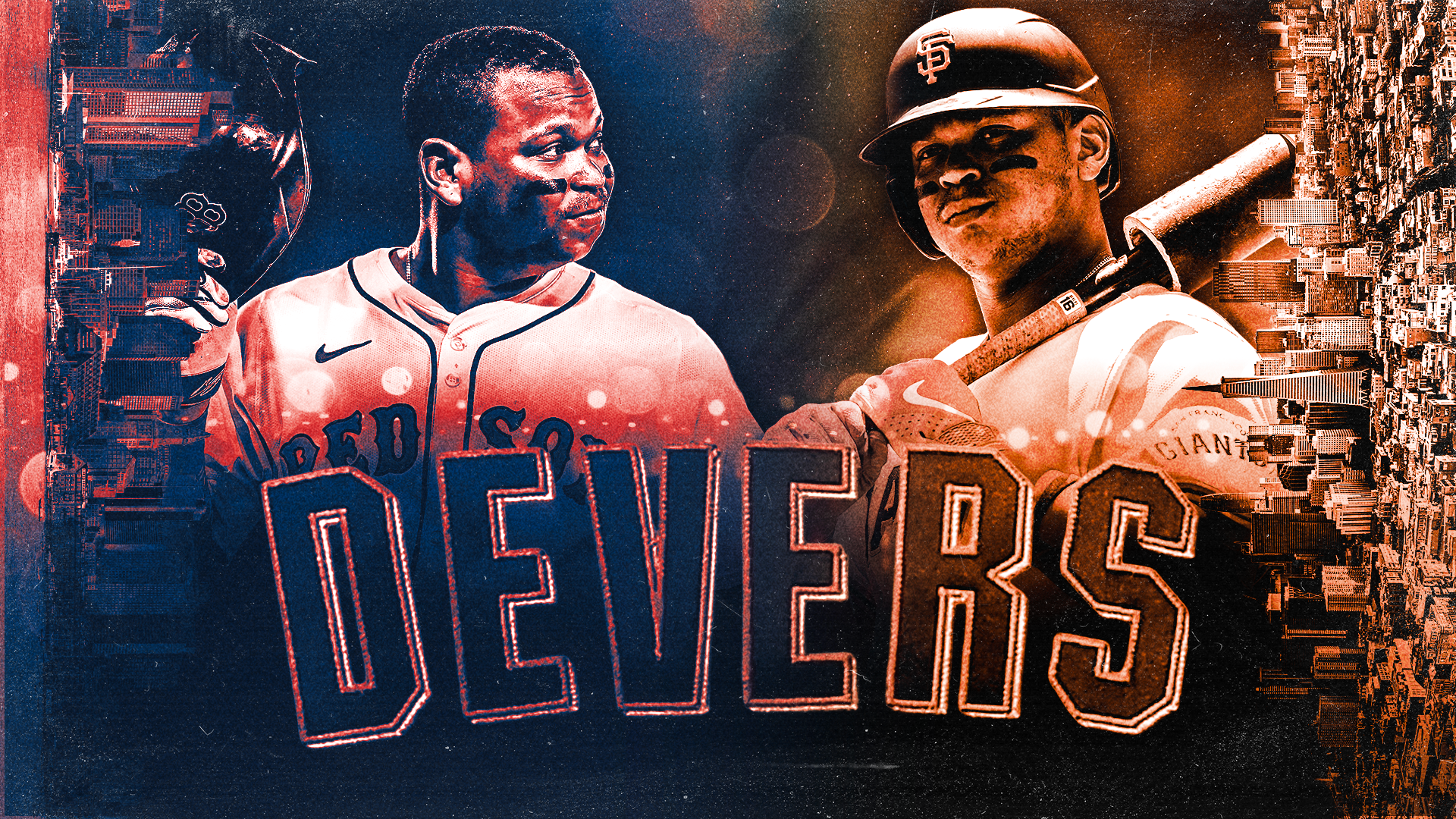
One year ago today, June 15, the Boston Red Sox sent shockwaves through baseball when they traded third baseman-turned-DH Rafael Devers and the $230 million or so remaining on his contract to the San Francisco Giants for four players. Devers was the latest homegrown star to depart Boston, joining Xander Bogaerts and Mookie Betts , and it was in part due to drama of their own creation. Remember all that stuff about Devers not playing first base ? All involved could have handled that better.
The Giants, after having struck out on so many big-name free agents over the years, took a big swing when they acquired Devers. The Red Sox removed a headache, stockpiled some talent, and cleared a lot of future payroll. Here is the full trade:
- Giants receive : DH Rafael Devers - Red Sox receive : LHP Kyle Harrison , RHP Jordan Hicks , OF James Tibbs III , RHP Jose Bello
The trade happened only a few hours after Devers hit a home run in a win over the New York Yankees (he even had to be pulled off the team plane). The Red Sox were 37-36 with a +22 run differential before the trade. Afterward, they went 52-37 with a +88 run differential and reached the postseason as a wild-card team. It was their first postseason berth since 2021.
"It's important to point out that this is in no way signifying a waving of the white flag on 2025," Red Sox chief baseball officer Craig Breslow said after the trade. "We are as committed as we were six months ago to putting a winning team on the field, to competing for the division and making a deep postseason run."
The Giants were 41-31 with a +45 run differential before the trade and 40-50 with a -24 run differential after. They crashed out of a postseason spot, so, based on that, the Red Sox won the trade in 2025. Obviously, it is much more complicated than that. The Giants and Red Sox both made the trade with an eye on 2026 and beyond far more than they did with an eye on 2025.
We graded the trade when it was made , and now that a year has passed and we have more information, we can go back to dish out new grades. It's important to evaluate trades based on what we know at the time. It's also important to go back with the benefit of hindsight and see how it ultimately played out. Here are our updated trade grades on the one-year anniversary.
Boston Red Sox
Original grade: C New grade: D
On the Red Sox side, there are three ways to look at the Devers trade. One, they absolutely had to get rid of the headache because it was damaging the clubhouse. Two, they used the first base drama as a pretext to move a bat-only player with a huge contract after ownership had spent the previous few years trimming payroll. And three, the Red Sox simply loved the trade package and the players they received, and couldn't pass up the deal. In all likelihood, the reasoning was a combination of all three.
Everyone looked bad during the first base drama. Devers looked bad because he wouldn't be a good teammate and try the position (which he ultimately did with the Giants). The Red Sox and then-manager Alex Cora looked bad because they communicated one thing -- "They talked to me and basically told me to put away my glove, that I wasn't going to play any other position but DH," Devers said before the trade -- then changed gears and asked Devers to do something else. It wasn't handled well by any party involved.
"In the end, I think it's pretty clear that we couldn't find alignment with Raffy," Red Sox CEO Sam Kennedy said after the trade. "We all worked at it over the last several months. Going back to the offseason, starting with Alex Cora and Craig and the staff, and then up to me, and all the way up to (owner) John Henry. We worked at it. We had a different vision for him going forward than he had and we couldn't get there. We couldn't find alignment, and we reached that inflection point and made the decision to make a big move."
Boston's run to the postseason could be an indication that, once Devers was gone, the clubhouse was in perfect harmony. That is something we just can't know as outsiders. We're not privy to clubhouse dynamics. What we do know is that, since the trade, the Red Sox haven't received much production from the DH position, which is where Devers made all 73 starts in 2025 before the trade. Here are the numbers over the last calendar year:
Devers Red Sox DH MLB average DH
Batting average
.235
.253
.246
On-base percentage
.323
.316
.328
Slugging percentage
.438
.389
.430
Home runs
29
15
25.9
wRC+
113
93
110
Weighted runs created plus, or wRC+, is a souped-up version of OPS+. It adjusts for ballpark and other factors, and distills offensive performance down to one number, where 100 is average and the higher the number, the better. Devers has outperformed Red Sox DHs since the trade and not by a little, either. In fact, Boston's DHs have been among the worst in baseball since the trade. Only six teams have gotten a lower wRC+ from the position and only the Colorado Rockies (13) have gotten fewer home runs.
The Red Sox understood they would take an offensive hit when they traded Devers and banked on better defense and a DH rotation (mostly Masataka Yoshida ) to pick up the slack. It played out that way last year. It hasn't this year (the Red Sox are way short on power) in part because they were unable to retain Alex Bregman as a free agent. The Bregman signing started the "Devers to DH" domino effect, and, after the Devers trade, the thought was the Red Sox would re-sign Bregman and keep the better all-around player.
(Bregman is not having a good year with the Chicago Cubs , so perhaps it's for the best that the Red Sox were unable to keep him.)
How the Red Sox spent the money they saved when they shed Devers and his contract is difficult to untangle. Roman Anthony signed an eight-year, $130 million extension last August, but did the Red Sox really have to trade Devers to be able to do that? I have a hard time believing that. They also extended closer Aroldis Chapman last September, took on money in the Willson Contreras and Sonny Gray trades with the St. Louis Cardinals , and signed Ranger Suárez over the winter.
Those were all significant additions to payroll made after the Devers trade, and, after years of cutting back, Boston has raised payroll to a franchise record level this year. Here are the club's end-of-season competitive balance tax payrolls:
Red Sox CBT payroll MLB rank
2022
$236 million
5th
2023
$226 million
12th
2024
$226 million
12th
2025
$249 million
7th
2026
$264 million (projected)
6th
The Red Sox have spent the money they saved with the Devers trade. How exactly they spent it is impossible to say due to all the moves that followed. The important thing is the Red Sox have reinvested the savings, which isn't always a given. The savings will continue too. Devers is owed $211 million from 2027-33, or just more than $30 million per year. Baseball's economics could change with the new collective bargaining agreement after the season, meaning those savings could take on increased importance, but no matter what, $30 million is $30 million.
As for the players the Red Sox received in the trade, only Bello (Jose, not Brayan ) remains in the organization. He has a 3.04 ERA in 26 ⅔ Low Class-A innings this year and has been on and off the injured list. Neither Baseball America nor MLB Pipeline rank him among Boston's top 30 prospects. Bello was considered the fourth piece in the four-player package. The other three players have since been traded elsewhere and the returns definitely haven't been great. Let's go chronological:
OF James Tibbs III: Selected by the Giants as the No. 13 pick in the 2024 Draft, Tibbs was traded with minor-league outfielder Zach Ehrhard to the Los Angeles Dodgers for Dustin May at last summer's deadline. May had a 5.40 ERA in five starts and one relief appearance with Boston, and did not pitch after Sept. 3 because of an elbow injury. He left as a free agent this offseason. Tibbs, meanwhile, has blossomed with the Dodgers. He's running a 1.035 OPS in Triple-A and is among the minor-league leaders with 19 home runs. Given their MLB roster and other more touted outfield prospects, it seems likely Los Angeles will use Tibbs as a trade chip rather than plug him into their big-league roster. Ehrhard has had a nice year in Triple-A as well. Point is, the Red Sox traded Tibbs and received little from May.
RHP Jordan Hicks: Hicks allowed 20 runs in 18 ⅔ innings for the Red Sox last year, then, on Feb. 1, he was traded with minor-league righty Nick Sandlin and two players to be named to the Chicago White Sox for minor-league righty Gage Ziehl and a player to be named. This was a salary dump. The Red Sox attached a good prospect (Sandlin) to Hicks to shed $16 million of the $24 million remaining on his contract. The hard-throwing Sandlin made his MLB debut for the ChiSox on May 27. Ziehl has a 4.66 ERA in Double-A. Again, it's impossible to say how the Red Sox spent the money they saved with the Hicks trade, but that was the goal here. Dump that contract. (None of the players to be named later have yet been named. They are unlikely to be significant pieces.)
LHP Kyle Harrison: Harrison made three appearances for the Red Sox last year and was on their Wild Card Series roster, but did not pitch in the three games against the Yankees. A week after the Hicks trade, Harrison was sent to the Milwaukee Brewers in a six-player swap. Here is the full trade:
Brewers received Red Sox received
LHP Kyle Harrison
3B Caleb Durbin
LHP Shane Drohan
UTIL Andruw Monasterio
IF David Hamilton
IF Anthony Seigler
Harrison has been terrific this season and will probably be an All-Star. Drohan has also been very good in a swingman role for the Brewers, pitching to a 3.59 ERA in 42 ⅔ innings across four starts and 10 relief appearances. Durbin, meanwhile, has needed a recent hot streak to approach a .580 OPS. He's a gifted defender at the hot corner, but the bat has been a disappointment after last year's third-place finish in the National League Rookie of the Year voting. Hamilton, Monasterio, and Seigler are low-impact utility guys.
We needn't overthink this one: Harrison has been outstanding and Durbin has been bordering on replacement level. To date, this is a big L for the Red Sox, though of course that could change given the long-term control of both players. The May trade didn't work out and Hicks was salary dumped at the cost of a prospect who is better than the prospect the Red Sox received in that trade. Did any of these three trades make Boston better? When the Hicks salary dump looks like the best move, the answer is no.
One year after the trade, it's fair to say the Red Sox downgraded their offense with the Devers trade, and made a bad thing worse with the Tibbs and Harrison trades. They don't look very good at the moment. At minimum, there's an opportunity cost there. Those were two good trade chips that were dealt for players who haven't moved the needle. The Red Sox have spent the savings from the Devers trade and the Hicks salary dump, so give them credit there. Too many teams simply pocket the money nowadays.
There's a case -- a very good one, I think -- to be made that the Red Sox deserve an F for the Devers trade because they simply aren't a better team now than they were a year ago. The reasons for that are bigger than Devers, but that trade is definitely part of it. I won't go with an F though. I'll update the Red Sox to a D because the last seven years (!) of the Devers contract aren't looking so hot. Getting out from under that money is a win to me. A small win, but a win nonetheless. The rest of the trade though? Yikes.
San Francisco Giants
Original grade: B New grade: C
The origin story of the Devers trade dates back almost a decade. The Giants tried and failed for years to lure a big-name slugger to San Francisco, starting with Giancarlo Stanton during t
_Originally reported by [CBS Sports](https://www.cbssports.com/mlb/news/regrading-rafael-devers-trade-red-sox-giants-one-year-later/)._
Comments
Loading comments…