
Saregama MD: AI-Generated Music Should Have No Value on DSPs
Vikram Mehra, Saregama's MD, argues that despite its presence on streaming services, AI-generated music is not finding an audience and should therefore be assigned no value by DSPs.
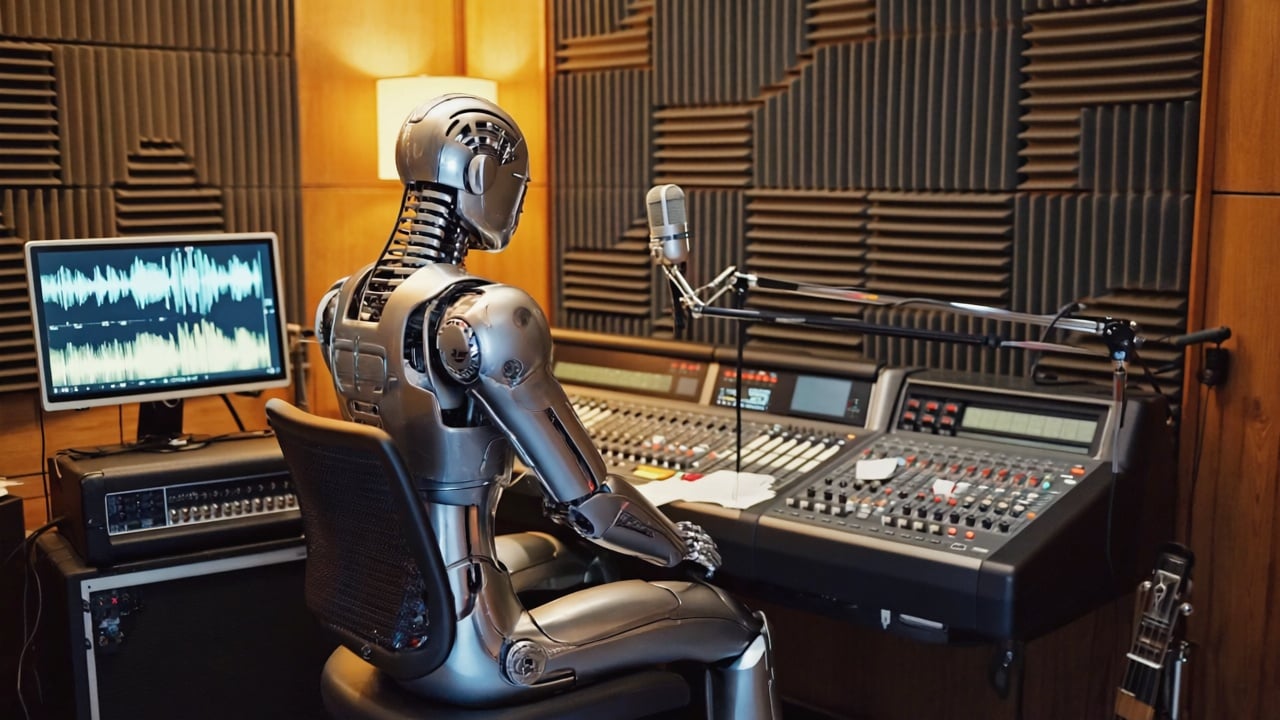
Saregama MD calls for DSPs to assign ‘no value’ to AI-generated music
May 20, 2026 By Mandy Dalugdug
Saregama Managing Director Vikram Mehra has called on streaming platforms to strip AI-generated music of any share of royalty pools – while simultaneously signaling that India ‘s oldest music label is open to licensing its catalog to generative AI companies.
The two positions – one demanding that AI-generated content be excluded from royalty distributions, the other welcoming AI firms as a new licensing revenue stream – capture a tension that runs through the wider music industry’s approach to artificial intelligence in 2026.
Mehra made the comments during Saregama India ‘s Q4 FY26 earnings call last week (May 14).
Mehra told analysts: “All the music labels globally and in India are working very closely with the leading three global streaming platforms, making it very clear that when the content pool is going to get distributed across the labels, no value should get assigned to content which is getting generated purely or through AI.”
“We are hopeful that platforms and IP owners will come to a reasonable agreement whereby the royalty monies or the content pool monies will get distributed only to genuine IP and not the AI slop.”
> “no value should get assigned to content which is getting generated purely or through AI.” Vikram Mehra, Saregama
Mehra acknowledged that AI-generated music is present across streaming services – but argued it is failing to find an audience.
“It’s there. It’s there across all platforms. The fact of life is, it’s seeing no traction,” the executive said.
“There is no revenue leakage today. There is no market share loss happening today.”
> “We are realizing that AI is creating new licensing opportunity, as can be witnessed by the deals signed by various global music labels with various generative AI platforms.” Vikram Mehra, Saregama
In the same earnings call, however, Mehra struck a different note on AI – framing it not only as a threat to be contained, but as a commercial opportunity to be pursued.
“We are realizing that AI is creating new licensing opportunity, as can be witnessed by the deals signed by various global music labels with various generative AI platforms.”
“At the right time, we will also engage commercially with many of these people. It may become one more way in which… our IP can be monetized.”
Mehra also said Saregama has launched a dedicated “AI efficiency team,” with tracking infringements among the operational use cases of its AI-based tools.
The dual stance – block AI content from the royalty pool, but license to the AI companies creating it – mirrors the approach being taken by several major Western labels.
Universal Music Group and Warner Music Group settled their copyright lawsuit against Udio in October 2025 and November 2025, respectively, and struck licensing deals for a new AI music platform. Warner Music Group reached a separate agreement with Suno in December 2025.
But those negotiations have not gone smoothly across the board . Suno ‘s licensing talks with UMG and Sony Music remain stalled , according to the Financial Times , with one person involved in the negotiations telling the newspaper there is “no path forward with the current proposal.”
Mehra’s call to exclude AI content from royalty pools comes as the volume of synthetic music on streaming platforms continues to escalate.
According to Deezer , the Paris-headquartered streaming service was receiving nearly 75,000 fully AI-generated tracks every day as of April – representing more than 44% of all new music delivered to the platform daily .
That figure has surged from 10,000 daily uploads when Deezer launched its AI detection tool in January 2025, to 60,000 by January 2026.
Deezer says up to 85% of streams on fully AI-generated tracks on its platform are fraudulent, with those streams demonetized and removed from the royalty pool.
In March, Michael Smith – the man at the center of the first criminal prosecution for AI-assisted streaming fraud in the United States – pleaded guilty to conspiracy to commit wire fraud after using AI to generate hundreds of thousands of songs that were streamed billions of times by bots, fraudulently collecting more than $8 million in royalties.
A 2024 study by CISAC and PMP Strategy estimated that nearly 25% of music creators’ revenues could be at risk by 2028 – an impact that could amount to as much as EUR €4 billion (approximately USD $4.65 billion) annually for music creators alone.
In February, a coalition of artist representatives published an open letter calling on the music community to reject Suno , accusing the AI music generator of diluting royalty pools for legitimate artists.
Saregama , which says it holds the largest music archives in India with a catalog of over 150,000 tracks, reported full-year FY26 revenue of 9.85 billion rupees (approx. USD $102m).
Its music segment generated 8.14 billion rupees ($84m) in revenue, up 17% YoY , while quarterly adjusted EBITDA hit a record 1.33 billion rupees ($13.7m) , a 31% YoY increase. Music Business Worldwide
News India Saregama
Related Posts
Saregama invests $36m in Bollywood studio Bhansali Productions, secures exclusive music rights for future films
_Originally reported by [Music Business Worldwide](https://www.musicbusinessworldwide.com/saregama-md-calls-for-dsps-to-assign-no-value-to-ai-generated-music/)._
This story is summarized from coverage by Music Business Worldwide.
Read full story →Comments
Loading comments…