Spotify joins major labels, Google, and OpenAI to back US anti-AI deepfake bill
Spotify, Universal Music Group, Sony Music, Warner Music Group, Google, and OpenAI are among the growing coalition supporting a new US bill to outlaw AI deepfakes.
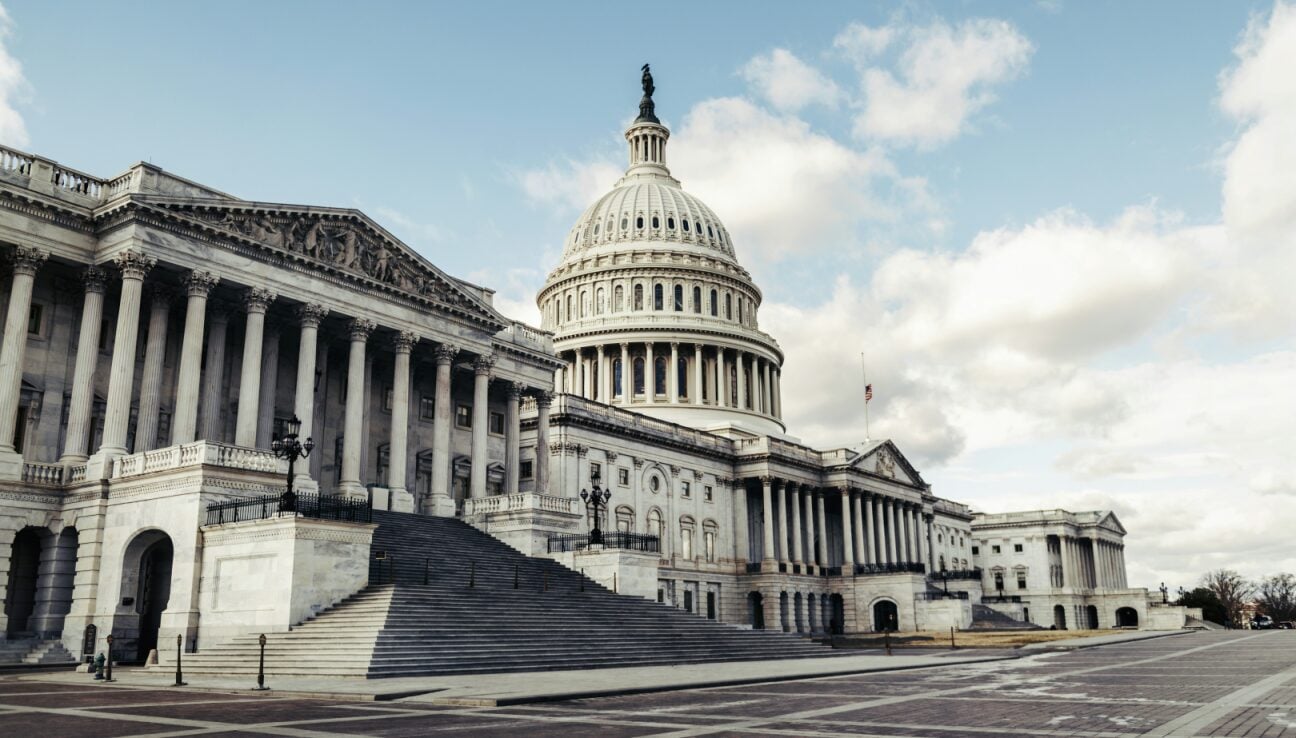
Spotify backs US bill to outlaw AI deepfakes, joining UMG, Sony, Warner, Google, and OpenAI in growing coalition
May 21, 2026 By Mandy Dalugdug
A bipartisan group of US lawmakers has reintroduced the NO FAKES Act – the bill designed to protect individuals from unauthorized AI-generated deepfakes of their voice and likeness.
The Nurture Originals, Foster Art, and Keep Entertainment Safe Act of 2026 was reintroduced in both the US House of Representatives and the Senate on Wednesday (May 20).
The bill has attracted a coalition of support from across the music industry, including from Universal Music Group , Sony Music , Warner Music Group , the Recording Industry Association of America ( RIAA ), the Recording Academy , and the National Music Publishers Association ( NMPA ).
This marks the third time the bill has been brought before Congress – it was first formally introduced in the Senate in July 2024 , and reintroduced in April 2025 – but it failed to advance out of committee on both occasions.
Each time it has returned, the bill has arrived with a wider base of endorsements.
When it was reintroduced last year, Google , OpenAI , and IBM added their names to the existing music industry coalition.
This time, Spotify and Getty have joined the list of supporters, according to the RIAA .
Spotify ‘s endorsement arrives amid its own escalating battle against AI-generated content on its platform.
In September 2025, the company revealed it had removed more than 75 million “spammy tracks” over the prior 12 months and introduced a new impersonation policy prohibiting unauthorized AI voice clones.
In March this year, Spotify went further, launching a new Artist Profile Protection feature that allows artists to review and approve releases before they appear on their profiles – a direct response to what the company described as the “rise of easy-to-produce AI tracks” flooding streaming services.
Then, the day before the NO FAKES Act was reintroduced, Spotify extended its Verified by Spotify badges to podcasts – reaffirming that it will remove shows that impersonate creators using AI voice cloning – amid data from Podcast Index suggesting AI-generated shows now account for more than a third of new podcast feeds.
The updated NO FAKES Act has been specifically revised to account for platforms like Spotify – distinguishing between user-generated content platforms and more curated services, and tailoring how disputes are processed and enforced accordingly.
The bill’s Senate sponsors are Senators Marsha Blackburn (R-TN), Chris Coons (D-DE), Thom Tillis (R-NC), and Amy Klobuchar (D-MN).
On the House side, the legislation is co-led by Representatives María Elvira Salazar (R-FL), Madeleine Dean (D-PA), Nathaniel Moran (R-TX), Becca Balint (D-VT), Laurel Lee (R-FL), and Joe Morelle (D-NY).
The NO FAKES Act aims to establish a federal intellectual property right in an individual’s voice and likeness for the first time – enabling people to take legal action against those who knowingly create, distribute, or profit from unauthorized digital replicas of them.
The issue has become particularly urgent for the music industry as AI tools have made it easier to generate convincing deepfakes of artists and public figures.
Taylor Swift , who was targeted by explicit AI-generated deepfake images in 2024, recently applied to register her voice and likeness as federal trademarks in an apparent effort to combat future deepfakes.
> “The use of AI is only growing, and Congress must catch up with common sense, common ground regulations.” Madeleine Dean, US Representative
“The use of AI is only growing, and Congress must catch up with common sense, common ground regulations,” said Rep. Dean in a statement accompanying the bill’s reintroduction .
“By granting every person a clear, federal right to control digital replicas of their own voice and likeness, the NO FAKES Act will empower victims of deep fakes; defend against sexually explicit deepfakes; and safeguard human creativity and artistic expression.
“We must support technological innovation while preserving the privacy, safety, and dignity of all Americans.”
Rep. Salazar said: “In this new era of AI, bad actors are quickly and easily profiting from the creativity of others. Our laws must catch up.
“The NO FAKES Act is simple and sacred: you own your identity – not Big Tech, not scammers, not algorithms. Deepfakes are digital lies that ruin real lives, and it’s time to fight back.”
Sen. Coons said: “Whether they’re Tom Hanks or an 8th grader in Wilmington, no one should worry about someone stealing their voice or likeness.
“We’re reintroducing a stronger NO FAKES Act after working with stakeholders from across the country to make the protections in our bill more robust without compromising Americans’ free speech rights.
> “We’re reintroducing a stronger NO FAKES Act after working with stakeholders from across the country to make the protections in our bill more robust without compromising Americans’ free speech rights.” Chris Coons, US Senator
“I am proud that NO FAKES is the most advanced piece of AI legislation before Congress right now with the broadest network of supporters. Americans can’t afford to wait any longer for Congress to pass this bill and send it to the president’s desk.”
Sen. Blackburn said: “AI should empower innovation – not give scammers and online predators a free pass to exploit someone’s voice and visual likeness without permission.
“From artists and songwriters to students and everyday Americans, people deserve meaningful protections against deceptive deepfakes and digital impersonation.
> “From artists and songwriters to students and everyday Americans, people deserve meaningful protections against deceptive deepfakes and digital impersonation.” Marsha Blackburn, US Senator
“The NO FAKES Act would establish clear guardrails that protect the creative community in Tennessee and nationwide, and we are grateful to have more support than ever before for this bipartisan and bicameral legislation.”
The updated version of the NO FAKES Act includes several revisions from the 2025 iteration.
Among them is a new counter-notice procedure that allows individuals to challenge incorrect takedown notices – a measure designed to protect free speech.
The bill also now includes exemptions for libraries, archives, and research institutions.
For user-generated content platforms, the bill offers a safe harbor from liability, provided the platform follows established rules and removes unauthorized deepfakes when alerted.
The legislation already included exemptions for news coverage, documentaries, biopics, sports, satire, and criticism.
RIAA Chairman and CEO Mitch Glazier said: “RIAA proudly endorses the NO FAKES Act of 2026, a widely supported consensus bill developed through a bipartisan, bicameral process and championed by American AI developers, the creative community, child safety groups, conservative groups, labor unions, and free speech advocates.
“Polling confirms that 92% of Americans are concerned about the impact of AI deepfakes on our neighbors and culture and reveals near total support for a Federal law that protects voice and likeness.
“NO FAKES provides those important protections while securing freedom of expression, reducing litigation and achieving the full promise of American AI technology.
> “NO FAKES provides those important protections while securing freedom of expression, reducing litigation and achieving the full promise of American AI technology.” Mitch Glazier, RIAA
“We applaud the efforts of Senators Coons and Blackburn alongside Representatives Salazar and Dean, along with their bipartisan colleagues, on crafting this legislation that has also been recommended by the White House’s National AI Framework.
“This is an example of communities coming together to solve an important issue, and we are closer than ever to NO FAKES becoming the law of the land this year.”
Warner Music Group CEO Robert Kyncl said: “I applaud Senators Blackburn and Coons and Representatives Salazar and Dean for their commitment and leadership in addressing the urgent need to establish guardrails to prevent unauthorized, AI-generated deepfakes.
“As a bridge between the tech and creative industries, the NO FAKES Act enables a new wave of technological breakthroughs while protecting human expression and artistry.
> “As a bridge between the tech and creative industries, the NO FAKES Act enables a new wave of technological breakthroughs while protecting human expression and artistry.” Robert Kyncl, Warner Music Group
“We look forward to working with Members of the US Senate and House to pass the Bill this year.”
Dr. Moiya McTier , Senior Advisor at the Human Artistry Campaign , said: “Preserving everyone’s fundamental right to their own voices and images is a critical and immediate need. The NO FAKES Act protects that right, while also supporting free speech rights and promoting responsible, ethical AI development.
“…Every American deserves a right to their own identity. As highly realistic AI voice clones and harmful deepfakes become more pervasive, this bill stands ready for passage and the time to act is now.”
The bill’s other music industry endorsers include CAA , BMI , the American Association of Independent Music ( A2IM ), the Academy of Country Music , the Music Artists Coalition , the American Federation of Musicians ( AFM ), ASCAP , SAG-AFTRA , SESAC , Songwriters of North America ( SONA ), and SoundExchange . Music Business Worldwide
News United States NO FAKES Act Spotify
Related Posts
Spotify extends ‘Verified’ badges to podcasts, further cracking down on AI impersonators
_Originally reported by [Music Business Worldwide](https://www.musicbusinessworldwide.com/spotify-backs-us-bill-to-outlaw-ai-deepfakes-joining-umg-sony-warner-google-and-openai-in-growing-coalition/)._
This story is summarized from coverage by Music Business Worldwide.
Read full story →Comments
Loading comments…