
The Runarounds' Touring Career Launched by Jerrod Wilkins & Alex Collier After TV Series Appearance
Jerrod Wilkins and Alex Collier successfully launched The Runarounds' touring career following the band's appearance on a TV series, demonstrating how art imitating life can forge a genuine connection between artists and their audience.
Some of the most resonant art is the one that imitates life, forging a genuine connection between the artist and viewer.
A bridge that many love to cross is one that connects television and music, with reality shows centered around aspiring artists competing for a record deal or series that allows a breakout star to jump into music a la Miley Cyrus and Hilary Duff.
But in the case of The Runarounds, a band featured in the scripted Amazon Prime Video series sharing the same name, the quintet’s performance in the show begged the question: Did the music or the series come first?
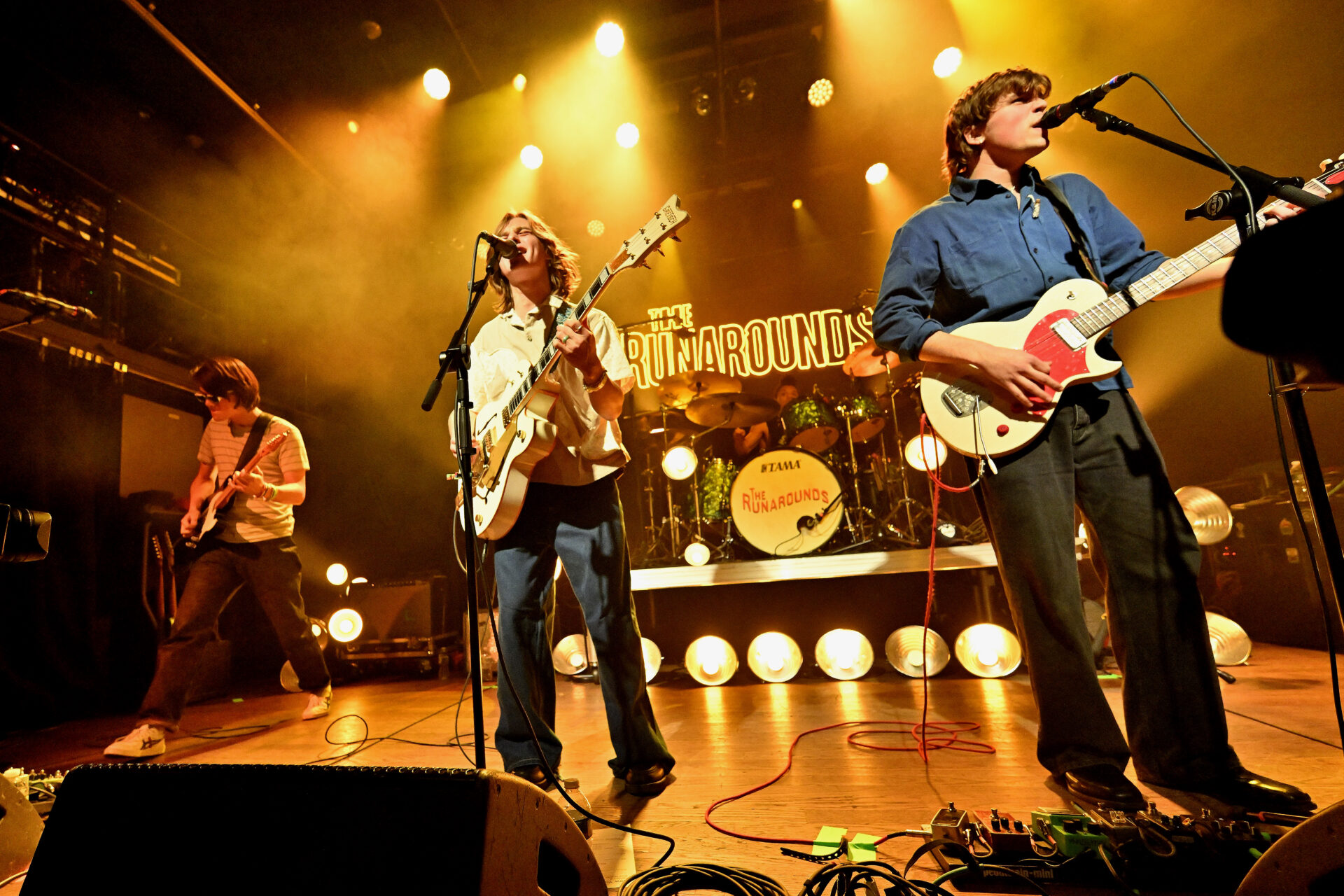
Their story is as interesting as any plot for a show. The creatives behind The Runarounds sought real musicians for the main roles in the series, and they not only found their stars but also stumbled on a quintet that would go on to have real chemistry on a live stage.
Lead singer and guitarist William Lipton and guitarist Jeremy Yun were childhood friends before joining the series and jammed together. In the development stages of the series, they formed a bond with castmates Axel Ellis (vocals, guitar), Jesse Golliher (bassist) and Zendé Murdock (drummer) while working on music for the show.
They soundtracked the series with a live album recorded when they were filming the show, and they’ve been able to build a touring career off both ventures. The Runarounds sold out their 2025 headline tour and carried that momentum into 2026. The band sold out 26 of 32 concerts this year during the onsale, moving nearly 40,000 tickets. They played a sold-out show Feb. 10 at Riviera Theatre in Chicago that grossed $77,555 off 2,324 tickets, according to Pollstar Boxoffice.
Though the series wasn’t picked up for a second season, The Runarounds carry on with their music, and more live shows are on the way in markets like Jacksonville, Greensboro and Oklahoma City. The band will also be performing at prominent music festival Bonnaroo in Manchester, Tennessee, this summer.
It’s quite the story and only the beginning—at least, that’s what their managers believe.
Pollstar spoke to Jerrod Wilkins and Alex Collier of General Assembly, a management firm with acts like Susto, Black Violin and Scatterbrain on its roster, to talk about building on the success of the series and what’s next for the young rockers.
Pollstar : It’s been quite the rollout for The Runarounds, with the band dropping new music and continuing to tour.
Alex Collier: It’s wild. We just finished the third iteration of the “Minivan Tour.” We really wanted to just introduce new markets. We wanted to hit an international market, which was Toronto, and some of these towns that we didn’t get to on the first run and second run, which started in January.
The story of The Runarounds is a fascinating one, working simultaneously in two sectors of entertainment while developing as artists. It’s given the band an authenticity that fans, whether they love the show or their music, seem to appreciate.
Jerrod Wilkins: A few things you said that are interesting. First of all, we would like for every band that we manage to start with a TV series because it makes it a lot easier. It really kicks down the doors and jumpstarts it, for sure. We’re incredibly fortunate that we had that opportunity just to use that as a launching pad. A lot of credit to Jonas Pate, the creator of the show, who developed this whole concept and cast the band for this.
There’s a lot to be said about the fact that we had this real driver who was working for us. And at the same time, it works against us. It’s like you have to sort of chip away at this idea that this is incredible because this was a group of kids who were put together for a TV show. Alex, who was there from day one, was really a champion of the idea of, “This is a show and they’re acting in the show, but this is a real band. These are real musicians.”
And a big part of the campaign over the last six to eight months has been to chip away at that stigma around the idea that this isn’t credible or legit because it comes from a TV show. And we did for the most part with what we did with the tour. You can see it online, you can see the growth and the response from the fans. Anybody who sees this show will clearly recognize that this is a real band, and they write great songs, and they’ve created something that is pretty special on multiple levels, especially touring.
Getting rid of that stigma can be difficult for anyone transitioning from one medium to another, having to prove themselves in another arena.
Collier: It started with the show. But there was always this idea that the band was going to play live. There was not going to be any playback. When we put out that first record, it’s what you’re hearing from the show. And we put our foot down on that very early on.
There are a lot of questions as to how you do it and how you execute it properly with the number of variables that happen on a film set and the amount of music gear that could collide with all of that. But I think number one, the guys are just amazing players, and they were able to figure that out. When you go see them live, you realize, “Oh my God, these are incredible musicians.” There’s this energy around it, and that’s what we tried to convey with the show.
There was this moment where there was a writer’s strike, and we thought, “Let’s not pause here. Let’s get the band out and start playing these shows.” Given the history of some of the members, we had an audience built into L.A. with Will going to USC. Some of those students wanted to put concerts together, and that allowed us to get to the Troubadour, which is something that, for most bands, takes three, four, five years to get to.
Wilkins: It’s important to add that they were cast based on their musical ability, first and foremost, and then taught how to act. … Everybody thought this was a television show like Daisy Jones & The Six, where there are actors that are portraying band members, but from day one, there was always the idea that this was going to be a touring band that’s going to live independently of the show.
Collier: It was cool to see us stump some of the folks at Amazon and the influencers that came out. We did a show at South By Southwest to kickstart the marketing of the show, and everyone just put their phones down and they were in awe, realizing, “Holy shit. This is insane.”
How did your relationship with the band start?
Collier: I’d worked with Jonas and his twin brother on Outer Banks to develop the sound of the series from season one. Jonas called me one day and just said, “Hey, I have this idea. I want to start a band.” And at this point, I was in the management world, but I also played in some of the bands that I’ve managed. He was like, “Tell me how you do this. What does this look like? How do you develop an indie band?”
I remember harping and being like, “Hey man, get those guys in a van for two weeks and they’ll be best friends in ways that they don’t even recognize it, and they’ll be better players for it.” That was the start of it. They were cast and came to Charleston.
At that point, you know, we filmed the pilot, we started getting edits of this. I was Jerrod’s intern a long time ago, and we’re both here in Charleston. We kept in touch, and the idea was to figure out a way to work together. It’s sort of a no-brainer with us both being here in town. Jerrod was brought in fairly early in these conversations to meet the guys and to help develop this as we got into production for season one.
Wilkins: Then it was clear that there was a release date for the show, so then we really worked to build the team. We were maybe eight months out from the show, and we knew that we had a label deal that was going to come into view. We knew we needed agents, business managers and attorneys.
CAA was really one of the first people on board, Brian Manning and Cal Rawlings, who have been incredible partners in this. We’ve got the AWAL team on the label side who’ve been phenomenal to work with. And they’re the ones working as we make this new record that is going to be a new album apart from the soundtrack.
We had all of our ducks in a row, and all of these teams of people that help support what these guys are doing on the road.
Things moved quickly. How did you handle the rapid ascension?
Wilkins: We worked with CAA to make sure we had a plan in place for the fall right after the series dropped to hit small clubs. What we knew was that we wanted to sell out the small clubs. We didn’t want to go in and think about a 750-cap club and not sell it out and leave tickets on the table.
Tickets went on sale for that, and then it quickly blew out in those small rooms. Then we upgraded in places where we felt like we had some wiggle room in terms of growth in the market. In some places were at a 250-cap club.
Gainesville is an example of where we really were successful because we went to Heartwood Soundstage, a 250-cap indoor space. And that sold out within hours of it going on sale. And the promoter came back and said, “Look, I think we can put this outside in the 500-cap outdoor space.” We released those tickets, and it sold out that day. And he said, “Let’s put it fully outdoors. We can go up to 1,500 cap.” And we sold that out.
But we never wanted to be in a position where we were going into rooms where we felt like we were punching above our weight. I think it was really important.
Collier: One thing that we did too was because we were selling these tickets so fast, we also gave the band the opportunity to go out and interact with the audience that was there really early. We gave them these little mementos. This generation is not used to that. … These kids are showing up at 9 a.m. and camping out.
The guys quickly recognized that this was even bigger than they knew. It’s building a community, so how do we continue that? They were adamant about making sure we got more people in. How do we come back to the market quickly for the folks who weren’t allowed to come in? It creates this conversation, a groundswell in the concert-going community.
In television and music, you may have different fan bases. How do you find the right balance and avoid alienating either side?
Wilkins: We can balance both, but at the end of the day, people who are fans of the show generally are going to be fans of the band. Maybe some of the pushback has been the other way around, where we see a lot of people discover the band at a show and have never seen the Amazon series.
In this moment, we’re having these conversations and struggling with authenticity for the band itself and writing from a place that is who they are versus having notes about what they needed to write for a scripted series. That’s the direction that we’re really pushing right now, and we feel like there’s something special building on the band side. We’re still exploring opportunities for additional long-form content that is maybe not scripted but still tells this story for the fans of the TV show.
But at the end of the day, the focus is we’ve got to evolve as a band. We have to go make a great record. That’s the next step. It’s all going to start with music for us.
We have to evolve as a touring band, too. Believe me, there were a lot of growing pains going from clubs to 2,600-cap rooms in a very short period of time, but we’re looking beyond that.
While it’s unfortunate that there won’t be a second season, maybe that is a blessing in disguise.
Wilkins: We certainly don’t have to press pause on touring for six months. That gives everybody time to focus on the album. And also looking at additional tour dates and building this opportunity.
How can festivals help you move forward?
Wilkins: The festival strategy is important because you’re tapped into an existing ecosystem that is much bigger than anything you could ever do on your own. You’ve got global reach with a festival like Bonnaroo and pretty robust marketing plans and budget
_Originally reported by [Pollstar](https://news.pollstar.com/2026/05/08/from-the-screen-to-the-stage-how-the-runarounds-launched-a-touring-career-from-a-tv-series/)._
Comments
Loading comments…