
Thunder Face Roster Decisions & Financial Reality; Shai Gilgeous-Alexander Remains Key
Following their loss to the Spurs, the Oklahoma City Thunder must navigate challenging roster decisions due to the looming second apron, with Shai Gilgeous-Alexander being the only indispensable player.
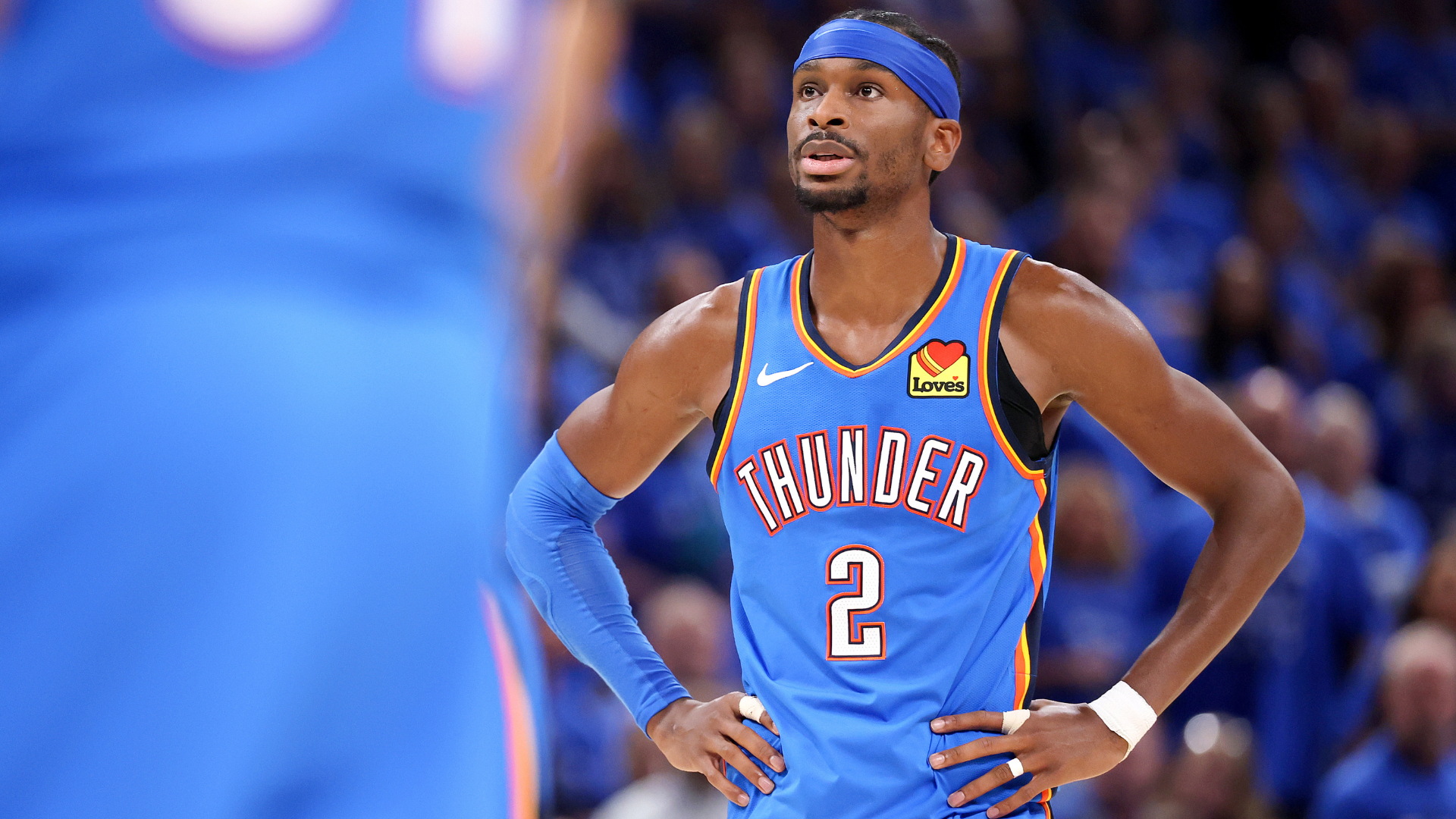
Every champion feels like a budding dynasty in the moment, yet we're about to crown our eighth different champion in eight years after the Oklahoma City Thunder dropped Game 7 of the Western Conference Finals at home to the San Antonio Spurs on Saturday night.
The collective bargaining agreement eventually comes for everyone, and the Thunder are about to experience the same. The 2023 Denver Nuggets lost key reserves Bruce Brown and Jeff Green , and then Kentavious Caldwell-Pope a year later. The 2024 Boston Celtics kept their roster together for another year, but traded away Jrue Holiday and Kristaps Porziņģis while losing Al Horford and Luke Kornet to free agency for the sake of avoiding the second apron.
The 2025 Thunder were as well-positioned to keep their team together as any recent champion has been. That was the benefit of having two All-Stars in Chet Holmgren and Jalen Williams on rookie deals. But the bill always comes due. It's what made this year's loss to the Spurs so devastating. This was Oklahoma City's last cheap season.
The Thunder had the NBA 's 19th-highest payroll in their championship season, according to Spotrac. They ranked 13th this season. But next year? At this moment, the Thunder are set to spend around $28 million more than any other team... without including their draft picks. Things only get harder for the 2027-28 campaign, when Shai Gilgeous-Alexander 's supermax extension kicks in, along with a possible rookie extension for Cason Wallace .
The Thunder have spent years preparing for this moment. They're about as well-insulated against the effects of the aprons as any team reasonably could be. But decision time has officially arrived. Oklahoma City is no longer positioned to keep everyone. So let's look at their finances and attempt to figure out where the cuts are coming.
So... how bad is it?
When you include their two first-round draft picks, No. 12 and No. 17, the Thunder are projected to be $39 million above the second apron for next season. Now, this raises our first substantial question: is the second apron an unofficial hard cap for the Thunder?
It doesn't have to be. Most of the second apron's restrictions relate to adding players externally. Well, the Thunder probably don't think they need to add any big-name players externally. They've won 132 regular-season games over the past two years. They have a championship-caliber roster already.
Going above the second apron freezes draft picks, but draft pick consequences are mostly irrelevant to the Thunder. They've accumulated such a draft surplus and have so many paths to adding more picks in the future that frozen picks, or even picks moved to the end of the first round (a consequence for spending three years out of five over the second apron), just won't hurt them that badly.
Victor Wembanyama's 'greatest of all time' trajectory is officially ahead of schedule after Spurs' Game 7 win Sam Quinn
Nonetheless, I'd expect the Thunder to treat the second apron as a hard cap for this season because of what's coming a few years down the line. The current collective bargaining agreement has an opt-out clause after the 2028-29 season. The NBA is certainly operating as though a lot is going to change after that, given that it included a 2029 sunset provision in its reformed draft lottery . Next year will be Oklahoma City's first year of this era paying the luxury tax. You get three tax years before the now extremely punitive repeater tax kicks in.
So let's reverse engineer this: you get two second apron seasons before the third pushes a future first-round pick to No. 30, and you get three tax seasons before the fourth introduces the repeater tax. There are three years left before the CBA presumably changes. It would therefore make sense for the Thunder to stay below those thresholds and hope the next CBA changes in ways that are more favorable to them than the last one. That's probably why they ducked the luxury tax this season. They wanted to delay the repeater clock, and next year, they'll try to delay the frozen pick clock as well. They'll have plenty of second apron years to come. Next year doesn't have to be one of them.
Which players are on the chopping block?
Here's our second major question: who's replaceable? There are three very obvious answers here:
- Lu Dort has an $18.2 million team option and is a 3-and-D wing on a roster with an endless supply of 3-and-D wings. He was mostly bad in the Western Conference Finals, and while his on-ball defense remains a strength, his offense has become a real weakness. You could argue that just removing him is a net positive. Wallace and Ajay Mitchell are better than him. They were underutilized on the bench, but Dort's status as an elder statesman kept him in the starting lineup. If the Thunder can get something for Dort? Great. But there aren't many teams positioned to take on his contract since he's making more than the mid-level exception, and Oklahoma City's preference is probably to keep him away from the Lakers , who would have the cap space to sign him outright if that option is declined. The last thing they'd want would be for Dort to defend Gilgeous-Alexander in a playoff series next year, especially after helping Dallas get Daniel Gafford in 2024 came back to bite them in the playoffs. That means the other cap space teams ( Bulls , Nets ) and the big trade exception teams (Celtics, Mavericks , Grizzlies ) probably get the first crack. - Jared McCain , making only $4.4 million with two years left on his rookie deal, may well have been acquired specifically to replace Isaiah Joe as the "designated shooter" in their rotation. Joe is set to make $11.3 million next season, but McCain played far more than Joe did in the playoffs. The Thunder wouldn't have any trouble trading Joe into someone's mid-level exception. He has a very affordable team option for the 2027-28 season as well. - Aaron Wiggins is on another team-friendly contract. He's making $9.2 million and has two more cheap years after that. He's been buried in Oklahoma City, but he's certainly a rotation-caliber player and possibly even a starter on another team. He didn't factor meaningfully into Oklahoma City's playoff rotation, and besides, the Thunder need to clear someone notable out of their perimeter rotation to accommodate former No. 12 pick Nikola Topić, who missed his rookie season with a torn ACL and most of his sophomore season recovering from testicular cancer. The Thunder need to see what they have with him.
Those are the easy ones. Merely removing those three salaries would leave the Thunder with 14 roster spots filled, with total obligations slightly below the second apron. That doesn't mean we're stopping here, though. Oklahoma City is likely to want to find more savings, both for long-term planning and to leave itself a bit of flexibility for moves during the season or to pursue a possible free agent or two. There are three more situations that should be monitored here:
- Isaiah Hartenstein has a $28.5 million team option. The Thunder have Jaylin Williams as a reserve center, and they drafted Thomas Sorber at No. 15 last year to be a long-term front-court project. Nonetheless, Hartenstein is unquestionably irreplaceable in the current construction of the team. The Thunder simply do not get offensive rebounds when he's not on the floor. He's among the NBA leaders in screen assists, a critical stat for springing Gilgeous-Alexander as a driver. His physicality was essential against Victor Wembanyama , and his parabolic flip shot is one of the very few shots in basketball that truly vexes Wembanyama as a rim-protector. Nobody else has a shot with such a high arc. Oklahoma City cannot let him go. He's badly needed for next year's championship pursuit. So odds are, the Thunder will work with Hartenstein on a long-term extension that will probably lower his salary for next season by a bit, but secure him for multiple seasons. - Kenrich Williams has a $7.2 million team option. He doesn't play much. That's not a matter of quality. He'd play more on most other teams. But in Oklahoma City, he's a beloved locker room figure. He's another candidate to have his option declined only to re-sign for multiple years at a slightly lower figure. Locker room figures are eventually going to become an unaffordable luxury here, but for now, they'll try to keep Williams in the fold. - In a perfect world, the Thunder would probably prefer not to make both the No. 12 and No. 17 picks. They simply won't have minutes for multiple rookies, and they've already had to purge several players they made meaningful investments in, like Tre Mann and Ousmane Dieng , purely because of a lack of minutes and money to spend on them. The Thunder also quietly don't have nearly the pick surplus they once did. They have two incoming top-five protected picks coming from Denver, along with first-round swaps with the Clippers in 2027 and the Mavericks in 2028. After that? It's only their own picks, which will probably be bad. They'd probably love to turn one or both of this year's picks into selections in the 2029 or 2030 draft. Maintaining liquidity will be important for the Thunder if they ever want to make an aggressive pursuit of a specific draft prospect down the line.
This is likely what's on the table. I'd imagine Dort, Joe and Wiggins -- or at least two of the three -- are unlikely to return. Hartenstein should be back on a new deal, and the Thunder probably won't make both of their first-round picks. But those are the obvious concepts. What if we thought a little bigger...
Could the Thunder take a more extreme step?
Ducking the second apron next season is, as we covered, achievable. It's off the table entirely for the 2027-28 campaign. At that point, the trio of Gilgeous-Alexander, Williams and Holmgren alone will be making roughly $150 million. Factor in the $21 million going to Alex Caruso , whatever they re-sign Hartenstein for this summer or next and the rookie extension Wallace is going to get ( Stephen Noh's salary model valued Wallace at around $28 million this season, so price an extension accordingly) and those six players alone might get the Thunder to the second apron. And on top of that, Mitchell has a team option for the 2027-28 season that the Thunder might like to use to get him to re-sign at a favorable, long-term number.
At a certain point, this just isn't tenable. That's not even an apron matter anymore. Eventually, most owners would just draw a budget when it comes to cash spending. That's especially true in small-market Oklahoma City. The Thunder have spent far more generously on players than most teams in a market like that would. Again, they've spent years preparing for this, but there's a limit somewhere. At some point, maybe in a year, maybe two, the Thunder are probably going to have to move someone from their core, not just their rotational surplus.
Caruso and Hartenstein, as the oldest of those core players, are the easy targets. They're both still essential, and were probably the second- and third-most valuable players on the team in the Western Conference Finals. Sustainability is great, but Gilgeous-Alexander, 27, is in his prime right now . The Thunder aren't going to take a step back lightly, and besides, those are the players that would return the least if traded. If the Thunder want to really replenish their draft stock, they have to consider more extreme alternatives.
There's been plenty of speculation about the Thunder making a big move up this year's draft board, with Duke's Cameron Boozer ( No. 3 on CBS Sports' Big Board ) most frequently cited as the target. They're not getting him with a godfather pick offer. The Wizards , Jazz and Grizzlies, picking in the top three, all have pick surpluses as it is. They don't need six first-round picks in the future. They need a franchise player, and they're probably not going to trade out of
_Originally reported by [CBS Sports](https://www.cbssports.com/nba/news/thunder-offseason-preview-financial-situation-roster-outlook-second-apron/)._
Comments
Loading comments…