
UMG and Sony Move to Add Over 61,000 Recordings to Suno AI Lawsuit
Universal Music Group and Sony allege Suno "trained on millions of their copyrighted tracks," and now seek to add 61,026 more works to their lawsuit in a proposed second amended complaint. The companies state these 61,026 works are "only a
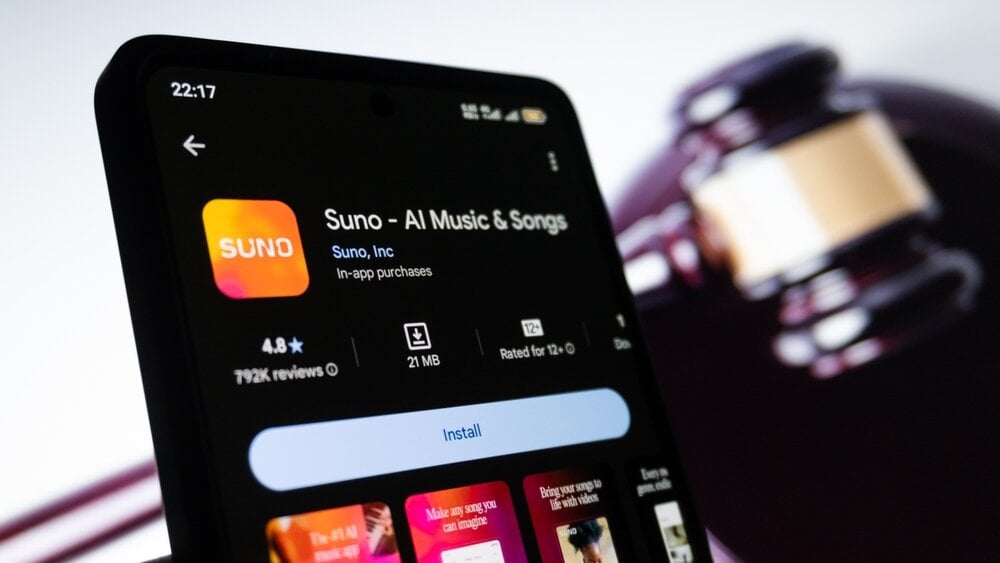
UMG and Sony seek to add over 61k recordings to Suno lawsuit after discovery reveals AI trained on ‘millions’ of their copyrighted tracks
May 26, 2026 By Mandy Dalugdug
Universal Music Group and Sony Music Entertainment have asked a federal court for permission to add more than 61,000 copyrighted sound recordings to their copyright infringement lawsuit against AI music generator Suno .
The motion, filed on Thursday (May 21) in the US District Court for the District of Massachusetts , which you can read here, comes after the record companies used audio fingerprinting technology to identify their recordings within Suno’s training data.
The original complaint, filed in June 2024 , asserted 560 copyrighted works.
Judge F. Dennis Saylor IV , who is presiding over the case, would need to grant the motion before the additional works are added to the lawsuit.
Suno opposes the request, according to the plaintiffs’ filing.
According to the plaintiffs’ memorandum of law supporting the motion, which you can read here , discovery revealed that Suno used “millions” of their copyrighted sound recordings to train its AI models.
The labels say they are asserting “only a small fraction” of those recordings, 61,026 works, in the proposed second amended complaint.
In its original answer to the complaint, Suno admitted that “the tens of millions of recordings that Suno’s model was trained on presumably included recordings whose rights are owned by the Plaintiffs in this case.”
But, according to the labels’ filing, Suno “continued to refuse to identify the sound recordings it had used to train.”
The record companies say they were “forced to undertake a costly and burdensome review of Suno’s voluminous training data” because Suno “declined to offer any transparency outside of the discovery process.”
To identify their works within the training data, the plaintiffs used Audible Magic , an industry-standard audio fingerprinting technology.
The process required a two-stage procedure.
In Stage 1 , the plaintiffs’ experts created digital fingerprints of each audio file in Suno ‘s training data – a process that required two trips to a secure room at Suno’s outside counsel’s office, totaling two full weeks of work.
In Stage 2 , those fingerprints were transmitted to Audible Magic to check for matches against its content-recognition database.
The filing describes protracted disputes between the parties over the use of Audible Magic .
Suno initially agreed to permit Stage 1 of the analysis in June 2025 , according to the filing, but then rescinded its consent on July 8, 2025 , citing unresolved disputes over Stage 2.
The parties appeared before Magistrate Judge Paul Levenson on July 31, 2025 , who “expressed skepticism about Suno’s security concerns and suggested a compromise,” according to the plaintiffs’ filing.
An agreement was reached in October 2025 , and the plaintiffs began Stage 1 on November 3, 2025 .
The Audible Magic analysis was completed on January 2, 2026 , with final match results delivered to the plaintiffs on January 15, 2026 .
The labels then undertook what they describe as a manual, multi-step process to compile their expanded list of works from the Audible Magic results.
For Sony , that process involved identifying works believed to be registered with the Copyright Office , compiling registration certificates, manually looking up corresponding ISRC numbers, and comparing those against the Audible Magic match results.
For Universal , the process included creating lists of works asserted in prior litigation, manually searching for and confirming rights, and conferring with artist representatives.
The plaintiffs say they “could have devoted additional time to reviewing the complete set of Audible Magic results and identifying and asserting every copyrighted work infringed by Suno,” but “concentrated on a representative subset” in order to advance the litigation.
According to the filing, Suno ‘s position is that the amendment “would effectively start the case over” and that it is “entitled to an expeditious resolution of its fair use defense.”
The labels say that argument is “meritless,” arguing that “the cause of any delay was Suno ‘s ongoing refusal to provide Plaintiffs with the data in its possession.”
“Denying leave to amend on that ground would effectively reward Suno for copying copyrighted works on an unprecedented scale and then hiding that copying from public view,” the memorandum states.
The plaintiffs have proposed that Suno ‘s fair use defense be addressed on summary judgment before ownership-related discovery for the new works is completed – a structure they say would “moot any of Suno’s delay-focused objections.”
The motion also notes that the proposed amendment adds works to an existing claim rather than introducing a new legal theory, and that no additional discovery from Suno will be needed.
The filing also includes a proposed second amended complaint that reasserts allegations from a prior proposed amended complaint filed in September 2025 , which alleged that Suno obtained recordings by “stream-ripping” them from YouTube in violation of 17 U.S.C. § 1201(a) .
That earlier motion for leave to amend – filed in September 2025 – remains pending.
Warner Music Group – formerly a co-plaintiff in the case – settled its lawsuit against Suno and struck a licensing deal with the company in November 2025 .
The Warner entities were voluntarily dismissed from the case in January 2026 .
UMG and Sony remain active plaintiffs, and their licensing negotiations with Suno have reportedly stalled .
The two remaining labels have also fought to obtain the terms of Suno’s settlement with Warner Music .
In discovery, UMG and Sony requested all documents concerning Suno ‘s plans to alter its business following the Warner licensing agreement, as well as post-February 2025 materials regarding its efforts to license training data.
Magistrate Judge Levenson rejected that request on April 6, ruling that, “as Suno argues, settlements of litigation have little persuasive bearing on identifying and characterizing markets for intellectual property.”
The labels objected on April 20 , arguing the Warner deal is not merely a backward-looking settlement but “a forward-looking commercial arrangement.”
Suno responded on May 4 , accusing the labels of attempting to “relitigate a dispute they lost.”
The case was originally filed in June 2024 alongside a parallel lawsuit against rival AI music generator Udio .
The most recent scheduling order, entered in March 2026 , sets a deadline for dispositive motions of January 8, 2027 .
That deadline may need to be revised if the court grants UMG and Sony ‘s motion to amend.
Separately, on Friday (May 22), Sony Music Entertainment filed a parallel motion for leave to amend in the Udio case, seeking to add 30,442 copyrighted works to that complaint.
As in the Suno case, the plaintiffs say they identified the additional works after gaining access to Udio ‘s training data in discovery, according to the latest court filing, which you can read here . Music Business Worldwide
News United States Artificial Intelligence lawsuits Sony Music Entertainment Suno Universal Music Group
Related Posts
Sony Music moves to add more than 30,000 copyrighted recordings to its lawsuit against Udio
_Originally reported by [Music Business Worldwide](https://www.musicbusinessworldwide.com/umg-and-sony-seek-to-add-61000-copyrighted-works-to-suno-lawsuit-after-discovery-reveals-suno-trained-on-millions-of-their-recordings/)._
This story is summarized from coverage by Music Business Worldwide.
Read full story →Comments
Loading comments…