
Amphitheater Boom: New Venues Emerge Across the U.S.
The U.S. is experiencing a surge in amphitheater development, with over 30 new outdoor venues announced or under construction since 2023 by municipalities, developers, and entertainment companies.
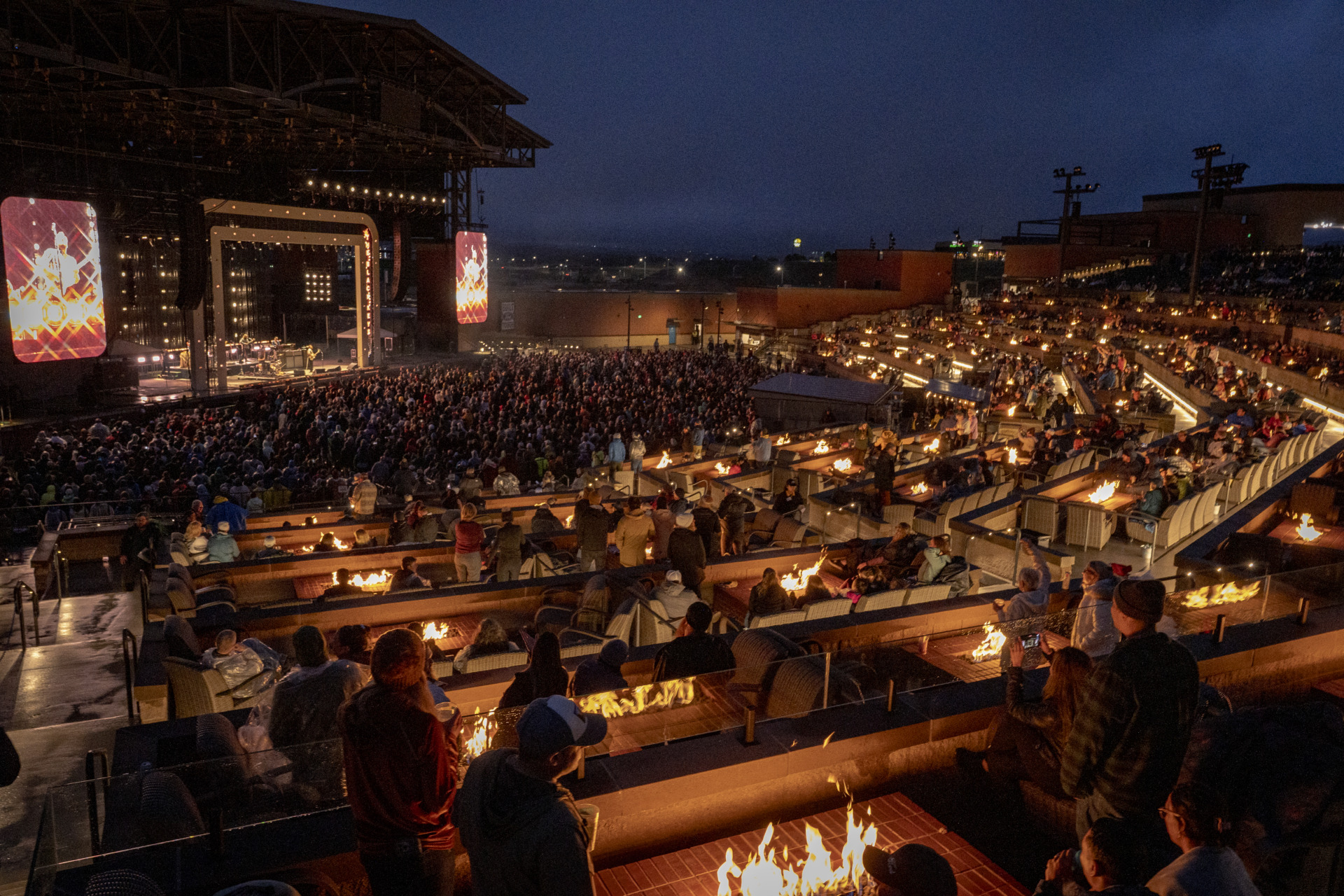
For cities across the U.S., happiness is a room without a roof.
The country is in the throes of one of the strongest amphitheater development cycles in recent memory. Since 2023, municipalities, developers and entertainment companies have announced or begun construction on 30-plus outdoor venues with a capacity of 5,000 and above.
“There’s a lot of focus on live entertainment, not just amphitheaters, but any kind of live entertainment,” says Emery Leonard, Principal at TVS, the architecture firm for the new Nissan Stadium in Nashville, the $900 million NBA arena being built in Oklahoma City and the rebirth of Red Hat Amphitheater in Raleigh, North Carolina. “They’re becoming anchors for larger community development projects. After the pandemic, it’s what people want to do. They want to gather and listen to music and be outside. We do a lot of indoor concert venues as well, but there is a certain magic to being outside.”
The amp surge is driven by concert demand, downtown development and competition for major tours.
The number of permanent outdoor venues in the U.S. numbers between 1,300 and 1,500 with Glen Helen Amphitheater in San Bernardino, California, seating 65,000. But capacity does not always correlate with ticket sales.
With a capacity of 9,525, the picturesque Red Rocks Amphitheatre in Morrison, Colorado, topped Pollstar’s 2025 year-end amphitheater chart with a gross of $74,512,826 and 972,954 tickets sold.
Amphitheaters under construction or being remodeled have capacities ranging from 5,000 to 20,000 with a price tag of $25 million to $400-plus million. Even at that eye-popping price point, amphitheaters can be an affordable option for municipalities eager to invest.
“They are more affordable,” offers Leonard. “And it’s a little easier to put on a show in one. There’s not much to build – there’s more than you would think, but nothing compared to a building – and there’s a lot less to maintain.”
In May, the $184,000 million Acrisure Amphitheater in Grand Rapids, Michigan, opened with Lionel Richie. The 12,000-cap. venue features a massive 120’ by 80’ stage touted as the largest at any amphitheater east of the Mississippi River, and purpose-built to accommodate the production needs of most modern tours – including a 30-foot push from the loading dock to the stage.
In a lot of cases, “production is an afterthought, or it is sacrificed,” says Richard MacKeigan, General Manager of Acrisure Amphitheater for Legends Global. “So, we made the direct decision not to allow that to happen.”
Owned by the Grand Rapids–Kent County Convention/Arena Authority the amphitheater joins a network of Grand Rapids venues – including Van Andel Arena, DeVos Place and DeVos Performance Hall, Doss Place and in March 2027 Amway Stadium – that are all managed by Legends Global.
The venue is projected to welcome more than 300,000 visitors and has already booked more than 45 shows for the inaugural run including performances by Darius Rucker (June 25), Dave Matthews Band (July 7-8), John Mellencamp (July 10), Lil Wayne (July 25), Jerry Seinfeld (Aug. 8), Kesha (Aug. 26) and Mötley Crüe (Aug. 27) among others.
Acrisure and other new amps are a big departure from the original facilities where fixed seats or lawns chairs and blankets were the only options. Acrisure features 40 loges, four-top rail seating designed by Grand Rapids-based Irwin Seating and multiple VIP areas including a lounge for 250 people stage right that’s decked out with patio furniture.
Today’s amphitheaters typically include premium clubs and suites, improved ADA accessibility, multiple food and beverage concepts, improved production features, year-round capability and integration into mixed-use entertainment districts.
“People are getting older,” offers MacKeigan. “They don’t want to sit outside – it’s not the environment that a 50-year-old wants. Venues like ours are identifying that. There’s still this element of people that want to go – and if it’s a great show they are going to go – but how can we make the experience as positive as possible? That was a significant lens we looked through with the construction of the amphitheater – and I also think it’s what you’re seeing in more and more venues, not just amphitheaters.”
The first big amphitheater boom occurred in the 1980s and ‘90s driven by promoters such as SFX and Pace Concerts, who helped shape the modern touring industry and many venues that remain active tour stops.
Setting a new bar for contemporary amps is VENU Holding Corporation, based in Colorado Springs and helmed by founder and CEO J.W. Roth.
VENU sheds set for opening in 2026 and 2027 include the 12,500-cap. Sunset Amphitheater in Broken Arrow (Tulsa), Oklahoma, with a $300 million price tag, and the 20,000-cap. Sunset Amphitheater in McKinney, Texas, which is approaching $400 million. The company portfolio includes the flagship 8,000-capacity Ford Amphitheater in Colorado Springs and Texas venues under development in El Paso and Webster, as well as Chattanooga, Tennessee.
“When you look at most outdoor music spaces, they were built before what the fan is demanding today,” says Roth. “It’s hard to build that and make it pencil. We really need the assistance of municipalities that can contribute real estate and tax incentives – all those kinds of things – and it makes perfect sense.”
Roth thinks the word “amphitheater” no longer fits the outdoor entertainment culture “because what we’re building is really next generation music venues that operate year-round.”
For example, VENU is incorporating heat conductors into the stage that are run by massive boilers so that artists are comfortable performing on cool nights.
“I always tell our team – I tell everybody – we don’t just build venues, we build memories,” says Roth. “We build experiences. We build ambience. Because that’s where relationships, that’s where memories, that’s where all those things happen. When that happens in your community, you win.”
Roth said the company’s five current projects total more than $1.5 billion with more in the pipeline.
“You can spend $200 million to build an amphitheater that caters to music 35 or 40 tour dates a year,” says Roth. “Or you could spend $400 to $450 million and build a venue that operates year-round, has the same feel and same ambience as an amphitheater, but is able to operate multi-seasonally and host 100 to 125 events a year.”
While a lot of new construction is being done in urban downtown corridors, Roth is bullish on building on the outskirts.
“We really like the idea of doing these in suburban communities, where the communities are seeking a vibrancy,” he says. “When I built the Ford Amphitheater, everybody else showed up – Top Golf, all the hotels, the race tracks. We learned that where we go, we’re sort of a magnet for other entertainment type players.”
In Raleigh, North Carolina, the Red Hat Amphitheater is going from temporary filler to permanent fixture as part of the city’s expansion of the Downtown Raleigh Convention & Entertainment Complex. The existing Red Hat Amphitheater site is being cleared to double the size of the existing convention center and a new, improved version of the amp is being built a block away. Opening in 2027, the 5,500-cap. venue is a public-private partnership with a production focus.
“Projects like this show off our commitment to investing in vibrant public spaces that strengthen our downtown and support our local economy,” says Jane Harrison, Raleigh Mayor Pro Tem. “We have seen sales double on concert nights for all of these local businesses, which help sustain staffing levels and generate new job opportunities and stronger business operations, especially during these hot summer months.”
In 2025, the city-owned venue welcomed nearly 50,000 patrons with an economic impact of $30 million.
“We want to be successful and we want to be financially prudent, but at the same time we want to support small businesses, and we want to get people downtown, so we hold prices down a little bit,” explains Kerry Painter, Executive Director of The Complex. “We charge a little bit less than we would at other amps, because it’s important to get people to come downtown, to have dinner on a Tuesday night. We get a little bit more leeway to do the things we want to do to make it a meaningful community, and at the same time, still work with Live Nation to get exceptional artists.”
Since opening in 2010 with 20 shows, Red Hat Amphitheater has grown into one of the Southeast’s most in-demand venues. This season has more than 30 concerts including Goose (June 26-27), Madison Beer (July 5), Lindsey Stirling (July 17), Bob Dylan (July 28), Ella Mai (Aug. 18), Shaboozey (Sept. 22), Turnpike Troubadours (Oct. 10) and the Marcus King Band (Sept. 11).
Following the 2026 concert season, the existing venue will be decommissioned and demolished so construction can begin on the expanded Raleigh Convention Center. A new 600-room Omni Hotel will be located across the street from the existing convention center building. Renovations are also taking place on the front plaza of the Complex’s other venue, the Martin Marietta Center for the Performing Arts, just south of the new Omni.
The new Red Hat Amphitheater will open in time for the 2027 season. The backstage is designed to feel like a mid-century roadside motel. Improvements include catering, permanent dressing rooms and better production facilities including loading docks and a concrete stage. Key changes to FOH include improved acoustics and sightlines, better entry flow and pedestrian design and modernized production infrastructure including restrooms.
“All I’ll say so far is this far out it feels like it’s going to be a very healthy concert season,” says Grant Lyman, Co-President U.S. Regions, Live Nation, of the inaugural 2027 lineup. “People are excited about the new amphitheater. We’re out there spreading the word to agents and managers, and people seem really excited about the incredible history we built at the temporary site, turning into something that’s forever.”
It feels personal for Lyman who booked Backstreet Boys for the first show at the Red Hat Amphitheater in June 2010.
“When we opened, we thought it was going to be a five-year plan if we were lucky, and the entire reason it was so successful is because it was embraced by the downtown community, and we’re so thankful for that,” says Lyman. “But yeah, we’re blown away and so proud of what we accomplished at this site. We’re excited to see it continue.”
_Originally reported by [Pollstar](https://news.pollstar.com/2026/06/24/more-days-on-the-green-concert-amphitheater-development-hits-fever-pitch-with-new-builds/)._
Comments
Loading comments…