
Switzerland's Live Music Scene: Big Business Thrives Amidst Struggles for Smaller Shows
Switzerland, a small country with high spending power, sees its live music scene booming for major acts but struggling for smaller shows due to intense competition from various entertainment options. This annual focus explores the dynamics
Switzerland may be a relatively small country compared to its European neighbors, but its people’s spending power is way above the norm. That’s not to say selling tickets is easy, because there’s a lot of competition, and not just from concerts and festivals. Based on the feedback from the country’s live professionals, the market is very much at a juncture, as some report exceptional sales and continued growth, while others sense some saturation setting in.
TAKK-AB Entertainment, for instance, had a very strong 2025, highlighted by two sold-out Ed Sheeran performances at Letzigrund Stadium in the Swiss city of Zurich. CEO Sebastien Vuignier says the 2026 forecasts are “even better without any stadium show but with more arenas, most of them being successful,” he says. “We see the demand growing for the big show, for acts like Noah Kahan, Olivia Dean, Tame Impala, it’s even exceeding capacity. What is more, legends like Deep Purple or Foreigner are doing much stronger business than ever. Just like Zucchero who is selling over 20,000 tickets in the market this year. But some smaller shows are struggling.”
This chimes with the experience of Beatrice Stirnimann, CEO of the Baloise Session in Basel, a high-quality, boutique concert experience that’s been going from strength to strength for more than 40 years, despite its capacity of just above 1,500. She says, “I have the feeling that there are more events happening in Switzerland than ever before…but all events are selling less tickets. So, it’s probably still a good market but with less income per event.”
Thomas Dürr, CEO of ACT Entertainment, is looking at a very healthy 2026. “Ticket sales remain strong despite price increases, and we’ve noticed that purchases are being made sooner,” he says, adding that “the market is clearly overheated. More and more event organizers and festivals are struggling.” For now, however, “demand for tickets remains high, and the market continues to grow.”
Philipp Musshafen, CEO of Zurich’s Hallenstadion, says, “There is a certain saturation – not only in the concert market, but in the entire leisure market. People make very conscious decisions about where they spend their time and money. We are not only competing with other venues or concerts, but also with travel, gastronomy, sports, streaming, festivals, and many other leisure activities.” The only way to stand out is to create an offer that excels on all levels.
According to Musshafen, this means that “the production teams should find optimal working conditions with us; the artist should feel comfortable; and visitors should feel safe, welcome, and well looked after.” He sees “great potential in the area of hospitality and VIP offerings,” which only goes to show that people are willing to spend good money if they feel they’re getting a fair return.
According to Stefan Wyss, Partner & Director Concerts & Touring, Gadget Entertainment Group AG, “The Swiss live market is in good shape overall. Demand remains solid, and people are still willing to spend on live experiences, however people are becoming more selective about the shows they attend.” Compared to last year, he continues, “The overall pace feels similar. Touring activity remains high, and audiences continue to prioritize live experiences. Very hot artists like The Neighbourhood or Lorde are selling even quicker. But we see on the other hand an increasing number of shows that are selling below expectations.”
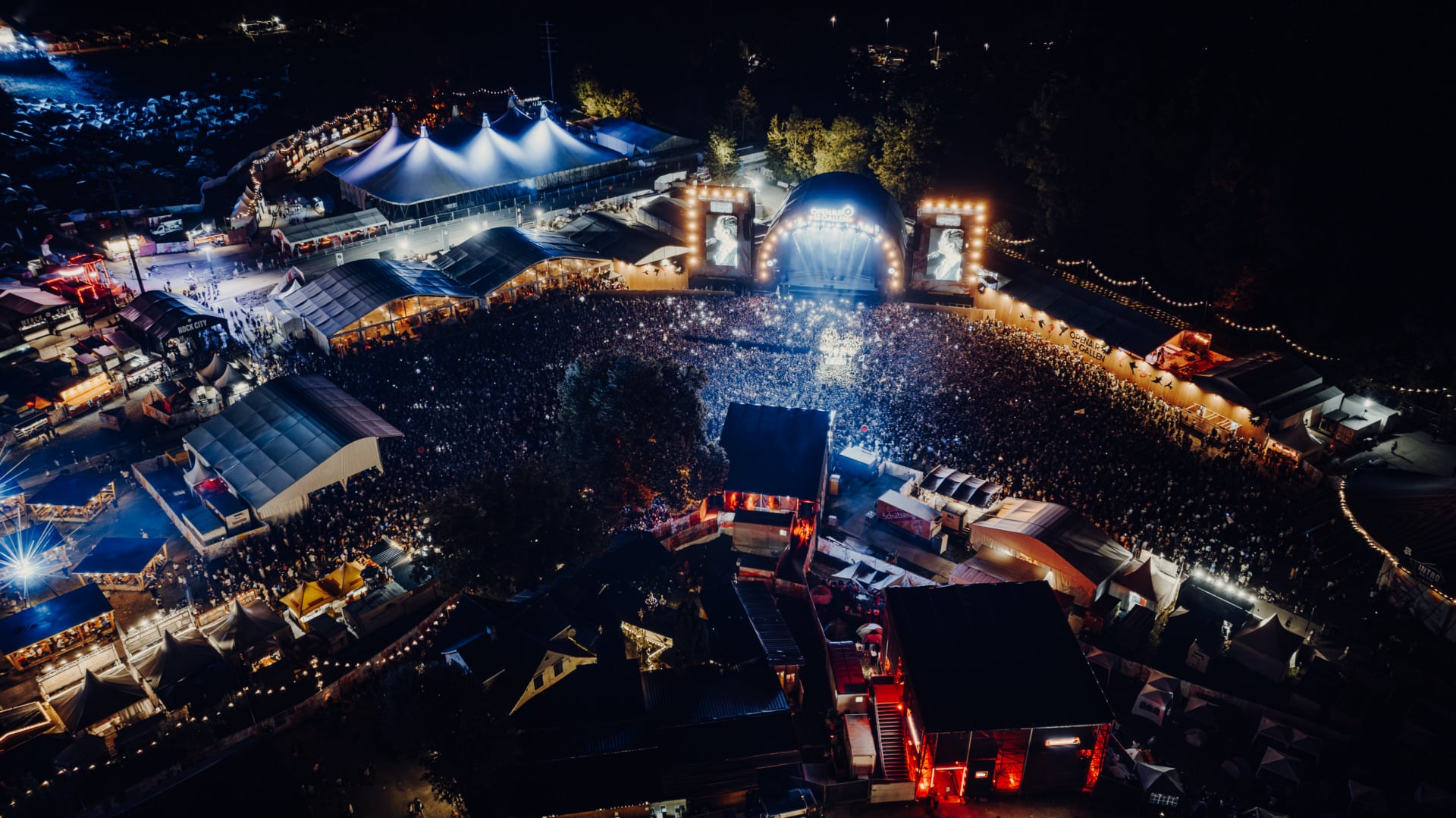
On the festival front – Gadget promotes OpenAir St.Gallen, Summerdays, Seaside, Stars In Town, ZKB Unique Moments, and Radar Festival for New Music – things are “shaping up very positively” as well, Wyss continues, “with strong sales and encouraging momentum across the board. One key dynamic is the importance of early and compelling line-up announcements, which significantly influence sales. At the same time, competition remains intense, so clear positioning and strong programming are more important than ever.”
The country’s largest festival, Paléo, which takes place in Nyon, July 21-26, is also on track, according to its artistic coordinator and Vice President Dany Hassenstein, who says “all tickets are sold and preparations are going well. Compared with last year, we must be increasingly careful not to reduce, or even lose, our margins. For festivals like ours, the economic viability is becoming increasingly challenging and fragile. Festivals are facing a constant rise in costs. At the same time, it will not be possible to keep passing these increases on to ticket prices indefinitely.”
He adds, “In recent years, we have seen audience interest shift away from festivals Ed Sheeran played two concerts at Stadion Letzigrund last August, and toward concerts by international super stars in stadiums. For an event like Paléo, the challenge is to remain attractive in the eyes of the public. This certainly means maintaining a strong identity and paying close attention to the overall experience offered to festivalgoers.” Another big challenge is the “growing pressure from administrative authorities, whether in environmental matters, land-use planning, health, or safety.” Hassenstein warns that “increasingly restrictive regulations are threatening the very conditions that make an event like Paléo possible.”
Paléo is at a crossroads, celebrating its 50th edition in 2027. Following the 2027 edition, founder and current festival director Daniel Rossellat intends to step back and hand over the festival’s operational leadership in a move aimed at guaranteeing the festival organization’s long-term continuity. “We have a unique opportunity, with the right content and the right communication, to build lasting connections with young audiences,” says Hassenstein, “that is exciting for us as a company, for our partners, and also for artists who can no longer reach younger audiences on their own.”
He also touched on another unique aspect of Switzerland, namely its four official languages, German, specifically Swiss German, French, Italian and Romansh, with the former two being the most popular. Hassenstein is originally from the German-speaking part of Switzerland and moved to the French-speaking part to work at the festival. “I felt Paléo was so exciting and different from anything I had ever experienced in the German-speaking part,” he says, “would it also work there? Probably not. The French-speaking cultural factor is a real asset to the Paléo community. A franchise in France would probably be more interesting…just saying.”
Vuignier sees the cultural difference as “a strong opportunity. It’s like benefiting of two different markets. If an act is strong in France, we’ll focus on Lausanne or Geneva. If Germany is stronger we’ll play Zurich.” TAKK-AB promotes more than 300 shows per year at grassroots venues, according to Vuignier, who says “that’s where we started, it’s the DNA of TAKK-AB. The demand can be very low for some of these shows, but we’ll keep on fighting. It’s worth the effort when we see acts like Tame Impala, who started playing 300 and 500-cap clubs in Lausanne and Zurich and are now selling out arenas.”
He therefore observes the closing of venues like the 1,800-capacity Komplex or the 1,500-capacity X-Tra in Zurich as ominous signs, especially because “we don’t see any project for new venues for now. We’ll have to work on options.”
One grassroots venue that’s been defying the odds for the past 50 years is Mühle Hunziken in Rubigen, a 550-cap. venue currently experiencing “a vibrant wave of enthusiasm and growth,” according to its CEO Chirgu Stuber, who elaborates: “Even though the capacity is limited, this legendary concert venue welcomes more than 100,000 visitors every year, with over 75% of shows selling out. The live calendar keeps getting denser, and bookings tend to happen earlier. Due to this positive momentum, we are now also operating two additional outdoor summer stages.”
Mühle Hunziken is proof that guaranteeing an excellent experience for the audience is the key to success irrespective of the size of business. “The overall experience and attention to detail have become just as important as the band performing on stage,” says Stuber, “and that is exactly what makes exceptional venues like Mühle Hunziken so appealing. Videos from inside often go viral around the world because the place is unlike anything else. Nowhere else can audiences experience artists as intimately as they can here, spread across three different levels. Furthermore, Mühle Hunziken is home to more than 10,000 whimsical objects, curious artefacts, and mysterious little treasures waiting to be discovered.”
According to Wyss, “The grassroots scene remains essential, but it is clearly under increasing pressure. In Zurich in particular, we have significantly fewer venues than we used to, especially in the club segment, which makes it harder for emerging artists to gain live experience.”
Gadget actively supports new talent through dedicated formats and platforms like the Intro Stage at OpenAir St. Gallen or the Radar Festival in Zurich. These kinds of formats are becoming more important as traditional grassroots structures decline. To maintain a healthy touring and festival industry, “it will be essential to continue investing in new talent. And in sustainable venue structures. This includes maintaining spaces for live music, creating new ones where necessary, and adapting to changing audience expectations. Long-term thinking will be key to ensuring cultural relevance,” says Wyss.
To ensure a healthy industry going forward, Musshafen believes it is “crucial that we remain curious. We cannot simply rest on the success of the past; we must be willing to explore new paths. Live entertainment thrives on emotion, courage, risk, and closeness to the audience. At the same time, the industry is becoming increasingly professional, technological, and economically demanding. Bringing these two worlds together will be key.”
Hassenstein feels like “a backlash is coming for all players who have lost focus on customer wellbeing and benefits,” and Stuber concludes, “when passion-driven venues like Mühle Hunziken are able to thrive, nurture niche scenes, support subcultures, and help develop emerging talent, the entire industry benefits. Music is built on passion and diversity — and some of the most genuine live moments still happen in small club shows.”
Subscribe to Pollstar HERE
_Originally reported by [Pollstar](https://news.pollstar.com/2026/06/25/between-big-business-booming-some-small-shows-struggling-annual-switzerland-focus-2026/)._
Comments
Loading comments…