
Chance the Rapper's "Coloring Book" Album Celebrates 10-Year Anniversary
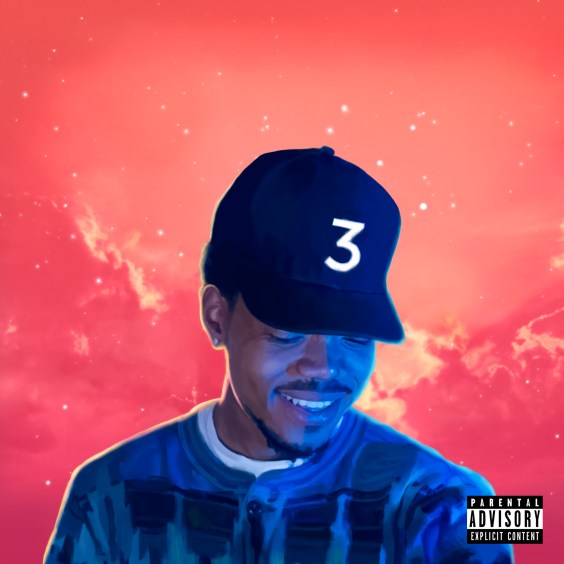
It has been 10 years since Chance the Rapper released his acclaimed album "Coloring Book," marking a decade since its debut.
12:00 PM EDT on May 12, 2026
Few phrases have ever accentuated the passage of time like “Chance The Rapper released Coloring Book 10 years ago today.” But it’s true: Chance The Rapper released Coloring Book 10 years ago today. A decade is a long time.
In 2016, the arrival of the young Chicago hip-hop phenom’s third mixtape was cause for celebration: the climax of a grand buildup, a coronation moment. The world went nuts for Chancellor Bennett, myself included. (He was on my #1 and #2 favorite songs of the year.) Critical acclaim poured in, but it wasn’t just music critics gassing Chance up. By the next year, this rapper without a record deal had infiltrated our most mainstream cultural institutions: cleaning up at the Grammys, guesting on The View , hosting Saturday Night Live . This guy felt like a fresh talent with a unique creative vision, a grassroots success story rooted in authentic community. His joy was irresistible, his rise inspirational. Maybe he could show the music industry a better way forward. There was no one else quite like him.
In hindsight, that enthusiasm feels misplaced. When his long-awaited, wedding-themed official debut album The Big Day flopped in 2019 and his essence was reduced to a meme , Chance’s reputation took such a resounding hit that I’m not sure he’ll ever fully recover from it. His fall-off was a retroactive contaminant, so profound that it called into question everything that came before. Quirks that once seemed charming were now obnoxious. The joy that had been contagious was now oppressive. Now the “3” hat seemed kind of fucked up . It took him more than half a decade to bounce back with last year’s Star Line , a solid album that repositioned him as a career artist with a cult following, miles away from the superstar spotlight he once enjoyed.
So, what happened here? Why were so many of us excited about Chance The Rapper a decade ago, and why do many of those same people now cringe at the memory? Was the hype ever justified? Were we collectively hallucinating, and then The Big Day jolted us out of our stupor? Or was the backlash an overcorrection? I had somehow convinced myself that Coloring Book was little more than “No Problem” and a bunch of filler, but revisiting the album this week, I was surprised at how many great songs I’d forgotten about, from the exultant, house-inflected “All Night” to the sentimental ballad “Same Drugs.” Chance’s loudest tendencies became the subject of parodies, but I’m now reminded of how good he could be in low-key, reflective mode, as on “Summer Friends” or “Juke Jam.”
I’m not here today to breathlessly regale you with tales of Chano’s heyday, but I do think there were legitimate reasons to be excited about him back then. Many of them are evident on Coloring Book right alongside the annoyances, sometimes tangled up with them. Below, find a few ideas about his appeal at the time.
As heard on 2013 breakthrough Acid Rap , Chance was a startlingly original talent. Gravitas and livewire cartoon energy seemed to be always chemically reacting within his smoky rasp, fighting for control of his muse like kids wrestling over a video game controller, combusting into melodic outbursts and fits of onomatopoeia. He used that voice to dole out harrowing reports from the streets of Chicago, tender tributes to familial love, druggy reveries, and relentless optimism in the face of life’s ceaseless problems. The backing tracks were largely produced by his local friends, and they coursed with bespoke Chicago energy, merging forward-thinking footwork production with classic flavors of blues, jazz, and gospel.
It was at a natural outgrowth of the post-Kanye sound that had been flourishing on rap blogs for years, one that brought that sound full circle by expressly rooting in Chicago rather than the internet. As if connecting the dots, Mr. West adopted Chance as a protege, weaving him into the futuristic gospel of his The Life Of Pablo opener “Ultralight Beam” and then popping up on Coloring Book ’s opening track “All We Got” at a time when his cachet remained high. “Kanye’s best prodigy,” Chance rapped at album’s end. “He ain't signed me, but he proud of me.” That “Ultralight Beam” feature set off sirens in my brain and sent my endorphins rushing. Chance’s momentum had been building. Now, with a show-stealing guest spot on a high-profile album, he had arrived and was teasing a new project that would surely justify the excitement. Maybe you were enthralled, or maybe Chance drove you nuts, but you couldn’t ignore him. He had the juice.
Many understandably now look back on “ Obamacore ” through a cynical lens — partially because the hopeful visions degraded into unfulfilled promises, bad-faith discourse, and the myriad horrors of our present dystopia, and partially because the era’s rampant positivity was manifested in such cloying ways. Chance was certainly in step with all that, as a rewatch of the ultra-twee “Sunday Candy” video will remind you. But Coloring Book also arrived a few years into the Black Lives Matter movement, when the Black joy embodied by Chance and his cohort struck many of us as a necessary antidote to so much injustice, before the phrase started to feel like a focus-grouped slogan foisted upon self-satisfied liberals.
The joy expressed on Coloring Book was specifically Christian, informed by longstanding traditions of the Black church. Any time someone conjures the kind of religious uplift heard here, a segment of listeners will reject it as performative pageantry, and a song like “Blessings,” with its theologically suspect refrain of “When the praises go up, the blessings come down,” can indeed be hokey and grating when you’re not in the mood. Even in the moment, many who were drawn in by Acid Rap felt like they’d been hoodwinked. (As a Christian myself, albeit one from outside the Black church tradition, I’m split on it; “I might give Satan a swirlie” is corny, but “Type of worship make Jesus come back a day early” is funny in a good way.) Ultimately, whether his religious euphoria connected on a wide scale depended on the delivery system. On a song as dynamic as “Angels,” where those old and new sonic traditions collided in boisterous fashion, Chance’s shtick hit like a bolt of lightning.
When Chance broke through, there was a lot of media excitement about his intricately connected young creative community. As a teenager, he’d honed his craft in an after-school program through the Chicago Public Library alongside fellow emcees like Vic Mensa, Mick Jenkins, and Saba. Mensa had been part of the teenage band Kids These Days alongside Nico Segal, the eventual leader of Chance’s band the Social Experiment, who back then was going by the unfortunate alias Donnie Trumpet. Kids These Days featured future Chicago indie and experimental scene staples like Macie Stewart and Liam Kazar. Chance, Mensa, and Segal were also part of the collective Savemoney, whose membership included rappers like Joey Purp and Towkio. Vibrant figures like Noname and Jamila Woods had entered the fold too.
There was so much exciting music coming out of that interconnected scene, with artists popping up on each other’s work all the time. The features on Coloring Book tell the tale. Chance was ascendant, so the project was flooded with superstars like Lil Wayne, Future, Young Thug, and even Justin Bieber. But names from his Chicago scene were mixed in right alongside the A-listers: Saba, Jamila Woods, Noname, Towkio. Nowadays most of those artists are out on their own paths, not unlike the Odd Future artists who preceded them in blog fame. But back then, it seemed like a movement worthy of excitement and attention, and Chance was out front leading the way, giving these talents their biggest platform.
In the ‘90s, one surefire way to get snobby rock fans to engage with hip-hop was to deploy a live band. I remember one late ‘90s CMJ college radio chart where the only hip-hop acts amongst all the indie rockers were DJ Shadow and the Roots, the hip-hop band who famously branded themselves as an authentic alternative to glitzy, commercialized ‘90s rap. The value system embraced by many rap skeptics, which rated live musicians over programmed beats, came to be broadly known as rockism within nerdy music-critic discourse. Chance’s backing band the Social Experiment called back to that tradition, though by the time they blew up, live-band hip-hop had fallen out of fashion as hipsters and tastemakers reacted against old concepts of authenticity.
For a variety of reasons covered in my book — among them a digital music revolution that jumbled many genres together on iPods and social networks and allowed artists outside the boundaries of traditional radio formats to thrive; an explosion of festivals that brought that eclectic mix of music into physical space; and the rise of poptimism, a critical philosophy that suggested all genres deserve a fair shake — many alt-rock listeners who’d once looked down on mainstream pop and rap started taking the genres a lot more seriously in the 21st century.
When Chance came into the picture, deep into rap’s blog era, the indie cultural apparatus was gravitating toward rap and R&B artists like Kanye, Drake, Kendrick, Beyoncé, Solange, Frank Ocean, Future, and Run The Jewels. There was a pipeline in place for artists in these traditionally Black genres to cross over to a predominantly white listener base. This created an awkward dynamic for some artists; recall Vince Staples rapping, “All these white folks chanting when I asked 'em where my n****s at?” But if navigated carefully, it could help a fan base grow into a large, diverse coalition.
That’s what happened with Chance for a while. He was pulling in fans from wildly different cultural backgrounds, but also audiences with vastly different value systems. Chicago rap had already been blowing up via drill music, the blunt and nihilistic subgenre that was inextricable from the city’s gang life. Meanwhile, here were these positivity-pumping young folks investing in community development. Chance and his friends always resisted efforts to pit their community against the drill scene — he made it a point to shout out Chief Keef on Acid Rap — but in terms of public perception, it was usually a losing battle. For some music fans, the drill scene represented everything bad about rap, and Chance’s community were avatars for everything good about it. Essentially, he was benefiting from poptimism and rockism simultaneously.
Another aspect of Chance’s rise that made idealistic music fans’ spider sense tingle was his steadfast refusal to sign a record deal. “If one more label try to stop me/ There’s gon’ be some dread-head n****s in their lobby,” he enthused on the jubilant, menacing “No Problem,” a song that complicated any efforts to separate him from the rougher corners of Chicago. Chance came of age at a time when rappers often built buzz with a series of free-download mixtapes — the kind where Lil Wayne and others would rap their own verses over existing hits, but also the kind that were essentially unofficial albums full of original beats. Those same emcees often fell off creatively upon signing to a label and releasing commercially available albums.
Chance seemed determined to remain in his mixtape era indefinitely and to make a living outside the often predatory label system. “Am I the only one who still care about mixtapes?” he wondered on his collaboration with Young Thug and Lil Yachty, two other artists forged in the fires of Datpiff. This made Chance an inspirational story for people who dreamed of DIY pathways to sustainable stardom. Though he wasn’t exactly operating in the underground anymore, maybe he could show the world how to scale up ethically?
But the streaming era was dawning, and the dynamics of the rap business were changing. Drake’s If Youre Reading This Its Too Late was branded as a mixtape, but he released it directly to streamin
_Originally reported by [Stereogum](https://stereogum.com/2498609/coloring-book-turns-10/reviews/the-anniversary/)._
Comments
Loading comments…