
Joie Manda on Leaving the Majors to Launch Encore Recordings and Platinum Grammar
After building his reputation at Interscope, Joie Manda departed the major label system to launch his own ventures, Encore Recordings and Platinum Grammar, where he continues to develop groundbreaking artists without investor interference.
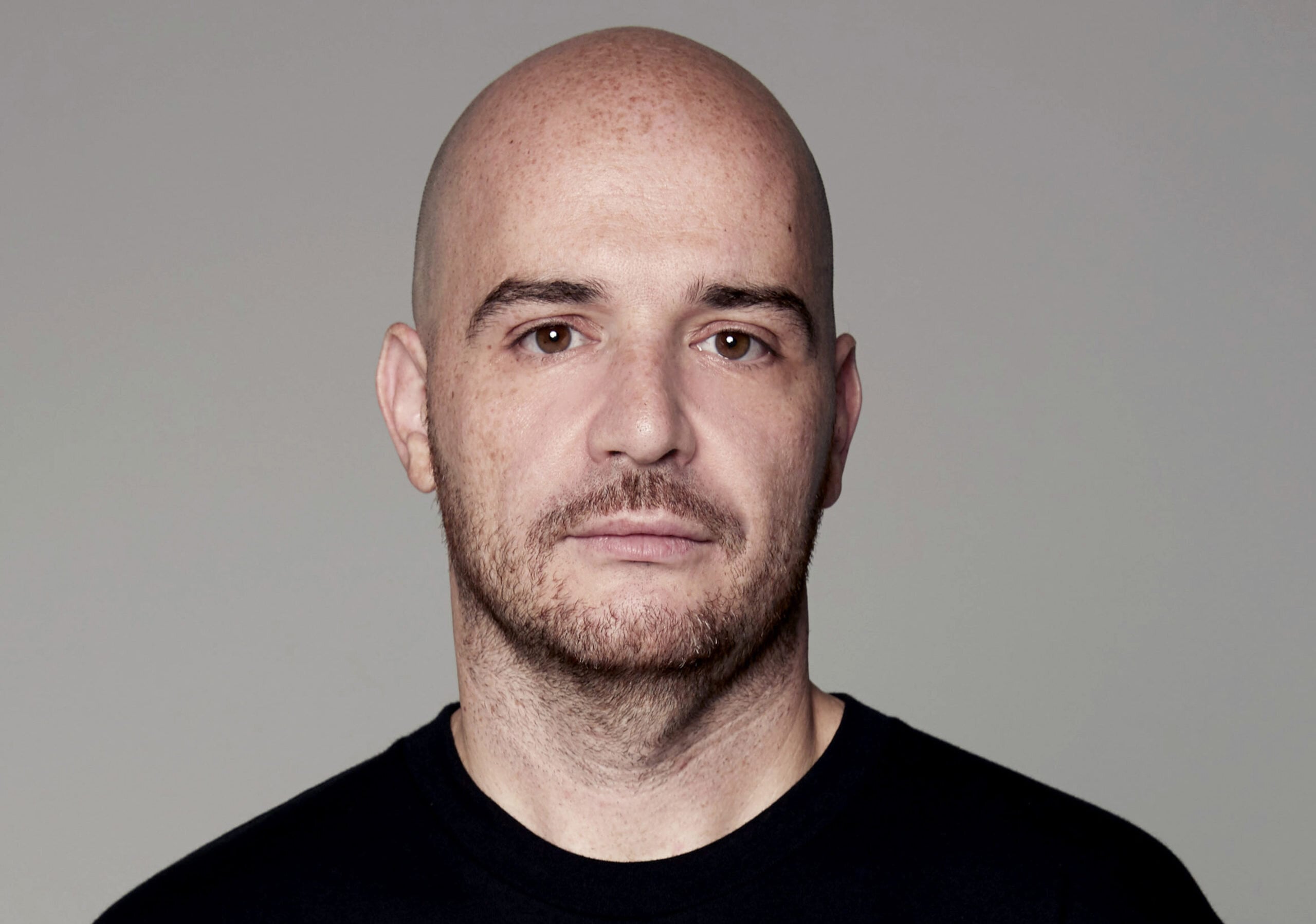
‘I didn’t want to jump from the majors onto a hamster wheel for investors and have them in my business every day.’
June 15, 2026 By Mark Sutherland
Despite having two winners on his roster ( D.Phelps and DK The Punisher ), Joie Manda did not attend the Grammys this year.
His daughter preferred to grab some sushi and watch on TV, so he joined her and gave his tickets to one of his artists, up-and-coming R&B star Girlfriend .
“I wanted her to be inspired,” he says. “You’ve got to see it to know that it can happen. It’s still early days for her, but I said, ‘You’ve got to see what this could be, if you keep working at it and we have some luck…'”
But then, in a storied career that has taken him from the club (he started out as a promoter at legendary New York nightspot The Palladium ) to the boardroom, Manda has always worked hard – and usually made his own luck, taking plenty of artists to the top in the process.
He first moved into the label world via his production work with DJ Funkmaster Flex (“Just being able to walk into those buildings freely, and them wanting me to come in – that was beyond my wildest dreams as a kid,” he marvels) and went on to serve in senior positions across the major label landscape.
At Asylum and Warner Bros , he worked under Lyor Cohen , signing a host of big rap artists and labels before deciding to walk during what he today calls “a tough contract renegotiation with Lyor”.
Lucian Grainge and Barry Weiss then brought him in to become the first President of Def Jam since Jay-Z . After a single year of success with 2 Chainz , Nas and Frank Ocean , personal reasons meant he had to relocate to the West Coast and he transferred to Interscope as Executive Vice-President (“Don’t tell anyone in New York I said this, but this is an easier way of life,” he quips).
Interscope scaled the heights during his tenure, as he helped to bring in the likes of Playboi Carti , J Cole and Juice WRLD .
And, now, after spending much of his career at the majors, Manda is forging his own path. Having left Interscope in 2020, he set up a label, Encore Recordings , in 2022, followed by his first foray into music publishing, Platinum Grammar Publishing .
And four years in, the hits are starting to flow. At the Grammys, PGP writer-producers were behind three gongs: D.Phelps saw his work on Leon Thomas ‘ Mutt album honored as Best R&B Album, while Kehlani ‘s mega-smash Folded , co-written and co-produced by DK The Punisher, picked up Best R&B Performance and Best R&B Song.
Encore and Platinum Grammar are entirely self-owned by Manda, although both can draw on the firepower of The Orchard / Sony Music , a ‘strategic partnership’ that comes with the added bonus of one-to-one chats with Rob Stringer for Manda. (“Rob loves to listen to music and talk about artists and records – that guy has got a lot of energy, man, he still loves this!”)
The arrangement suits Manda’s global approach – his rosters include the likes of Puerto Rican rap sensation Dei V and South Africa-based amapiano star Uncle Waffles .
It also justifies Manda’s brave decision to walk away from the mega-successful Interscope empire – where he also helped broker landmark JVs with the likes of Dreamville Records , LVRN Records , CMG and Todd Moscowitz ‘s Alamo Records – and go it alone.
“Brave, stupid, who knows?” he laughs. “It was difficult to make the decision – John [ Janick , Interscope CEO] was incredible to work with every day. But it was, ‘If not now, when?’ I owed it to myself to do this.”
And that’s why the notoriously press shy exec (“I’m not a big self-promoter,” he warns) has granted MBW a rare audience in his LA office, ready to talk the differences between indies and majors, streaming and the current state of hip-hop…
How did it feel to see your clients win at the GRAMMYS?
We know these songs are great, the world knows they’re great, but them getting celebrated is awesome. I’m super-happy for them.
We have some good hits, for sure. And this is just the beginning for both those guys. They’re both pretty prolific, and they’re in great rooms.
Phelps is working on the next Leon [Thomas] album and, because of the success of Folded , everyone’s trying to get in with DK, so we’re managing his diary closely.
What does that success tell you about where your companies are at, four years in?
I’m exactly where I’m supposed to be. Everyone I talk to is like, ‘Do you miss Interscope?’ And of course I miss Interscope, I love the staff and the artists, what we did there was great and what they’re continuing to do is incredible.
> “Of course I miss Interscope, but boutique is what I always wanted to do.”
But boutique is what I always wanted to do since I was a teenager buying records and paying attention to the piece of vinyl and the logo on it, whether it was Def Jam, Loud or Jive… Those brands were small, had a point of view and meant something to me. That was always what I wanted to do.
What’s the big difference between running an indie, compared to a major – apart from the expense account?
[Laughs] I don’t think about that much! The advantage of being indie is you have more time; you have a smaller roster, so you can focus and really talk to people.
When you’re running a big company, you have more HR issues to deal with, more back office, more dealing with corporate, more budgeting, more financial projections… Just more! The positive of the big company was a bigger team. It’s just a different animal.
Presumably you could have got funding from elsewhere, why did you go it alone?
I didn’t want to jump from the majors, onto a hamster wheel for investors and have them in my business every day.
I’ve had some success and some good luck, so I figured I’m fine with starting off without [issuing] the press release [saying] that I raised a few hundred million dollars. That doesn’t mean much to me.
Initially Encore did its own distribution…
I was a proud member of Merlin , using FUGA as a pipe to release my records. I had direct deals with some of the bigger DSPs; that was great at first, but the best part of it was learning. If Interscope was a restaurant, I didn’t spend much time in the kitchen, if you know what I mean.
I didn’t understand it as well as I’d always wanted to and should have. I probably now know too much about distribution and how the DSPs work, but it’s been really healthy.
We did a strategic partnership with Sony at the beginning of 2025 and that’s been really helpful, to plug into some of their resources around the world. To me, it’s important to be an indie, but it’s also important to make sure my artists aren’t disadvantaged in any way and they have the muscle that they need at the right times.
How do Encore and Platinum Grammar work together?
We don’t have much crossover. The publishing company publishes two or three artists on Encore, so they operate really separately. I don’t see them working much closer. When I started the label and then a publishing company, I wanted to make sure it was a different name, identity and brand, with a different staff, so the artists didn’t feel like, ‘OK, I’m signing a record deal and my publishing’s going to be an add-on for you’.
I wanted to make sure artists understood that I respect them as a writer or producer and, on the publishing side, they were going to have a different staff that service them, a completely different contract and deal. I’ve kept them apart for that reason. I didn’t want them to feel like we’re just trying to go into a different pocket of theirs.
So, what do you look for in a signing?
Stuff that’s different, that stands out, that gives me a strong reaction. Now, more than ever, there’s just so much [music], and so much of it doesn’t give you a reaction or make you feel any different.
Every once in a while, I hear something that’s out of the box and has a point of view. I meet the person, and if they have some vision of what they want to do, that’s who we end up signing, whether for publishing or records.
Is the plan to keep the rosters pretty small?
Yeah, I want to keep it boutique. When I was at the majors, we’d go into this room once a year and they’d say, ‘How many artists are you going to sign?’ We’d back into a number, but I’d be like, ‘You need to talk to a higher power than me, because I don’t know how many special artists I’m going to bump into this year!’
That’s the beauty of the music business or any creative business: you have no idea when someone’s going to walk into your office; when somebody’s going to call you and say, ‘You need to listen to this’; or when your research department is going to come in and say, ‘Hey, check this out, this is incredible’.
So, we keep the roster small, because I want to make sure we’re focused on development.
Are you confident you can break artists as big in the indie world as you did at the majors?
Yes. Maybe this just helps me sleep at night, but I feel like great always cuts through. I may be an old music industry fool, but I still believe that.
> “I feel like great always cuts through. I may be an old music industry fool, but I believe that.”
It really is harder than ever to cut through the noise, but we’re committed to doing that. No artist road map has ever been the same, but now you really have to be in it with the artist every day.
We’re all just figuring it out, indies and majors: we wake up every day, and the playbook is completely different. But being smaller and nimbler is definitely an advantage in this market.
You’ve worked with some of the greatest hip-hop artists of all time. What do you make of the current state of the genre?
Hip-hop’s in a weird place creatively. The Playboi Carti/ Opium and Yeat pocket, not to compare them, but that seems to be the most exciting to the kids right now. And UK rap is really exciting them right now in America.
On the publishing side, we have great producers that do a bunch of the Carti/ Ken Carson / Destroy Lonely stuff, so we’ve been focused on that. That’s the sound right now. And obviously Kendrick and J Cole are still crushing it but, yeah, street rap feels a little quiet at the moment.
How hard is it to be an artist right now?
Very hard. You can get music out really fast, but that’s not always the best thing. We’re seeing a lot of artists who aren’t developing naturally; they’re getting rushed because they’re able to put out music so flippantly, and that’s hurting the quality of music.
The ones that are more deliberate, get teams around them and plan, strategize and take some time, that’s the best recipe.
Does streaming pay artists and songwriters as well as it should?
No, I always want artists and songwriters to be paid more. But I’d probably give you that answer no matter what they were getting paid!
It’s really hard seeing all these stories about middle class artists [struggling]. I want artists who are passionate and really take it seriously, I want them to get paid more than people who are putting up rain sounds and making records just through AI.
But there’s not a simple answer – there are real artists, writers and producers incorporating AI as a tool, and that’s a different bucket to somebody that just goes on one of the music making apps and says, ‘Make me a song that sounds like Zach Bryan if Ryan Tedder wrote it’. That’s different to somebody really talented that uses AI to help them with an instrument.
I wish that it was differentiated, like if that music was on a different part of the DSP, in a different color, or some different designation. I don’t think it should be classified, looked at or in the same place [as real music].
You’ve had a lot of success with joint ventures and label partnerships: do you always know when those are going to work out, or is there still an element of risk?
There’s always an element of a gamble, but I believed. I’ve had a lot of success with partners – and when I say I, it’s always the tea
_Originally reported by [Music Business Worldwide](https://www.musicbusinessworldwide.com/joie-manda-i-didnt-want-to-jump-from-the-majors-onto-a-hamster-wheel-for-investors-and-have-them-in-my-business-every-day/)._
This story is summarized from coverage by Music Business Worldwide.
Read full story →Comments
Loading comments…