
LVRN CEO Tunde Balogun on honesty, 30B streams, and a $100M+ valuation
Tunde Balogun, CEO of LVRN (Love Renaissance), details the company's journey from Atlanta college parties to over 30 billion streams and a valuation exceeding $100 million.
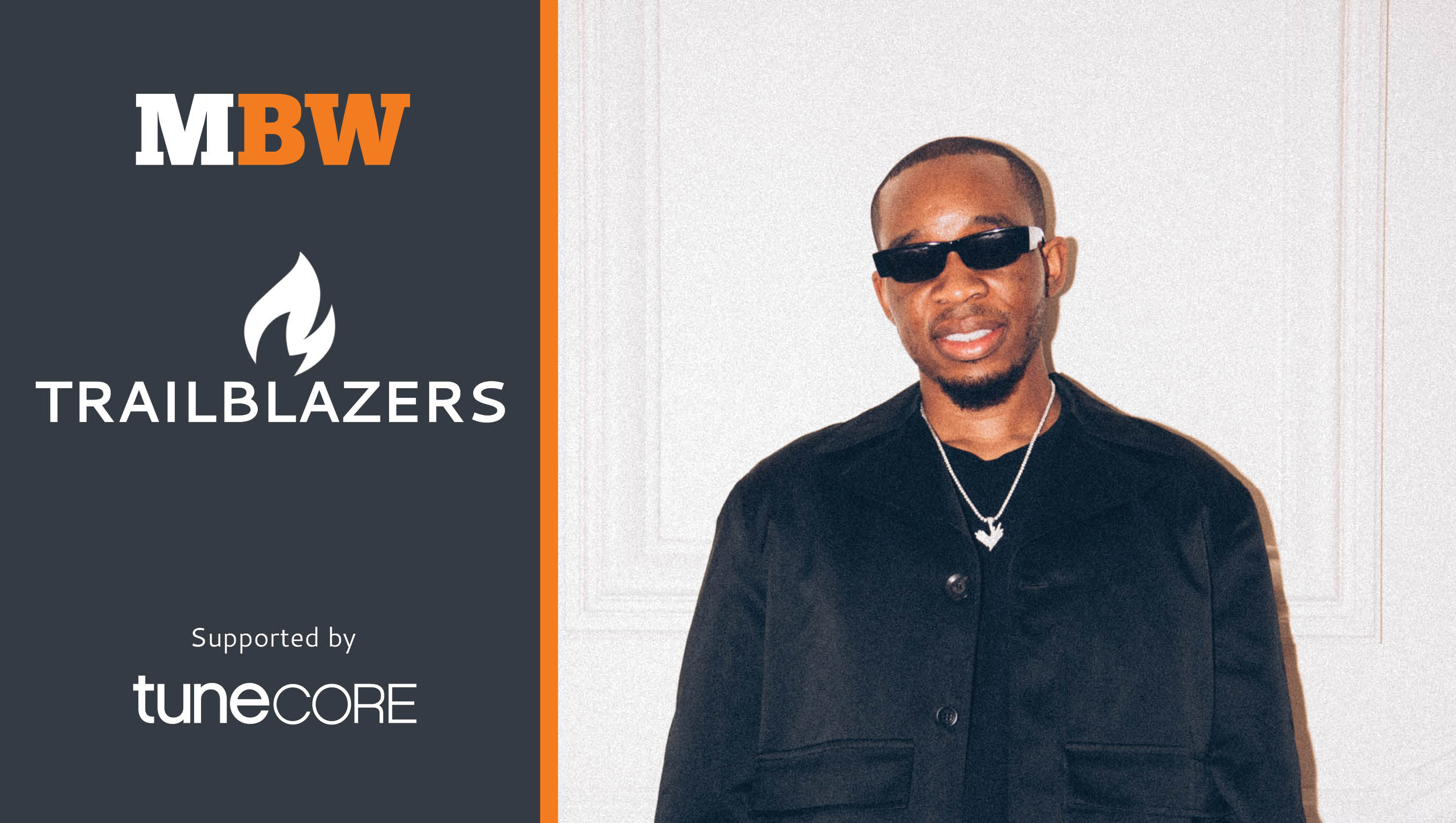
‘People don’t just want hits. They want honesty.’
June 4, 2026 By Murray Stassen
Trailblazers is an MBW interview series that turns the spotlight on music entrepreneurs with the potential to become the global business power players of tomorrow. This time, we meet Tunde Balogun, CEO of LVRN (Love Renaissance). Trailblazers is supported by TuneCore .
Tunde Balogun was in a hotel room in Lagos when he got the call.
It was December 26, 2021, and on the other end was Matt Pincus , the veteran music executive whose investment firm MUSIC was looking for its next bet.
Balogun’s company, Atlanta’s LVRN (Love Renaissance) , wasn’t actively looking for a backer, he tells us, noting that Pincus had sought him out. But by the time their two-hour conversation ended, the groundwork for an investment deal valuing LVRN at over $100 million had been laid.
“He was very impressed with what we’d built with no outside money,” Balogun recalls. “He was like, ‘I really like the talent you guys signed, but you are very special, and you are going to go far, and I would love to support you in your journey.'”
That deal, completed in 2022, marked a turning point for LVRN, the influential Atlanta-based indie label, management, and services company Balogun co-founded with Sean Famoso McNichol , Justice Baiden , Junia Abaidoo , and Carlon Ramong . The company’s flagship roster, including Summer Walker and 6lack , has amassed over 30 billion streams and multiple platinum certifications.
LVRN has since exited a joint venture with Interscope Records , though the two remain partners on Summer Walker and 6lack, and signed a distribution deal with Sony Music -owned powerhouse The Orchard .
But it’s where the company is heading that explains why Balogun – the son of Nigerian immigrants who grew up on Fela Kuti and King Sunny Adé – was in Lagos in the first place.
> “We’d had an amazing run with Interscope, and we were ready to try it out on our own.”
LVRN now has three full-time team members in Africa, had the biggest song in South Africa last year, with Isaka (6am) by Ciza , and is building a roster Balogun believes can compete with the majors. “I’d say they are competing with LVRN,” he corrects us.
It’s a far cry from LVRN’s origins as a party-promoting outfit in early-2010s Atlanta, when Balogun and McNichol were rival college promoters throwing events for students across Georgia State, Morehouse, and Spelman.
“We had fake beef,” Balogun laughs. “When we got to college, we were like, ‘Let’s just link up and throw a party together.'”
What followed was a promotion company called Team Millionaires , a stint at Ludacris’s DTP label (which Balogun calls “DTP University”), and eventually the formation of LVRN, a company built on R&B that has since expanded its ambitions far beyond it.
“The future of music isn’t about sounding bigger, it’s about meaning more,” says Balogun, on his thoughts on what comes next in the music business.
“We’ve reached a point where people don’t just want hits. They want honesty. They want to hear themselves in the music.”
Here, Balogun discusses LVRN’s origin story, the company’s Africa strategy, partnership with The Orchard — and why he believes the music industry is entering its most exciting era yet…
How did you get your start in music?
Growing up in Atlanta in the late 1990s, early 2000s, you had So So Def, you had DTP , you had LaFace . Music was also a big staple in my Nigerian household — Fela Kuti , King Sunny Adé , my parents’ favorite music from back home. I was surrounded by my older cousins playing southern hip-hop, and then seeing it grow in front of me really put an early image into my mind.
In middle school and high school, I started heading downtown, interning for Real Street Promotions by Tyrell Lewis . I was passing out CDs from Young Jeezy and folks like that. I started DJing and throwing parties.
> “I threw my first party in my mom’s basement, and my mom actually helped me with it — she was at the door helping me collect money, and I was DJing, and my friends were selling Capri Suns and sodas.”
I threw my first party in my mom’s basement, and my mom actually helped me with it — she was at the door helping me collect money, and I was DJing, and my friends were selling Capri Suns and sodas.
The only thing was, my parents said, finish school, and then you can go do whatever you need to do.
In my early 20s, I got an opportunity to intern at DTP with Ludacris, Chaka Zulu , and Jeff Dixon . From there, that pretty much officially started my career in music.
What was that experience like?
It was phenomenal. I would call it DTP University. Anybody who was a part of that run knows that was a school — you learned so much. I was able to work on everything from the LudaDay Weekend to touring and marketing plans. They really had us in every meeting possible.
I was able to be exposed early on to people I usually wouldn’t run into or have access to. They felt it was important to pass down everything they’d learned to the younger generation. It was a huge stepping stone.
My other co-founder, Sean, and I ran the publishing company [at DTP] for about two years, learned about music publishing, signed a bunch of producers and songwriters, and then went on to do our own thing with LVRN shortly thereafter.
How did you meet your other co-founders?
Sean and I met in high school. We went to opposing high schools, and because we were both party promoters, we had fake beef. We were rivals. Then, when we got to college, we were like, ‘Let’s just link up and throw a party together.’
So we started a promotion company called Team Millionaires. We threw parties for all of the college students in downtown Atlanta — Georgia State, the AUC, Clark Atlanta, Morehouse, and Spelman. We became really popular doing that. I was still DJing.
We booked a lot of artists, so we knew each other, but we didn’t know each other in the form of them wanting to work in music.
So we met up and were like, ‘Oh, wow, there’s so much synergy here. Let’s be partners.’ It was so weird how fast it happened. They had already had an artist they were developing, Raury . We hopped in and became partners with them. That was around 2013, and the five of us have been together since.
My current partners, Justice, Junior, and Carlon, actually already had LVRN as a company. Me and Sean had something else — we were further along in our careers, we had some producers and songwriters, we [were working with] an artist who was already signed to Atlantic Records .
One of our mutual friends was like, ‘Yo, Sean, Tunde, you guys need to meet Carlon, Junior, and Justice.’ We already had great relationships with a bunch of different people.
Atlanta is so central to LVRN’s identity. Your headquarters is there. Would you ever consider moving to LA or New York?
Here’s a little secret: I was actually stationed in LA — well, part-time LA, part-time Atlanta — from about 2017 until COVID. That was a year after we did our JV with Interscope, and we knew we needed to be close to our JV partner because we were still pretty new in the industry. We went and did some real time in Los Angeles. It was great. The company grew substantially. We made some great strides.
We bought a building in LA mid-COVID because we were going to open a Los Angeles office. But then I took a trip back to Atlanta and was like, ‘Man, Atlanta has something I’ve been missing. I miss home.’ And I wasn’t the only one feeling that way. We were at dinner and somebody said, ‘Man, I really enjoy just being home.’ I said, ‘Me too. By the way, guys, I’m moving back.’ And they were all like, ‘So are we.’
> “Being in Atlanta makes us very, very special. This is where we grew up. We know the way music and culture flow here.”
About six months after that, we tasked our real estate agent with finding us a building in Atlanta. We found our dream building and decided not to open the LA office. That building [in LA] is still sitting there empty, because we’re focusing here in Atlanta.
Being in Atlanta makes us very, very special. This is where we grew up. We know the way music and culture flow here. And because we’re so internationally focused now, Delta Airlines, being one of the biggest airlines in the world, with direct flights to anywhere in the world from Atlanta, makes everything a lot easier. Time-zone-wise, we’re able to communicate with the rest of the world a lot easier than if we were in Los Angeles.
When did Africa become such a serious strategic priority for LVRN?
Probably right after COVID. I’m Nigerian. All of us are first-generation. I’m Nigerian, Junior and Justice are Ghanaian, Carlon is Trini, Sean is Jamaican. We’ve always had an international mindset.
But we first started off in R&B, and I was always trying to figure out how we were going to tap in internationally through culture. It had to be intentional — it couldn’t just be us trying to catch a break or a check.
During COVID, I discovered amapiano, and I was like, ‘Wow, what is this?’ I’ve always been into house music, but this was something different. I did my research and saw the history behind it.
> “I am a huge investor in African dance, African electronic, black dance music — anything from the continent that has that tone and tempo.”
I saw it as an exciting entry point for us, because South Africa was a newer market compared to Nigeria. It was a full culture shock for me, really getting down there and understanding that SA is pretty much the home of dance music for Africa.
At the same time, we also got our investment from Matt Pincus, and it was important for us to diversify. We were really heavily in R&B. We do best at things that resonate with us, and [African dance music] resonated with me and the rest of the team.
I am a huge investor in African dance, African electronic, black dance music — anything from the continent that has that tone and tempo. I’m investing heavily in DJs and producers on the continent. I see a huge future for them. Right now, you see so many South African DJs, East African, West African, getting booked in Europe and America.
Do you have full-time team members in Africa?
Yeah, we have three people who cover the continent. I’m in South Africa pretty much every six weeks myself. We’re very hands-on on the ground. Everybody knows us.
The first year we spent there, we didn’t really do much business. We were trying to gain trust. A lot of music companies go places and just start to spend money. But having the trust of the people to actually do business with you will take you a lot further.
Tell me about the Matt Pincus investment. How did that conversation come about?
Matt approached us. We actually weren’t seeking investment; that wasn’t even at the top of mind. He sought us out via an attorney, Jordan Bromley , with whom we’d done some business in the past.
Jordan always spoke very highly of us. Matt asked him, ‘Who are some investable companies?’ He was like, ‘I think you should check out this company LVRN.’
He came and visited our office that January to meet the rest of the partners and me. He was very impressed with what we’d built with no outside investment. The only money we ever had was the money we reinvested from our JV with Interscope, because we owned our company 100%.
The timing was right. We’d had an amazing run with Interscope, and we were ready to try it out on our own. We’re still partners with them on Summer Walker and on 6lack, but everything else, we are fully independent now with Matt’s investment.
What made The Orchard an appealing distribution partner?
When we first went independent, we were working with different distributors, and my team came to me and said, ‘Tunde, this is not going to work.’ We were having to deal with five different teams every week. Our focus was growth, not doing a bunch of deals with different distributors.
I’d seen what [The Orchard] did with Rimas and Bad Bunn
_Originally reported by [Music Business Worldwide](https://www.musicbusinessworldwide.com/people-dont-just-want-hits-they-want-honesty/)._
This story is summarized from coverage by Music Business Worldwide.
Read full story →Comments
Loading comments…