
The Alternative Number Ones: The Wallflowers’ "One Headlight"
This post from Stereogum explores The Wallflowers' "One Headlight" as part of "The Alternative Number Ones" series.
8:24 AM EDT on June 15, 2026
In The Alternative Number Ones, I’m reviewing every #1 single in the history of the Billboard Modern Rock Tracks/Alternative Songs, starting with the moment that the chart launched in 1988. This column is a companion piece to The Number Ones . The column is now biweekly, alternating with The Number Ones on Mondays.
Bob Dylan had a pretty good year in 1997. In June, he was hospitalized for a heart condition, but he made a full recovery. Can a near-death experience be part of a good year? I'm going to say that it can, since it's 29 years later and he's still on the road. In September, Dylan performed for Pope John Paul II and a few hundred thousand other people in Italy. Three days later, he released Time Out Of Mind , a beautifully bleak comeback album that probably still stands as his greatest late-career masterpiece. Time Out Of Mind won the Pazz & Jop poll and the Album Of The Year Grammy, two distinctions that don't often align. Also, somewhere in there, Dylan's son became a rock star.
Here's a discussion question: Why did Jakob Dylan get alternative rock airplay but not Bob Dylan? One might argue that the entire idea of alternative rock, the concept that the overdriven guitar music sold to teenagers could be a vehicle for artistic and subversive expression that butted up against mainstream culture, started with Bob Dylan. Even if Dylan's '60s heyday happened long before anyone coined the term "alternative rock," he's inscribed into the DNA of everyone who ever attempted to make the stuff. I hear a ton of Dylan, for instance, just in the way that Lou Reed delivered his lines even from the very beginning of the Velvet Underground, and Reed has been in this column a couple of times. Not Dylan, though — Bob Dylan, I mean.
This is a column about Jakob Dylan, but I'm just going to call him "Jakob." Sorry. I'm a rock critic, and when rock critics use the word "Dylan," we're invariably referring to one person. I have never met Jakob Dylan, and it's unprofessional to call to someone by his first name like that unless you're close friends. I just don't want anyone to get confused and think that I'm talking about Luke Perry's character from Beverly Hills 90210 .
Anyway. Bob Dylan has never had a song that appeared on Billboard 's Modern Rock chart — not ever, not once. It's likely that someone has charted with a Dylan cover at one point or another, and I'm sure someone in the comments section will be able to cite examples. Dylan was already an established, foundational figure when Billboard established the Modern Rock chart in 1988, and he's been actively recording for its entire history. Lots of Dylan's music in that stretch has gotten great reviews, and plenty of it would've worked in the alt-rock context of its day. But Dylan was a figure of the baby boomer pantheon at a time when alt-rock was thought to be a reaction against all that, so maybe that's why the stations never played him. They never played Neil Young, either.
Jakob Dylan, though? Those stations played the hell out of Jungle Boy Jakob Dylan. (The "Jungle Boy" thing is a clumsy half-joke about both 90210 and pro wrestling, and it's both deep-cut nerdy and entirely nonsensical, but I refuse to cut it. Just give me this one.) Jakob, son of Bob, first started putting out music with his band the Wallflowers during the early-'90s grunge explosion, which he later cited as one of the reasons that the first Wallflowers album never took off. But when he came back a few years later with a new label deal and a different version of the Wallflowers, things shifted.
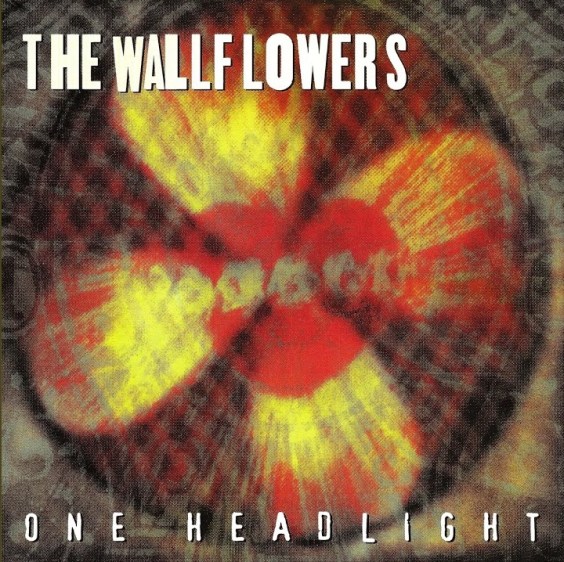
The Wallflowers released their 1996 album Bringing Down The Horse into a moment when vaguely jammy acoustic-guitar dude-bro acts like Counting Crows and the Dave Matthews Band were all over Modern Rock radio. It was the exact right time for a record like that. Also, Jakob Dylan was (and frankly still is) extremely hot, which certainly didn't hurt the band's appeal. Jakob didn't like to talk about his family, but his last name was an obvious talking point. (It is his last name, too. Robert Zimmerman legally changed his name to Bob Dylan in 1962, seven years before Jakob's birth, so Jakob Dylan was born Jakob Dylan.) Most importantly, though, Jakob had "One Headlight," a song that has served as an inescapable car-radio singalong for entire generations. That was enough to make Jakob Dylan, however temporarily, into a rock star. I bet Bob Dylan was tickled. I hope he was tickled, anyway. He'll never tell.
Funny thing about Jakob Dylan: He tried so hard to get people to talk about him as something other than Bob Dylan's son, and he had huge anxiety about his own songs reflecting or referencing the stuff that his father had already made. In 2000, Jakob told Rolling Stone , a magazine that was at least partially named after one of his father's songs, "I used to spend time censoring my stuff, grading it for references — get out the songbook to make sure he hadn’t used the words dump truck before." (That Rolling Stone piece was one of the first where Jakob felt comfortable talking publicly about his father in any capacity. Also, feel free to croak out the phrase dump truck in a Bob Dylan voice.)
But Jakob's Wallflowers music was fully rooted in the music made by Bob Dylan's aesthetic disciples. Jakob always described Bruce Springsteen, a man once marketed as the next Bob Dylan, as his songwriting hero. A former Bob Dylan guitarist produced Bringing Down The Horse . Later on, Jakob spent years working on Echo In The Canyon , a 2018 documentary about the Laurel Canyon singer-songwriter scene where everyone revered his father. I could go on citing examples forever. You can say that Jakob's older brother Jesse Dylan escaped Bob Dylan's shadow, since he grew up to direct movies like the Method Man/Redman comedy How High . Not a lot of Bob Dylan crossover there. Jakob, though? Jakob worked in the same field as his father, and the comparisons simply could not be stopped. It's not fair to compare anyone else to Bob Dylan because anyone else will lose. Even in a time of nepo-baby discourse, I can't help but feel a little sympathy for Jakob, though not enough for me to call him "Dylan."
Jakob Dylan is the youngest of three kids from Bob Dylan's marriage to his first wife Shirley Noznisky. For the first few years of Jakob's life, his family lived in New York, but they left for California when he was four and divorced when he was eight. The Dylan kids regularly went on tour with Bob, so Jakob was used to that life from the time that he could form conscious thoughts. When he got older, Jakob got into British punk, but he still looked to his father for approval. In the aforementioned Rolling Stone piece, Jakob talks about watching as his father picked up a copy of the Clash's London Calling and read the stuff on the back: "I don’t think he’d spend a minute looking at it if he thought it was terrible. I was looking for that. I wanted breadcrumbs to get where I was going. And I didn’t want to ask. I wanted to figure out some part of it for myself, in some way feel like a different generation."
When Jakob was in high school, he and his childhood friend Tobi Miller had a band called the Bootheels together. Jakob didn't think that music was what he wanted to do for a living, so he went off to study art at Parsons in New York instead. A few weeks into his first semester, he changed his mind, moved back to LA, and started another new band with Miller. At first, they called themselves the Apples, and they held weekly jam sessions in the back of the famed Jewish deli Kanter's. They changed their name to the Wallflowers, made demo tapes, and played local clubs. Eventually, the Wallflowers signed to Virgin, and their self-titled debut came out in 1992.
I'm not sure I knew that the Wallflowers' self-titled album existed before I researched this column. I'd damn sure never heard the record. Listening today, The Wallflowers isn't terrible. It's the same kind of organ-laced old-school choogle that you'd find on Bringing Down The Horse , but it's a little gangly and unformed. Jakob wasn't writing big choruses yet. He needed a little more time in the oven. The Wallflowers toured behind that first album and got some decent reviews, but the record just never sold. After about a year, Virgin dropped them.
Jakob Dylan kept writing songs, and he kept shopping his band to different major labels. Jakob's bandmates kept quitting. Before the Wallflowers recorded their second album, they lost Tobi Miller, the guitarist who'd started the band with Jakob. Despite all that, Jimmy Iovine signed the Wallflowers to Interscope and gave them a big push. You'd think that it wouldn't take a marketing genius to sign Bob Dylan's hunky son, especially if the young man actively wanted to be a rock star at a time when even the actual rock stars were at best conflicted about that vocation, but apparently it did. I wasn't a record exec in the mid-'90s, though, so what do I know?
The Wallflowers recorded Bringing Down The Horse with producer T Bone Burnett, a man who has already been in this column for his work on Elvis Costello's " Veronica ." (Costello was another hero for Jakob Dylan, and he's another artist who couldn't possibly exist without Bob Dylan.) Back in the mid-'70s, Burnett was one of the guitarists on Bob Dylan's famed Rolling Thunder Revue tours. Jakob went on those tours, but he was too young to remember much.
When the Wallflowers went to work with Burnett, the band's membership was in flux. The only remaining Wallflowers from the self-titled album were Jakob Dylan and the keyboard player, future Foo Fighter Rami Jaffee. So Burnett brought in a series of session-musician ringers to play on Bringing Down The Horse . One of them was Mike Campbell, guitarist for Tom Petty's Heartbreakers. Just like Burnett, Campbell had toured with Bob Dylan when Jakob was a little kid.
Mike Campbell played guitar on "6th Avenue Heartache," the lead single from Bringing Down The Horse , and he wasn't the only prominent person who got involved with that song. Adam Duritz from Counting Crows, a band that has been in this column , sang backup. David Fincher directed the song's video in the year after he made Seven . Fincher started out as a music-video auteur, but he'd mostly stepped out of the game by the time he made the "6th Avenue Heartache" clip. It's possible that he kneecapped the song a little bit by shooting in black-and-white, thus robbing the MTV-viewing public of the sight of Jakob Dylan's baby blues.
Nevertheless, "6th Avenue Heartache" was a hit , and a deserving one. The song fits into the same lane as what bands like Counting Crows were doing at the same time. Its '60s evocation sounds extremely '90s today — the ultra-clean production, the soaring backing vocals, the weeping riffage. Bringing Down The Horse came out in spring 1996, but "6th Avenue Heartache" took time to grow, truly gaining steam that fall. I couldn't tell you what that song is about, but I can tell you that it sounded pretty good whenever I heard it, which was pretty often, since it got play across a bunch of radio formats. (On the Modern Rock chart, "6th Avenue Heartache" peaked at #8. It's an 8.) On the strength of that one single, Bringing Down The Horse went gold, and the Wallflowers got booked to perform on the first Saturday Night Live that Chris Rock hosted.
The Wallflowers played "One Headlight" on that SNL episode, but if you ask Jakob Dylan, he'll tell you that nobody saw the song coming. As with every song on Bringing Down The Horse , Jakob wrote "One Headlight" by himself while sitting at his kitchen table. I wonder how the demo sounded. "One Headlight" has an almighty beast of a chorus, but people always slur when they sing along because nobody's quite sure what Jakob is saying. That's probably to the song's benefit. There's a lot of memorable imagery in Jakob's "One Headlight" lyrics, but I'
_Originally reported by [Stereogum](https://stereogum.com/2501349/the-alternative-number-ones-the-wallflowers-one-headlight/columns/the-alternative-number-ones/)._
Comments
Loading comments…