
Live DMA: European Live Music Sector "Politically Sidelined"
Following its annual meeting in Fribourg, Switzerland, Live DMA, the European network of national live music associations, stated that live music venues, clubs, and festivals face a "politically sidelined" and "fragile environment."
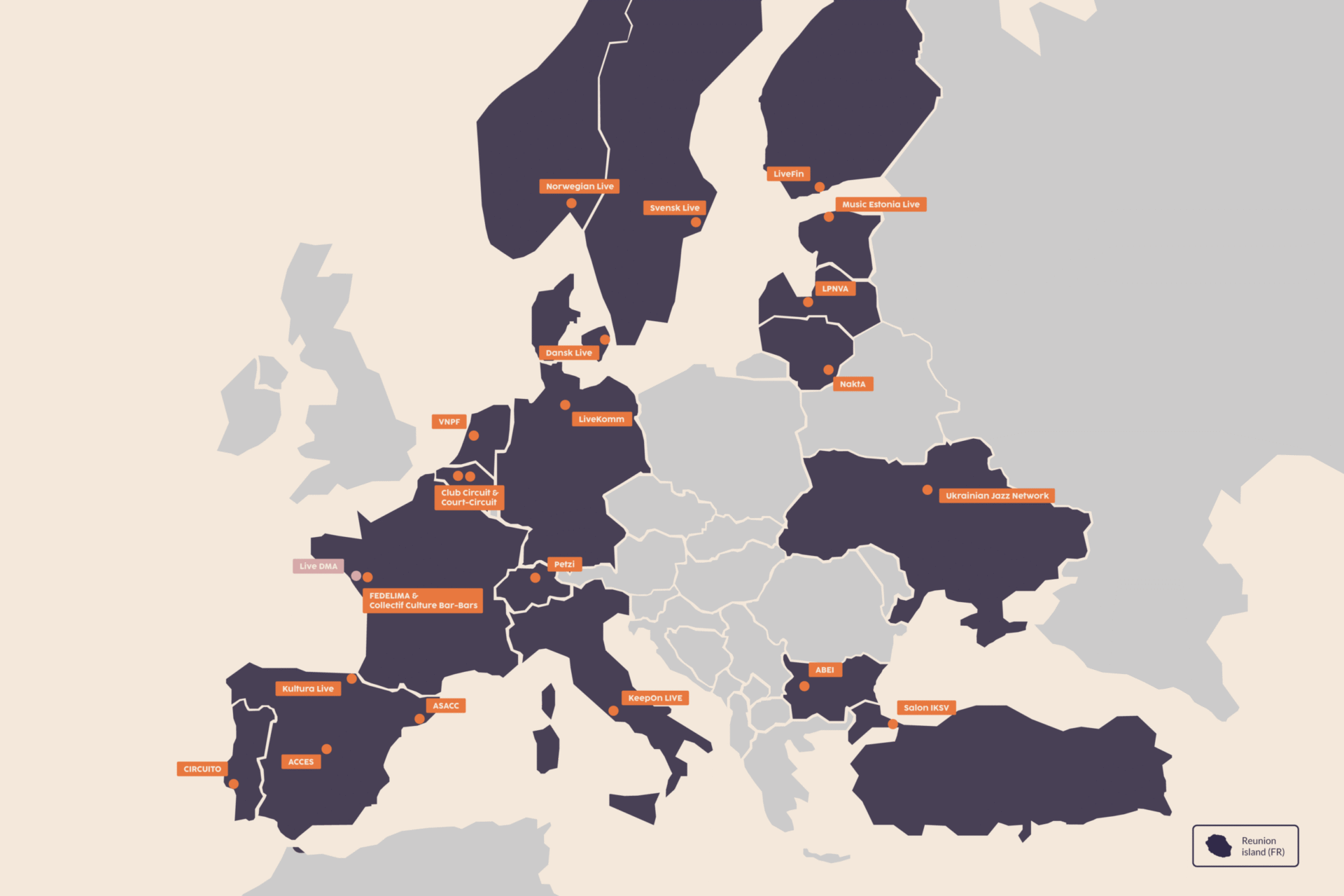
Live DMA, the European network of national live music associations, published a statement following its annual meeting in Fribourg, Switzerland at the end of March, warning that live music venues, clubs and festivals, weren’t simply facing a “fragile environment”, but were “being progressively weakened by political choices and structural imbalances.”
Live DMA has found that “as governments reallocate public spending toward defence and security, culture is being deprioritised.” It lists Germany, Sweden, Norway or Switzerland as example of countries, where “cultural budgets are stagnating or losing ground in real terms.”
As concrete examples, the association mentions Czechia, where “policy decisions are actively restricting access to public support for non-profit organisations,” and France, a country known for the great funding its government makes available for grassroots music venues. According to Live DMA, that’s changing: “funding cuts are coupled with a political discourse that increasingly questions the legitimacy of cultural actors, including independent music venues,” it states.
The fact that many countries still only include what Live DMA calls “historically institutionalised forms” of culture, i.e. classical music and opera, in their funding programs, leaving out most forms of live music, remains an issue.
Where that is the case, as well as in countries that never received much public support for live music such as Sweden or Finland, the live sector itself is forced to compensate. Placing the burden onto the sector, was a failure to recognize music venues as essential cultural spaces and public goods, according to the association.
Live DMA also finds that “where legal frameworks exist, they provide a degree of resistance,” pointing to countries like Denmark and France, “where music policy has been embedded in law for decades.”
The recognition live music and live music venues receive remains inconsistent even within a country. In Catalonia, Spain, for example, venues are still classified under categories such as casinos or bingo halls, which, according to Live DMA, is “a status that limits their cultural legitimacy”. However, in Barcelona, the capital of Catalonia, the appointment of a night mayor with experience in the live music sector, “has strengthened institutional dialogue.”
The Netherlands have also recognized nightlife as a cultural good worth protecting.
Wherever in the world the live sector is trying to engage with politicians with decision-making power, process is “slow, and often outpaced by immediate financial pressures.”
Meanwhile, even where funding exists, its real value is declining where the funding pots are not adjusted to reflect inflation. VAT, a sales tax, on ticket in various European countries is also comparatively high, not only indicating a political blindness to the value of live music, but severely limiting the sector’s ability to operate in the current economy.
The association also observes a “growing disconnect between national and local” governments in terms of the support they offer. This uncoordinated policy approach “weakens the overall system.”
Finally, economic pressures are compounded by shifts in audience behaviour. Declining on-site spending, and the growing concentration of demand around large-scale events are reshaping the ecosystem, live professionals from across the world have been talking at legth about both of these dynamics with Pollstar.
The grassroots scene is, of course, mostly affected by all of the above.. Small venues are expected “to take risks, support emerging artists and invest in audience development, while operating with shrinking margins and limited public backing.” At the same time, for most of these spaces, increasing ticket prices isn’t an option, further restricting their capacity to adapt.
Live DMA’s conclusion: “What emerges is not a series of isolated challenges, but a systemic weakening of Europe’s live music ecosystem. Political decisions, economic pressures and market dynamics are converging to undermine the very spaces where artistic development happens.
“This raises a political question at European level. If defence and sovereignty are central priorities, cultural ecosystems should be recognised as part of that same framework.
“This implies moving beyond symbolic support. It requires structured integration of music into European frameworks, including the Cultural Compass, future programmes such as AGORA EU, and the national and regional partnership plans.
“It also requires regulatory action. The way economic value circulates within the music sector is not neutral. Without intervention, it continues to concentrate at the top of the value chain, while the foundational spaces are left under-resourced. In this context, sector-led mechanisms are gaining importance. Redistribution tools such as ticket levies are becoming necessary responses to structural imbalance.”
About Live DMA:
Created in 2012, Live DMA is a European non-governmental network supporting live music associations. Live DMA is by nature a cooperation network based on shared visions and values. By nurturing exchange of information and good practices between its members and working as collective voice for the sector, Live DMA aims to enhance the recognition of live music venues, clubs and festivals all over Europe, as essential cultural, economic and social operators.
Through time, Live DMA has grown in terms of size and impact. Today, the network is composed of 20 members situated in 16 countries. The members are regional and national live music associations that represent over 3000 music venues, clubs and festivals located all over Europe.
In 2017, the European Commission recognized Live DMA as European network and granted, via the Creative Europe programme, funding to develop the network’s project Live Style Europe. Live Style Europe is a “building capacity programme” with the objective to empower music venues, clubs, festivals, and regional and nationals live music associations and to provide them with skills and tools in order to adapt to the changes of the music sector.
Subscribe to Pollstar HERE
_Originally reported by [Pollstar](https://news.pollstar.com/2026/05/12/europes-live-music-sector-is-being-politically-sidelined-live-dma-finds/)._
Comments
Loading comments…