
Pittsburgh Arts Groups Partner, Leading to Layoffs
Pittsburgh Public Theater has laid off its entire staff following a new partnership with Pittsburgh CLO, which plans to continue summer programming. The move raises questions about whether this is a merger or a liquidation.
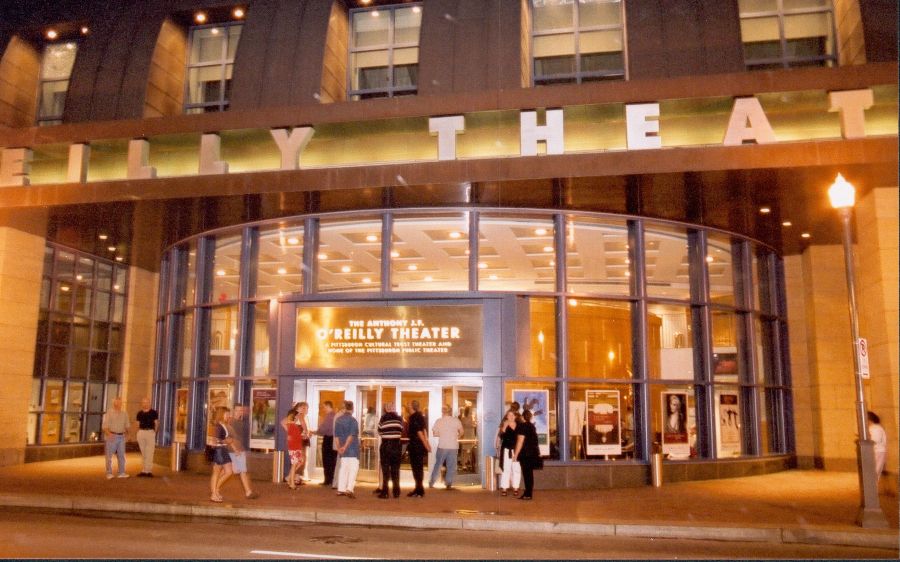
Pittsburgh Public Theater.
News
June 8, 2026 Colleen Hammond Leave a comment
In Pittsburgh, a Partnership Leads to Layoffs
Pittsburgh Public Theater’s entire staff has been let go, and Pittsburgh CLO is proceeding with summer programming. So is this a merger or a liquidation?
By Colleen Hammond
After months of speculation about the future of locally produced theatre in Pittsburgh, a dozen theatre professionals are out of work after a mass layoff at one of the city’s largest producing companies.
On May 19, all 11 staff members at the Pittsburgh Public Theater were notified their jobs had been eliminated via a letter from PPT’s Board Chair Krysia Kubiak. This announcement came two months after the boards of PPT and the Pittsburgh Civic Light Opera , the city’s second largest producing company, voted to formally merge the two organizations starting in January 2027.
“With the Pittsburgh Public Theater facing ongoing financial constraints and foregoing a traditional fall season as it prepares to become part of an entirely new, unified organization with Pittsburgh CLO, it is unfortunately not possible for the Public to sustain normal staffing levels,” Kubiak said in an official statement. “As a result, we have had to say goodbye, for now, to 11 cherished colleagues whose talents and contributions have been invaluable.”
At the time the layoffs were announced, PPT employees had been prepared for an eight-week furlough to start on June 30, according to former PPT’s former managing director, Shaunda McDill. Though her position was not among the 11 eliminated in the layoff, that is only because McDill was notified that the board was initiating a separation of contract with her four days earlier, on May 15. McDill’s contract, to expire on July 20, had not been renewed. Separation negotiations are still underway between McDill and the Public, according to McDill.
There is no single agreed-upon story about the origins of the merger idea. Informal conversations regarding a potential partnership among PPT, the CLO, and their South Side neighbor City Theatre began in 2023, according to James McNeel, managing director of City Theatre. These talks, he said, revolved around opportunities to share resources, such as costume and scene shops, in the face of mounting, industry-wide financial challenges. Multiple other sources familiar with the matter differ with McNeel’s account, claiming that the idea for a merger originated in conversations among board members and leadership at major philanthropic funding organizations.
In 2024, the theatres brought on a New York-based firm, Keene Consulting, to examine the viability of an ongoing partnership among the three organizations. The following year, in August 2025, the companies publicly announced their efforts to work together. The term “merger” was not used in the announcement, and first appeared in a joint statement released on Jan. 27. It was then announced that, despite early interest in the process, City Theatre would not be proceeding with the merger, leaving PPT and the CLO to join forces. McNeel said that City Theatre withdrew from the merger out of a desire to preserve their unique brand voice for patrons.
“I also think there’s another level of complexity that probably isn’t discussed as much relative to the decision-making process,” said PPT’s McDill. “I think that always boils down to, we all have our own niches, and we all have our own missions and visions, and what are the priorities for each organization.”
Although City Theatre, the CLO, and PPT are all professional regional theatres in a similar geographic footprint, their distinct brands and artistic pursuits would indeed present a major challenge for any merger. City Theatre focuses on new plays that speak to their audience on the South Side of Pittsburgh, and while the CLO and Public are located just blocks away from each other downtown, the former focuses on big-name musicals, while the latter leans into the play canon: Shakespeare, Ibsen, Edward Albee, August Wilson, etc. It is unclear what kind of programming the newly merged company will produce, or if it will bear any resemblance to the CLO and PPT’s current styles. In addition to the creative differences among the companies, McNeel said there were other struggles during the early merger phases.
“During my involvement with the merger exploration, it often felt that those with theatre field experience were kept to the sidelines by some, which is unfortunate,” McNeel said. McDill echoed him, saying, “I think what it’s safe to say is that there was a pendulum swing from it being a more collective process to really being led by the boards of the organizations.”
Despite the upheaval at the Public, there have been no layoffs at the CLO at the time of publication, and the organization plans to move forward with its scheduled summer season. Both PPT and the CLO previously announced that they would forego a traditional fall season and would resume regular productions after the merger is completed in early 2027.
Laura Greenawalt, a member of the PPT and CLO “unification team,” stated in a self-published Substack article that her team was “devastated” by the layoffs, and that it was the organization’s intention to potentially rehire former employees. “Where possible, we are looking for ways to ‘bring aboard’ PPT staff members into projects or contract work in support of summer programs and the business of unification,” she wrote.
McNeel declined to comment on the potential of City Theatre hiring any of the staff impacted by the Public’s layoffs. But City Theatre’s website currently lists open positions for an artistic producer and costume manager .
Multiple former employees of the Public expressed their ongoing fear of damaging both the Pittsburgh theatre ecosystem and their own personal careers if they spoke publicly about the challenges presented by the merger and the layoffs.
Said McNeel, in a written statement, “For over two years, I have held a deep belief that the consolidation model for the regional theatre was an idea worth exploring. The financial headwinds and challenges facing far too many of us are real and existential. Meaningful partnerships—shared services, mergers—could be transformative for the field if executed upon smartly. I just hope that leaders of these organizations will lean on the expertise available to them to ensure it happens—while always remembering that theatre is a human-centered, human-driven enterprise. Humanity must always be at the core of what we do. Nothing is worth building without the people behind the art.”
Colleen Hammond is a reporter based in Pittsburgh.
Further Reading
3 Into 1: Pittsburgh Theatres Explore Possible Merger
_Originally reported by [American Theatre](https://www.americantheatre.org/2026/06/08/in-pittsburgh-a-partnership-leads-to-layoffs/)._
Comments
Loading comments…