
Post-Apocalyptic Avant-Garde: Why La MaMa Still Defines Downtown Theater
With the premiere of ‘The Censorship of Dreams,’ New York’s Experimental Theatre Club proves that the most vital stories about the future are being told in the basement of history.
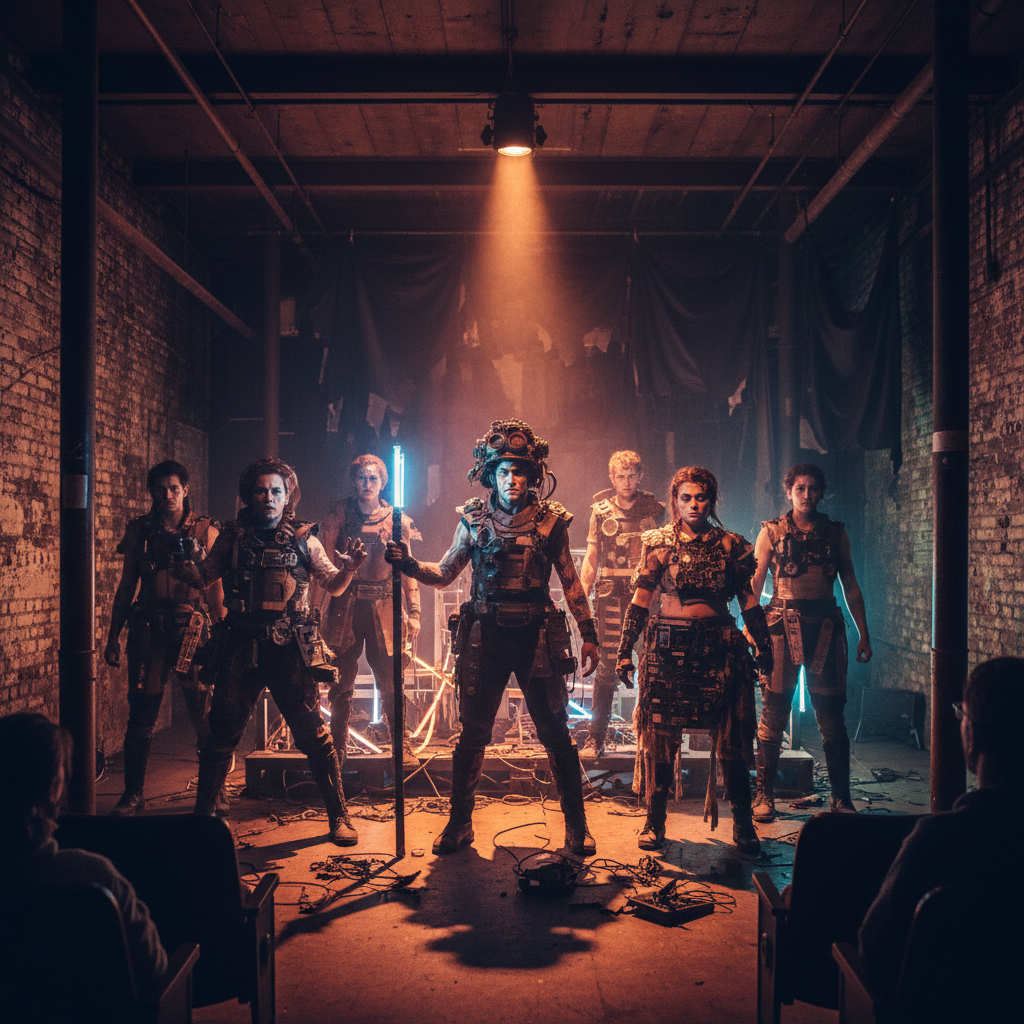
The Architecture of the Avant-Garde
To understand the gravity of a new production at La MaMa’s Ellen Stewart Theatre, one must first reckon with the ghosts of the East Village. Since its founding in 1961, La MaMa Experimental Theatre Club has served as the lungs of the Off-Off-Broadway movement, breathing life into voices that the midtown commercial machine deemed too abrasive or esoteric. The arrival of *The Censorship of Dreams* is more than just a new entry in the seasonal calendar; it is a continuation of a sixty-year lineage of provocative, non-linear storytelling. While Broadway currently leans heavily into the safety of recognizable intellectual property and jukebox nostalgia, the Ellen Stewart Theatre remains a sanctuary for the high-concept risk.
*The Censorship of Dreams* lands in a cultural moment gripped by anxieties over the 'restart.' Set in a world attempting to rebuild after an unspecified collapse, the play interrogates the price of order. It asks a quintessential La MaMa question: in our rush to stabilize a fractured society, what parts of our subconscious imagination are we willing to sacrifice? This isn't just a sci-fi trope; it serves as a meta-commentary on the current state of live performance itself. As the theater industry at large grapples with post-pandemic recovery, the tension between safety (commercial revivals) and soul (original experimentation) has never been more palpable.
The Psychology of the 'Restarted' World
Theatrical history is littered with 'New World Order' narratives, from the sterile dystopias of the mid-20th century to the gritty, resource-scarce futures of modern cinema. However, *The Censorship of Dreams* pivots away from the outward mechanics of survival to focus on the internal policing of the mind. By framing the dream state as a territory to be governed, the production taps into contemporary fears regarding surveillance, algorithmic control, and the erosion of private thought. It suggests that if a civilization is 'restarted,' those in power will inevitably seek to edit the source code of human desire to prevent a recurrence of past failures.
Visually and tonally, the production utilizes the towering heights of the Ellen Stewart Theatre to emphasize the scale of this new reality. The venue, a former meatpacking plant transformed into a cathedral of the arts, provides a raw, industrial backdrop that complements the play’s themes of reconstruction and bureaucratic sterility. This is where the market context matters: while a Broadway house requires thousands of ticket sales a week to remain solvent, a space like La MaMa allows for a specific kind of 'unfiltered' visual language. Here, the production design can be more abstract, forcing the audience to fill in the gaps of the world-building with their own uneasy projections.
Pattern Recognition: The Return of the High-Concept Drama
We are witnessing a cyclical return to the 'Theatre of the Absurd,' updated for a digital age. Much like the works of Samuel Beckett or Sam Shepard, which flourished in this very neighborhood decades ago, *The Censorship of Dreams* rejects the spoon-feeding of plot in favor of atmosphere and philosophical inquiry. There is a clear pattern emerging in the downtown scene: audiences are increasingly seeking out works that acknowledge the 'brokenness' of the modern world rather than offering escapism. The ticket-buying demographic for Off-Off-Broadway is shifting toward a younger, more intellectually restless crowd that views the polished perfection of a $200 Broadway seat as less 'authentic' than the challenging, often uncomfortable intimacy of experimental drama.
Ultimately, the significance of this production lies in its refusal to offer easy catharsis. In the commercial theater, we expect a 'restarted' world to end with a glimmer of hope or a clear moral lesson. *The Censorship of Dreams* instead leaves the viewer in a state of interrogation. It serves as a reminder that the most dangerous form of censorship isn't the banning of books, but the narrowing of what we allow ourselves to imagine during the quiet hours of the night. For a city that is itself trying to redefine its identity in a changing economic and social landscape, this play is a mirror—cracked, perhaps, but revealing a truth that the bright lights of Times Square often obscure.
FAQ
- What is the significance of the Ellen Stewart Theatre?
- Named after La MaMa’s founder, it is a landmark venue dedicated to experimental work that pushes the boundaries of traditional narrative and staging.
- How does 'The Censorship of Dreams' differ from typical sci-fi plays?
- Instead of focusing on technology or combat, it explores the psychological and philosophical implications of a controlled society in a post-collapse world.
- Why is experimental theater thriving right now?
- Audiences are increasingly drawn to original, high-concept stories that address contemporary anxieties in ways that commercial revivals often cannot.
Comments
Loading comments…