
Santa Monica International Jazz Festival Aims to Revitalize LA Music and Local Scene
The inaugural Santa Monica International Jazz Festival launched with Hiromi’s Sonicwonder at the Orpheum Theatre, seeking to invigorate both the Los Angeles music scene and Santa Monica's cultural landscape.
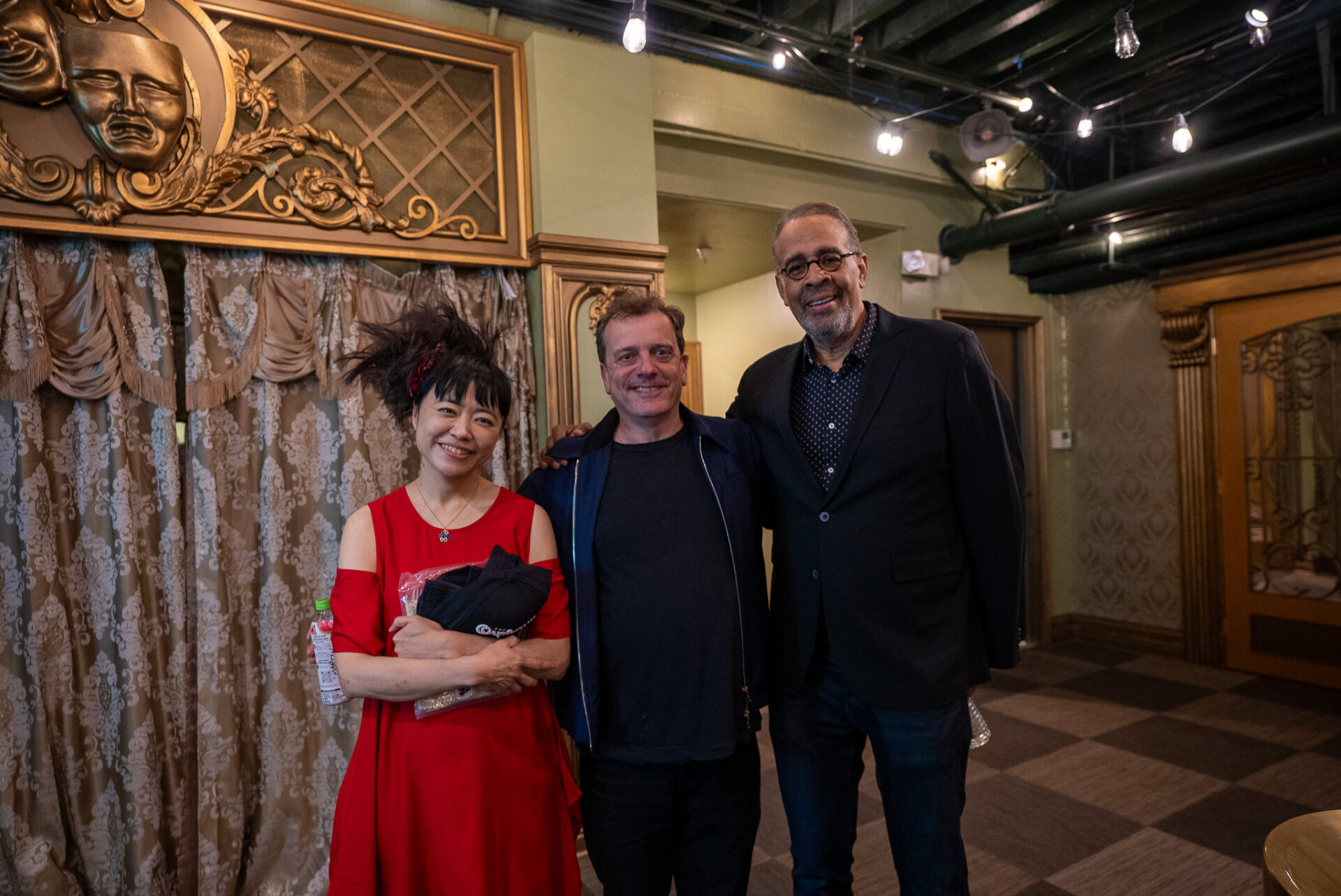
The jazz scene is alive and well in Los Angeles, and Santa Monica is looking to prove that notion with the inaugural Santa Monica International Jazz Festival, which kicked off with a special performance from Hiromi’s Sonicwonder at the Orpheum Theatre and followed that with a free show at Third Street Promenade featuring Elijah Fox, Genevieve Artadi, Duffy x Uhlmann, Billy Mohler and more. A trio comprising an events producer, a venue executive and a Grammy-winning artist partnered with the city to forge the major music event that not only contributes to the local jazz movement but may also spark a Santa Monica revival.
The event continues this Friday with a tribute to John Coltrane featuring Isaiah Collier, Lakecia Benjamin, and more at BroadStage, followed by its finale, A Day In The Park, which features Kamasi Washington headlining a concert at Tongva Park in Santa Monica.
It’s a big move for Santa Monica, which is looking to revitalize sections of the city where businesses once flourished. City officials are investing heavily in what they call a “realignment plan,” and they’re leaning into the booming live music industry to boost their efforts.
Why Santa Monica Is Upping Its Live Music Game
Pollstar caught up with the trio behind the Santa Monica International Jazz Festival—Artistic Director and festival co-founder Stanley Clarke, Executive Producer and BroadStage Executive Director Rob Bailis and Executive Producer and co-founder Martin Fleischmann—to talk about launching a festival in Southern California and what makes this particular venture unique.
Pollstar : When did the idea of a multiday jazz festival in Santa Monica percolate and start to become a reality?
Stanley Clarke: I was doing a three-year program at BroadStage, teaching and having classes. I mentioned that it would be nice to have a festival outside during the last year because they had a little jazz festival on campus in the first or second year, and it was nice. It was great to see the kids so excited to get out and play. It was probably the closest thing for them to feel professionalism, and that’s a great thing for students to get to that point where they can break and cut the umbilical cord. They can feel like, “Wow, I’m out here playing for people.” That’s what it’s all about.
I’ve been living in Topanga for a long time and spent a whole lot of time in Santa Monica. Being a guy who’s played hundreds of festivals, I used to think when I’d get closer to the water, “Why the hell don’t they have somebody that should have started a festival here?” It started like that, and it was crystallized. In a serendipitous way, it just happened that the year we picked the Miles Davis Centennial and John Coltrane Centennial. Martin [Fleischmann] came along, and it’s really a group effort. I’m happy I met all these guys and that this is a team that’s doing it because everybody’s done a great job.
While I’m sure you all have a unified vision, maybe each of you may have more personal goals. What were each of you hoping to accomplish with this venture?
Rob Bailis: From the stage perspective, it was launching an external festival and becoming the producing platform for that, brokering the city relationship and bringing all the pieces together. Being in the middle of it all, when you’re living in your own four walls, having the opportunity to get outside of all of that footprint and to get into the public square in a way that only a festival can invite you to do, that’s a unique opportunity. It really changes the scope of your institution. It changes the nature of the relationship you can have with your city. It changes all the ways in which you can relate with Greater Los Angeles. It really changes the whole nature of that conversation.
The way that we would work with Stanley as an artist and an artistic director in our own theater is completely different than the way that we need to work with him as an artistic director of a festival. It’s a whole different style of relationship. So, it’s going to take a whole really interesting three-legged stool for this thing to stand up.
The beauty of it is that everybody really got in there from the very beginning, got along really well, but also really knows what they’re doing. There’s a lot of trust in the room, which is great, and this happened to come at a moment when the city of Santa Monica also really wanted to play ball and really needs this to happen.
What made you want to jump into this, Martin?
Martin Fleischmann: They don’t come along every day. You need the right partner or partners that you feel are going to contribute something from each side, that is going to make a whole greater than the sum of the parts. It’s very much a creative impulse. You hear songwriters all the time saying it’s just so cool creating something from nothing. This is the same type of process where we are creating something where there was nothing before. It’s the first time that we’re going to do an event of this nature in Tongva Park.
It’s the first time in a long time that there has been a real concerted movement to create something along these lines in the city of Santa Monica. And all credit goes to Stanley for having that vision. I’d like to say there’s a financial motive—it’s not guaranteed.
What makes it different is that the curation really has an eye on the future. If you look at the artists selected for this first year, while we’re honoring the past, we are venerating the future and lifting it up toward the ocean.
How do the artists booked align with the vision you had with the festival?
Clarke: You could get all these legacy artists, and you see that done a lot. I’ve been on many shows and—not to put Smokey Robinson down, who’s a friend of mine—but he would headline the festival and then maybe another R&B act and then you had these jazz acts. What I wanted to do was make this a young festival and get as many young artists to be a part of it.
I’ve been doing this for half a century, and I can tell you honestly that the term jazz is, at this point, an undefined term. When I came on the scene, it was like Charlie Parker, Sonny Rollins, Miles Davis, and a few others. I was fortunate enough to be in with some groups like Return to Forever. That Return to Forever music with Mahavishnu Orchestra, we were called jazz rock bands. The point I’m making is that it evolved, and the music got louder. Then it gets softer with smooth jazz, and there’s been a resurgence of acoustic music.
I was playing with Stewart Copeland [of The Police] in my house, and I just remembered everything I liked about playing with him, even though some might say he’s from a genre that’s completely different than what I do. But actually, it’s not true because you can have people from different genres. All they need is the willingness to play together.
With this festival, all these acts are different individually, but they come together. It’s a young festival, and I think you’re going to feel it when you come out here. It’s really going to remind me of the festivals in the ’70s when all those bands I mentioned were in their 30s and 20s.
There was concern for the jazz scene here in Los Angeles following the pandemic, with various clubs closing, but it seems to be rising again. It really feels like this comes at a moment when L.A. needs it.
Clarke: The Blue Whale was one of my favorite places. I hear the guys are opening a new place. I used to go see young artists there. There’s a lot of resurgence for music here, which is great.
What is interesting is to see how you guys are taking advantage of Santa Monica’s real estate.
Fleischmann: I consider myself a veteran of the Santa Monica music scene and interacting with the powers that be that one does in order to put on events of the scale that I’ve been involved in. And it’s so gratifying now to have an administration from the top down that has put the word out that these kinds of events are welcome and they’re doing what they can to help them flourish.
How did you guys establish the format of the multiday festival taking place on different sites?
Bailis: The idea was different locations, different styles of engagement and different price points. The Third Street Promenade idea was an open-air market where you walk around to just enjoy the day.
And the idea that we’re doing a BroadStage moment that’s going to bring the full experience with a show on the plaza, the big VIP lounge experience and the great onstage experience and the perfect acoustics. This is much more intimate, and this is where we’re putting the Coltrane show, the virtuosic folks playing with slightly smaller bands, the experience where you really want to be in that group with only 500 people. That’s designed for that aural experience.
When you get to Tongva Park, these are sounds that you want to hear in a sea of people, and it’s actually at its best. The music is tailored to the place, and these are all the different ways you can have music in your life and have just the right space for it. It’s really a different way of going to a concert.
In a sense, the curation is about the fullness of the environment. It’s not just the artistic selection. It’s also thinking about how that artist is in that environment and how that environment is with the audience. We’re really thinking holistically about it. I just feel like we’re hearing such specific artistic intent, and each one really needs its own jewel box. We tried to find exactly the right box to set each one of those jewels.
Fleischmann: That’s something that appeals to me, the interaction of the artist with the environment, and I think demands more attention because people don’t really talk about it. It’s a huge part of what happens with the alchemy between the environment and the artist and then the audience stepping into that. You can’t bullshit this audience. They know, they know what’s up. You want to provide this audience with the correct setting.
How has the response been so far?
Clarke: I see a lot of people and institutions and things usually part of festivals like hotels and shops have been reaching out to us. They’re coming in late, but that’s natural for the first year. Some people wanted to see if this was really going to happen, but they’re coming in.
I think next year, this festival is going to really grow. It could possibly double, and a lot of that depends on the artists. A lot of guys have reached out to me to say, “Man, I want to play the festival next year because you can tell that it’s going to be fun.” And I want a lot of people to be in on the beginning of something that’s going to be great.
There’s another byproduct of these festivals, which is that there’s an educational point to it. When you go to these festivals in Europe and good ones like here, like in Monterey, New Orleans and a few others, people come out to these things because they’re events. It’s not that the music is secondary, but it’s a festival, particularly when you have the element of people getting involved, like the stores and hotels, and there are people walking around.
One of my favorite things about playing festivals, particularly in Europe, is at the end of the festival, one of the artists on the last day would say, “Alright, Stanley. I’ll see you next year at Jazz Fest.” It was a thing, and this is a wonderful thing for Santa Monica. It’s already great. We’ve won. It’s just how is the wind going to be and how much fun are we going to have? I know on the stage, we’re going to have a shitload of fun.
There are going to be a lot of young people who are going to come out and go, “Wow, I like this,” and they’ll come back next year. I was fortunate enough to play at Montreux Jazz Festival when a great promoter, Claude Nobs, had a casino. He even started his own money. … He called it jazz money, so when you came to the festival, you had to buy this money and have these little coins. It was easier because there were so many vendors.
_Originally reported by [Pollstar](https://news.pollstar.com/2026/05/07/fest-411-how-the-santa-monica-international-jazz-festival-can-disrupt-the-beach-town-greater-la/)._
Comments
Loading comments…