
Africa Rising Music Conference 2026: The State of Play Across the Continent
While Afrobeats dominates globally, it originates from a small part of Africa. The 2026 Africa Rising Music Conference will explore the continent's vast and diverse musical landscape beyond West Africa.
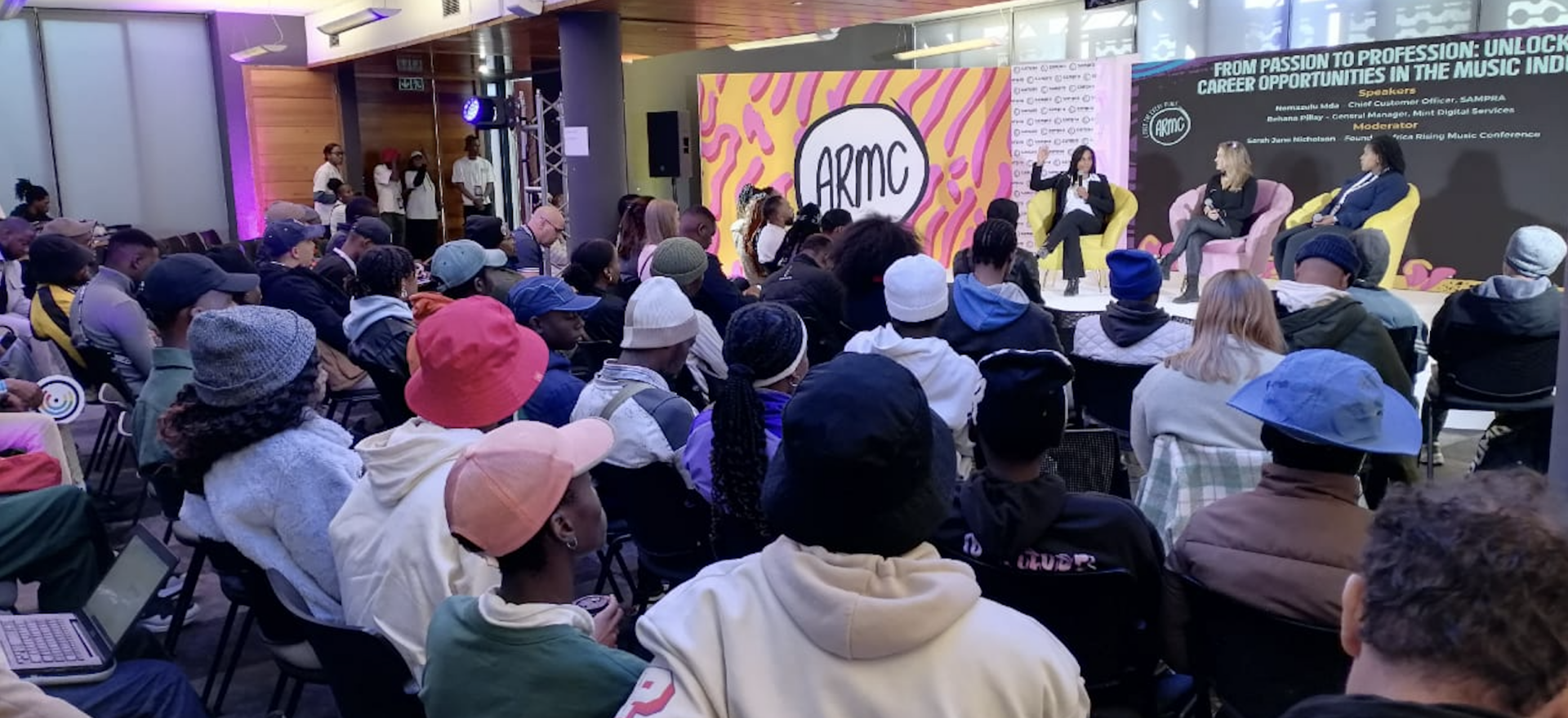
Afrobeats is one of the most dominant genres in the world right now. Its origins and main output can be traced back to Ghana and Nigeria, which together make up a relatively small part of the vast African continent, which boasts a huge diversity of cultures, and therefore musical styles, across its 54 countries.
All the major labels, publishers and global music distributors have offices in Africa, employing a substantial staff. The industry is located across a few cities in South and West Africa, which are by far the most advanced markets in terms of overall music and live infrastructure. But what about live?
The world’s biggest stars have performed at the country’s biggest stadiums courtesy of the world’s biggest promoters, and there are mid-sized international acts, who are investing significant time, energy and resources into building their fanbase in Africa. That’s all in addition to the vast network of local promoters putting on local talent wherever possible.
Sitting right at the heart of it all is Africa Rising Music Conference (ARMC), now in its sixth year, with a core mission of connecting the local industry with its international counterpart, and a particular focus on the many talented artists from across the continent lacking access to funding, infrastructure and representation. With the next edition coming up May 22-23 on Constitution Hill in Johannesburg, South Africa, Pollstar reached out to ARMC founder, Managing Director of Paradise Worldwide (Africa) Sarah Jane Nicholson, and Damon Forbes, founder of Breakout Events & Management, both operating out of Johannesburg.
Forbes has been in the music industry for 30-plus years, the last 12 as a promoter. His business, Breakout Events & Management is one of the top-three promoters in Southern Africa, doing between 160,000 to 170,000 tickets a year. The business is made up of two segments, supporting South African artists on South African stages as well as international touring, roughly equal in terms of volume.
“We’re a genre agnostic promoter. Over the last two years we’ve done everything from Diplo, RY-X or Bonobo on the DJ side through to retro stuff like Waterboys, Deacon Blue, Human League, and trending acts like Jordan Rakei, Modest Mouse & Rainbow Kitten Surprise. We’ve recently had Myles Smith, earlier this year, we had Callum Scott on tour in January, and Ronan Keating the year before, then of course we have toured Tiwa Savage and Davido, so quite a wide diversity,” he explains.
Experiences like these made it clear that South Africa needed a platform to showcase its own talent and talk shop with international delegates from markets with a long-established music infrastructure and touring history. The first edition of ARMC launched in 2019, and in 2020, with support from the Dutch Music Export Office, Nicholson and her team “were able to bring our first international delegation to South Africa. Over time, through continued engagement with global conferences and stakeholders, ARMC evolved into what it is today,” she explains.
South Africa remains Africa’s most mature market when it comes to electronic music, with a well-developed ecosystem of labels, promoters, and export-ready artists. Kenya is also emerging as a key player in East Africa, while Nigeria continues to dominate globally in Afrobeats and pop. Nigeria, in particular, is home to some of the world’s biggest acts right now, including Rema, Tems, Davido, and Wizkid, who are generating billions of streams globally and influencing sounds worldwide.
Nicholson adds: “There’s a massive gap between the big success stories and the next wave of under-resourced artists who don’t have access to the infrastructure needed to take their talent to the next level. With the right support and funding, we could see many more success stories emerging from the market.”
It’s one of the main reasons ARMC exists: to connect the local scene with the world. From young professionals building the country’s grassroots scene to top-tier label and media executives, they all attend the conference, speaking on panels and networking on site. “This year, we’re working with the likes of RedBull and Paradise Worldwide to pledge free tickets for rural communities, people who are not able to afford a ticket to the conference otherwise. We’re trying as much as possible to create more access for these young talents to come and listen to the likes of Damon and others speak about how to develop a sustainable business. It’s a meeting of local and international minds. We’ve had great success stories of local artists connecting with bookers and then, for the first time, traveling to Europe. We’re trying to figure out how to scale that. After six years, we’re trying to track more progressively our impact across the market, and how we can work with bigger stakeholders, funding initiatives from Europe, and so on,” she explains.
While government funding for music isn’t yet as widely available as in some European markets, there are domestic organizations like the South African Music Performance Rights Association (SAMPRA), or the Southern African Music Rights Organisation (SAMRO) on the publishing side, who, according to Forbes, “support global development with everything from supporting grassroots touring through to international touring. They understand the benefit of building South African artists’ careers internationally. There’s multiple places for funding, and we would benefit from an entity that brings all of these elements together. And while there is support domestically, there could always be more, because I believe our music is a very exportable product, and it is something which really markets South Africa as a brand.”
As far as the local circuit goes, it differs between genres. “As a band, or singer songwriter,” says Forbes, “it’s very difficult to find mid-tier venues. Generally, you can get in repurposed coffee shops, bars, those kinds of environments, sometimes a club, small warehouse. If you’re on the DJ, Amapiano, Afrohouse scene, there’s a lot more opportunities, as there are a lot more clubs than actual live music venues. As you grow in terms of capacities, there’s everything from 200-cap to 2,000. From there, there’s a big jump to 8,000 to 10,000-cap.” Several artists compensate for the lack of 4,000 to 6,000-capacity venues by throwing their own parties and festivals, featuring multiple artists on the bill. Brands like Windhoek or Corona throw themed parties, often with big, multi-DJ, electronic lineups, and a “relatively cost effective ticket,” according to Forbes.
Africa’s most active touring period is around December, when everybody goes on a holiday to the coastal regions. “You get artists going up and down the coast playing a whole lot of 400-cap rooms, or maybe two. Because it’s summer, some bars will open up their gardens for a slightly bigger capacity. Parks and sports clubs have started setting up and developing the opportunity for semi-permanent outdoor spaces that are seasonally based,” says Forbes.
“From an international touring artist’s perspective,” he continues, “we are always looking at things that will work in the 4,000-plus spaces. We don’t really look at anything smaller than that. We have brought bands down to these bar and coffee shop type venues as singer songwriters, and a few of those have been great fun and successful, but we’ve combined it with one or two festivals so that the routing justifies itself.”
On the way to Australia, Africa can be a stopover. Forbes estimates that more than 60% of the tours Breakout promotes are on that route. “We’ve also had rock and indie bands from the United States heading to Europe, and coming down to South Africa first, also to settle on the time zone, because we’re a fairly cost effective economy. And they perform shows here before heading up to Europe.”
For the biggest international superstars there’s a healthy stadium business to tap into, courtesy of both AEG Presents and Live Nation, who’ve brought over the likes of Ed Sheeran, Imagine Dragons, Travis Scott and others to DHL Stadium in Cape Town, FNB Stadium in Johannesburg, among others, in recent years.
There’s also a healthy scene of local promoters, often times specializing in genre-specific events that travel city to city. A lot of their shows will take place in venues called Shebeens, essentially large taverns with capacities ranging from 1,500 to 2,000, hosting big name DJs. “The closest thing I can think of is a German Beer Fest, where you go into one of those halls, and it’s just energy at the next level. It’s one of the reasons our urban and electronic scene is so healthy domestically, because there are more opportunities and more spaces for that,” says Forbes.
ARMC is structured as ARMC by Day (conference) and ARMC by Night (showcases). Night one is live and performance-led, featuring bands and vocalists across genres, while night two focuses on electronic music. Each year, the programme spotlights two focus territories – one from the African continent and one international – with artists from these regions showcased alongside local talent in a combined lineup at Constitution Hill. The Bassline Fest takes place within the same precinct, celebrating Africa Day and marking its 20th anniversary this year. Programmed artists also have the opportunity to perform at MTN Bushfire Festival in Eswatini the following week, as well as at Bassline Fest, extending their live exposure beyond the ARMC showcases.
This year’s conference programme includes dedicated opportunities to connect with local festivals, agents and media. Nicholson explains: “We host curated networking sessions that place top-tier executives in direct contact with emerging, international and advanced talent seeking meaningful connections.” One of these sessions, Meet the Bookers, Agents and Festivals, has already led to tangible outcomes, including South African artists performing for the first time at the Rave The Planet Parade in Berlin, as well as placements at Linecheck in Italy, Amsterdam Dance Event, and International Music Summit and so on.
So, how far along becoming a real market is Africa, keeping in mind that it’s a vast continent with vastly diverse cultures and economies spread out from coast to coast? Forbes, for one, is “constantly trying to convince people that this is a repeatable market. I think a lot of managers historically have viewed it as a market that won’t build over time, that you don’t repeat easily. But having come from the record company side, I’ve seen bands build themselves into brands via constant radio and media support, and I think social media is doing the same now. We’ve now done three tours for Callum Scott on each album cycle, and we’re constantly doing extremely well. We were sold out on two of the three shows we did with him on this last tour, and we’re selling out arenas at full capacity.”
When Callum Scott sold out 5,000 seats in a botanical garden on his first tour of Africa in 2018, his was still on the 2,000-cap circuit in his home market UK. And he’s just one example of many. Myles Smith sold between 4,000 and 8,000 tickets when he first came to the market in 2024 – at a point of his career when he was doing 700 tickets in London. “For Rainbow Kitten Surprise, I did 6,000 and 7,000 on two dates, and they’re not playing those size of venues in Europe yet, and that was two years ago,” Forbes continues.
And he concludes, “what I’m trying to say is, what it needs is more agents and more managers who are willing to give the market a chance, because if the versus deals are in place and they trust the promoters, there will be an honest upside, whereas historically, they’ve been skeptical that they wouldn’t receive payments, or that there was no legitimate accounting, etc. The result was that they pushed their fee up to compensate for the idea of not having any upside, because they didn’t want the risk. But, if you’re taking a chance
_Originally reported by [Pollstar](https://news.pollstar.com/2026/05/07/time-to-give-the-market-a-chance-the-state-of-play-in-africa-ahead-of-africa-rising-music-conference-2026/)._
Comments
Loading comments…