
The Infinite Apex: Remembering Alex Zanardi’s Defiance of the Finish Line
Alex Zanardi’s journey from the F1 grid to Paralympic gold was more than a comeback; it was a fundamental shift in how we define human potential and resilience.
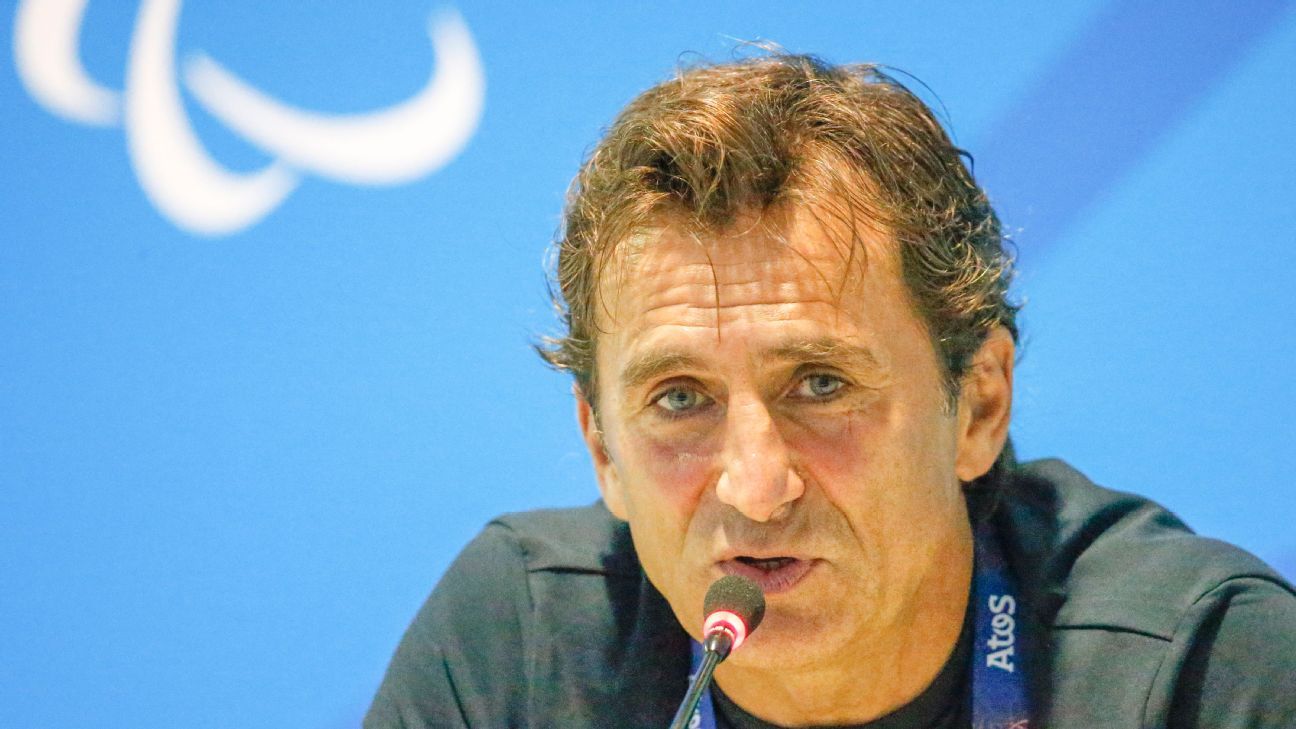
The trajectory of a professional racing driver is usually dictated by the ruthless physics of the track—split-second decisions made at 200 miles per hour where the margin for error is measured in millimeters. Alex Zanardi, who has passed away at 59, spent his early career mastering these thin margins in Formula One and CART. However, history will remember him not for the speed he achieved on wheels, but for the profound grace he exhibited after the wheels came off. Zanardi’s legacy is a rare confluence of high-octane spectacle and grounded human triumph, bridging the gap between the elite world of motorsports and the grit of the Paralympic stage.
To understand Zanardi’s impact, one must look past his statistics and toward the watershed moment at the Lausitzring in 2001. That horrific crash, which resulted in the loss of both his legs, would have signaled a quiet retirement for almost any other athlete. In the early 2000s, sports culture often treated disabled athletes as peripheral figures—remarkable stories of 'overcoming' rather than elite competitors in their own right. Zanardi shattered that paternalistic lens. By returning to competitive racing in specially modified touring cars and then pivoting to handcycling, he forced the sporting world to acknowledge that his competitive fire was a constant, irrespective of his physical chassis.
Reframing the Aesthetic of the Athlete
Zanardi’s transition to the Paralympics during the London 2012 and Rio 2016 games coincided with a global shift in the visibility of para-sports. He became the face of a movement that demanded these games be viewed through the lens of performance rather than pathos. When he hoisted his handcycle above his head after winning gold at Brands Hatch—the same circuit where he had once raced Ferraris and Lotuses—the symbolism was unmistakable. He wasn't a survivor reclaiming a lost life; he was an elite operative mastering a new discipline. This distinction is critical in the history of sports media; Zanardi helped transform the Paralympic narrative from one of inspiration to one of world-class excellence.
In the broader context of the racing community, Zanardi occupied a space similar to that of Niki Lauda. Both men stared down the clinical finality of their sport and simply refused to accept the verdict. While Lauda’s return was a feat of willpower focused on the cockpit, Zanardi’s second act was an expansion of the human spirit. He became an ambassador for the idea that a disability is a logistical challenge to be solved by engineering and grit, rather than a tragedy that halts a life. His influence can be seen today in the way modern racing leagues incorporate inclusive technology, ensuring that mobility is never a barrier to the podium.
The Market of Inspiration and the Reality of Risk
Beyond the track, Zanardi’s story tapped into a deep market desire for authentic resilience. In an era where sports stars are often overly polished and managed, Zanardi was refreshingly raw. He spoke about his accidents not with bitterness, but with a technician’s curiosity about what the human body could still achieve. This authenticity made him a unique figure in the sports ecosystem; he was a bridge between the high-society glamour of the European F1 circuit and the blue-collar determination of the endurance athlete. His presence at major world events served as a reminder that the most compelling stories aren't about winning, but about the refusal to be finished.
As we look back at his 59 years, we see a life that was effectively lived in two distinct volumes, yet bound by a single, unbreakable theme: the pursuit of the apex. Whether he was diving into a corner at Monza or pushing through the final meters of a handcycling marathon, Zanardi operated at the limit of what was possible. His passing marks the end of a singular era, but his influence remains etched into the asphalt of every track and the design of every piece of adaptive equipment. He taught us that while the finish line is inevitable, how we choose to approach it is entirely up to us.
FAQ
- What were Alex Zanardi's major achievements in Formula One?
- Zanardi competed in 44 Grands Prix, driving for storied teams like Lotus and Williams. While his most dominant results came in CART/IndyCar where he won two championships, his F1 career established him as one of the most talented technical drivers of the 1990s.
- How many Paralympic medals did Zanardi win?
- He won a total of six Paralympic medals, including four golds and two silvers, across the London 2012 and Rio 2016 Games, primarily in the H4 and H5 handcycling categories.
- What was the 'Zanardi Move' in racing history?
- It refers to his daring overtake of Bryan Herta at the 'Corkscrew' corner of Laguna Seca in 1996. The move became legendary for its audacity and is still cited today as one of the most creative maneuvers in open-wheel racing history.
Comments
Loading comments…