
We’ve Got A File On You: Broken Social Scene’s Kevin Drew
We've Got A File On You features interviews in which artists share the stories behind the extracurricular activities that dot their careers: acting gigs, guest appearances, random internet ephemera, etc. The post We’ve Got A File On You: Broken Social Scene’s Kevin Drew appeared
10:10 AM EDT on May 7, 2026
We've Got A File On You features interviews in which artists share the stories behind the extracurricular activities that dot their careers: acting gigs, guest appearances, random internet ephemera, etc.
At long last, Broken Social Scene are back. Remember The Humans , the Canadian music collective's first album in nine years, will finally see release this Friday. A month later, they'll launch a tour that will take them across North America and Europe this year.
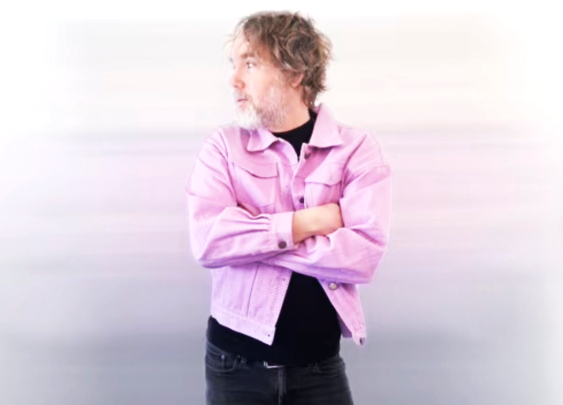
The new record finds BSS reunited with producer David Newfeld, who worked on their legacy-securing classics You Forgot In People (2002) and Broken Social Scene (2005). There are contributions from longtime affiliates such as Leslie Feist, Lisa Lobsinger, and Hannah Georgas. The lineup is as sprawling as ever, a mixture of core members and contributors in the band's orbit. But if there's a face of the band, it's Kevin Drew, the perpetually shifting unit's closest thing to a frontman, who co-founded Broken Social Scene with Brendan Canning way back in 1999.
Drew has done a lot, both inside and outside the bounds of Broken Social Scene. There have been movie soundtracks and acting cameos, collaborations with living legends, releases obscure and era-defining. In an extended video chat last month, we touched on many of those moments. Anecdotes abounded, including ones featuring Leslie Feist, Gord Downie, Zach Galifianakis, Nigel Godrich, Cillian Murphy, Hal Willner, Eric Bana, Lou Reed, Andy Kim, and more. But first, we dug into the latest collection from the band that changed Drew's life. Read our edited conversation below.
The time between Broken Social Scene albums has been getting longer each time. Why did this one take nine years?
KEVIN DREW: It wasn't supposed to. We don't do that on purpose, but I think there's a lot of life that gets lived before the band… We were never really a traditional band because so much of this project lives in the aspect of not being able to control it. People seem to take their time when they walk back towards what we're doing. You need those moments to sort of build your own little fort where you put posters of yourself on the wall, you hide your narcissism from the outside world, and you sit at the altar of “I can do whatever I want.” The problem with that is, it gets boring fast, and the melodies aren't as good. So eventually, we all have to get back together and realize that, even though we're reluctant at times to admit it, we have a chemistry that is irreplaceable.
Is there a certain time frame that you would say you were working on this album specifically?
DREW: We started in late June of 2023. And then my mom died. And then I released a little solo record. And when my mom died, I kind of just lost… it took a few months, and then we cruised back into David Newfeld’s studio. We got together and jammed, and we said, “We'll go over to New’s,” and that was only for a few days. It was about the spring of 2024, after David Newfeld’s mother died, that we thought, “OK, let's start getting serious about making an album.”
And we were really shooting for 2025. But yeah, you know how it goes. And we're not the band that goes in for two weeks. We go in and out, and we knew we were sort of dealing with a vending machine of emotion with a lot of these songs. David was so kind to us, just let us find what we wanted. And there were times where we were all so far apart that people were starting to send in ideas, and I said, “No, I don't want ideas. I want us in a room.” And then [Newfeld] slapped my hand, saying, “You've got to let everybody just give in whatever they want. You never know what we'll get out of it.”
So it was a very interesting way of returning. ‘Cause when we started, everybody had to be there. You know what I'm saying, Chris? Everyone needed to be, “I was there when that got put down,” and, “I was there, and I had a say,” to the point of now, where people sort of call in, “Do I need to be there? It seems like you guys are doing great.” It's interesting when you need it, it has to be your signature. And when you want it, there's a difference to that. You don't have to have a say about what compression is being used on a high head or a snare. There is this trust in what people are doing. And we knew with getting back together with Newf that his childlike innocence towards sound was gonna just take over the whole entire project, which it did.
How did you decide to work with him again?
DREW: Well, I moved out of town and moved close to him. We were discussing it before the pandemic hit, that maybe we'd get back together and do a couple of songs. And then when we started to hang out again and befriend each other after 20 years — we always stayed in touch. But you could tell that maybe we just wanted to see if that chemistry was real, and it was. And there's something where you also are not allowed to choose who you have chemistry with, and I think this is what is so huge about heartache, right? And heartbreak. The heart wants what the heart wants, and a lot of times it's with tough consequences and sad outcomes.
With David, though, all of us were coming in from all different perspectives now and different belief systems, and all kinds of music that everybody listens to. We knew that we were going into an analog world, which seemed like the right decision to make with him. Being part of that analog tradition and making albums, it seemed like that was a good way to approach something with blood and something that sounds real and something where it matters at a time where the AI conversation was just becoming so much… it was getting boring.
Yeah, that makes sense. I'm very sorry to hear about your mom.
DREW: I appreciate that. How about you and your family? You still have your mom?
Yeah, I do. I'm real lucky. Both of my parents are still alive, and my wife's parents as well. And everybody lives around this same area, so we get a lot of family dinners, a lot of babysitting. So it's good.
DREW: I mean, honestly, you talk about all these achievements in your life. I get emotional talking about my mom. My mom got sick, and it kind of ruptured our family in a way, especially — it was dementia. And it gets so hard. So I just celebrate those who still have their families, and I celebrate those who go through that.
And when David's mother died, there was a tragic part to it that was really incredible that I was able to be there and to hold his hand and listen to the love and respect. Mothers, for a lot of us, they were our first sleeping bag. They were our drum machine, you know? We have this saying, my partner, my wife said, “It's your first rhythm, you know? It's the first time you hear heartbeats, and it's the four on the floor — or the [ makes two quick thudding sounds ], as Patrick Swayze would say.
So I think, there's this aspect to this — because Brendan Canning then ended up losing his mom, as well as Evan Cranley losing both his parents right around the ending of this process. And you come to this point, Chris, where you deal with some loss, and then once it opens it up, it just keeps coming. And it comes with the age. It's the story of where you're at, and it's inevitable, and it's part of life, but it's sad, man. It's sad, and that sadness does make you harden yourself.
So one of the aspects to this record was people saying, “Oh, we hear so much youth.” And it was because you still have that in your music, but in your life, when you were a kid and you hurt yourself, you would wail. You would cry out loud. But when you're older, you just try to keep it in. You try to not cry too hard. And there’s something about accepting the loss of others that's just so difficult.
Do you feel like these songs, then, involve some of that kind of wailing and letting it out, in that more childlike way? Or are they an attempt to hold it in?
DREW: I think anytime you walk into a room with a band, you subtract 10 years because there's such an immaturity to the lifestyle. But I do think all the songwriters, all the singers, Leslie Feist, Andrew Whiteman, Lisa Lobsinger, Hannah Georgas, myself, Ariel Engle — that's six of us, wow. We all came at it with lyrics that were all cohesive, though we never spoke to each other. But you do realize you are living in a time that's very similar. And when you're an organism, you can branch out, and you can have your stems break free, but you always have a feeling of you're thinking and feeling the same things.
And I think I say this to the times of now, especially, “How are you sleeping?” I've been saying this in the interviews. We have so much going on, and so much information, and so much hurt out there, that it's tough. And even putting out this record, we're so happy to be putting it out, but there's also this feeling of “How do we continue?” And I think we just rely on the people for that, and we rely on the shows and the aspect of getting everyone in a room and trying to remind ourselves that we can sing songs together. We can play songs together. We can celebrate together without being naive to all the pain that is around us, in a certain sense. It's to honor that.
You mentioned the desire for this to be analog, and obviously the title, Remember The Humans , it's easy to interpret that in the context of all the AI stuff too. Is that correct?
DREW: Yeah, Charles Spearin titled it and framed it in a manner of just kind of a joke, in the aspect of You Forgot It In People , and us coming back with Newfeld. And he said, “Well, the AI record of You Forgot It In People would be Remember The Humans . So it stuck with us. And then also, once you start feeling that saying out and you put that poster on your wall, it's true how much we've forgotten, even more so when we titled that record back in 2002.
Now, that's a generational thing. I'm not talking about the kids, the youth, the ones out there who are leaving their phones at home, buying four-track machines, jamming with their friends. There's a good generation coming up who have forgot fucking nothing. But when we speak to the times of the neurological candidates of what we see is true, I always have to remind myself — and I say this a lot — I forget that it's an algorithm directed towards me. I think this is world algorithm news. And we're constantly getting tricked now more than ever, into thinking this information is for us. And the punk rock of it all is, it's crazy, but it's just turning it off.
Yeah. Brick is such a popular product now that just denies you access to your phone.
DREW: Does it? What's it called?
It's called Brick. It's a little device that you put on your phone. I haven’t used it myself, I’ve just seen people talking about it. And I think it's, of course, another service that you have to subscribe to. But yeah, it bricks your phone basically. It makes it so you only have access to it certain times of day.
DREW: I love that we would pay for that. Because it is an addiction, right? We are an addictive society right now, now more than ever. Wow, I gotta check that out. Thanks for that hot tip.
Tell me about “Not Around Anymore.” Is that an anti-nostalgia song? It's the lead single in the opening track. Why is that the opening statement for this project?
DREW: I don't know if I can speak to that for everyone. The feeling of it was a great opener. The aspect of when you get asked, “What is that?” there's certain opinions and views from others about shedding of skin. I always say, “Giving up to move on,” and the idea that there's so much that just isn't here to help us. And what I think is signature for this band, and just returning with David Newfeld, where we did always have synergy as a band and a producer, was the joyousness in the aspect of giving up, in the aspect of things not working out, in the aspect of some sort of personal suicide to remain trying to figure out how to move forward.
We've always been a band where we love to sing ab
_Originally reported by [Stereogum](https://stereogum.com/2497686/weve-got-a-file-on-you-broken-social-scenes-kevin-drew/interviews/weve-got-a-file-on-you/)._
Comments
Loading comments…