
The Phog Reclaims the Future: Why Tyran Stokes is Bill Self’s Ultimate Modern Blueprint
Kansas landing the top recruit in the Class of 2026 isn't just a recruiting win—it’s a tactical shift that signals the Jayhawks' intent to dominate the positionless era of basketball.
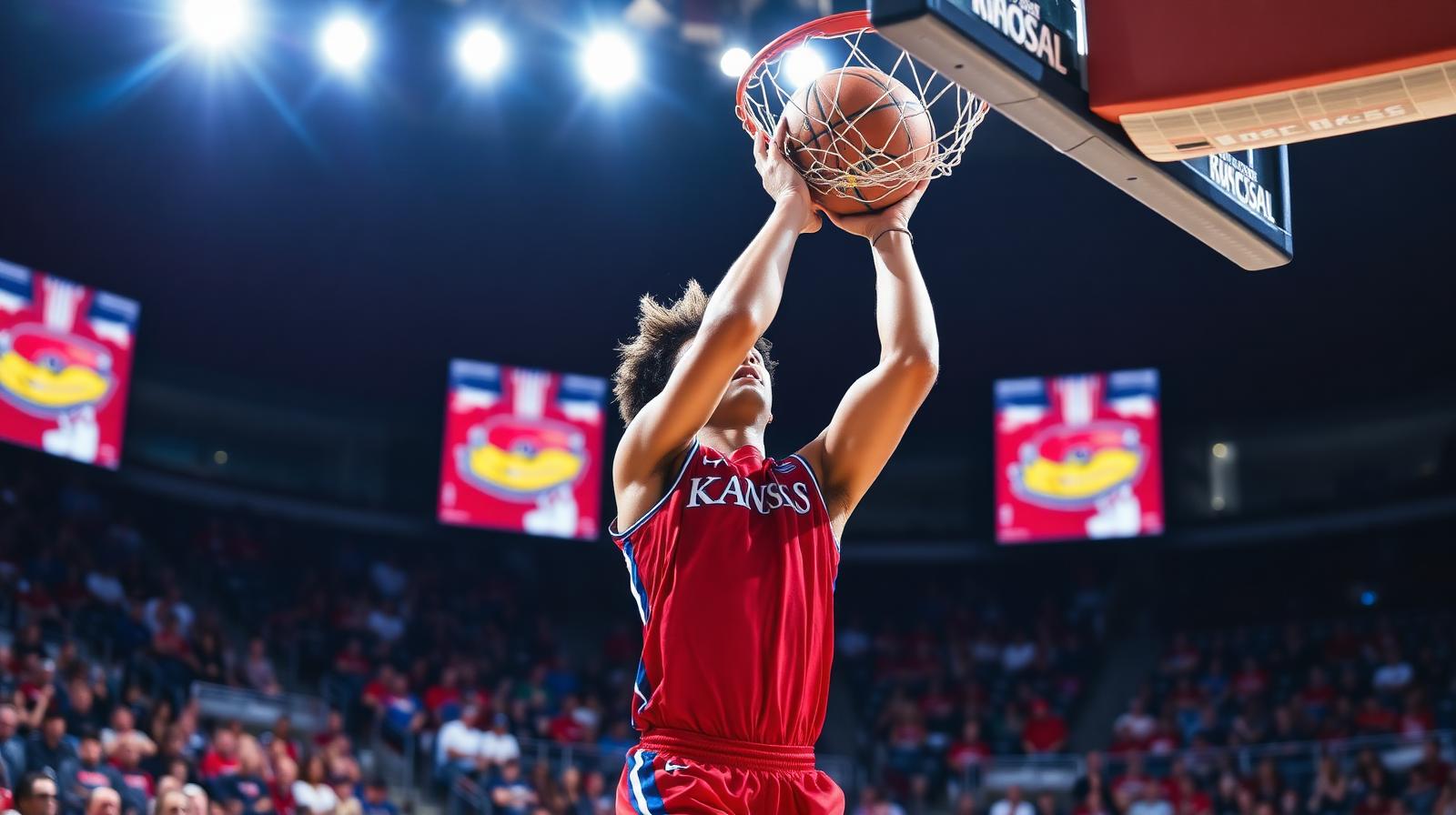
The Gravity of the Blue Blood Blueprint
In the modern landscape of collegiate athletics, where the transfer portal and Name, Image, and Likeness (NIL) collectives often dictate the rhythm of a roster, the high school commitment still serves as the ultimate barometer of a program’s cultural health. When Tyran Stokes, the consensus top-ranked prospect for the Class of 2026, pledged his future to the University of Kansas, it wasn't merely a line item in a recruiting ledger. It was a reaffirmation of the 'Blue Blood' dominance in an era that frequently threatens to democratize talent. For Bill Self, securing a talent of Stokes’ caliber represents more than just a scoring threat; it is an endorsement of the Phog Allen legacy as the premier finishing school for the NBA’s next generation of hybrid stars.
Stokes represents the archetype of the modern positionless player—a 6-foot-7 powerhouse with the lateral agility of a guard and the physical imposition of a traditional wing. Historically, Kansas has thrived when they possess a versatile 'Swiss Army Knife' on the perimeter, reminiscent of the impact Josh Jackson or Andrew Wiggins brought to Lawrence. However, Stokes arrives with a different psychological profile. He isn’t just a high-upside project; he is a refined tactical weapon who has already demonstrated he can facilitate an offense and guard multiple positions at an elite level. His selection of Kansas underscores a strategic bet on Self’s ability to blend high-usage stardom with rigid defensive accountability.
The Evolution of the Recruiting Arms Race
To understand why this commitment carries such weight, one must look at the shifting market context of college basketball. We are currently witnessing a contraction in the traditional recruiting cycle. With the 2026 class representing the first wave of athletes fully immersed in the professionalized atmosphere of modern prep ball, the competition for their services has shifted from mere facilities tours to complex multi-year development projections. Stokes is a player who could have easily entertained professional paths abroad or through domestic developmental leagues, yet his move to the Jayhawks suggests that the value of the 'on-campus experience'—combined with a sophisticated NIL infrastructure—is still the gold standard for top-tier prospects.
Furthermore, this move acts as a massive recruiting catalyst for the Jayhawks. In the ecosystem of elite basketball, talent follows talent. By securing the centerpiece of the 2026 class this early, Kansas effectively creates a gravitational pull for other top-ten prospects. It allows the coaching staff to pivot from an 'acquisition' mindset to one of 'curation,' selecting complementary pieces that fit around Stokes’ unique toolkit. Historically, when Bill Self locks in a cornerstone recruit early in a cycle, it leads to a deeper, more cohesive roster that can weather the volatility of the NCAA tournament.
Technical Fit and the Self System
Analytically, Stokes is a seamless fit for the Jayhawks’ offensive philosophy, which prizes high-post versatility and quick transitions. Unlike traditional isolators, Stokes excels in the 'short roll' and as a secondary playmaker. In the current Kansas system, which often utilizes a high-IQ big man as a hub, Stokes can act as a bridge between the backcourt and the paint. This allows the Jayhawks to run more complex sets that exploit mismatches, as opposing defenses are forced to decide whether to put a smaller, faster guard on him or a larger, slower forward. Both choices play directly into Stokes’ hands.
On the defensive end, the commitment is equally significant. Self’s defensive principles require players to navigate screens with precision and execute complex help-side rotations. Stokes’ wingspan and functional strength make him an ideal candidate for the 'switch-everything' schemes that have become the standard in both the Big 12 and the NBA. For a program like Kansas, which has built its identity on defensive efficiency, Stokes isn't just a luxury on offense—he is the essential anchor for a modern, suffocating defense that can adapt to any opponent’s personnel.
Looking Toward 2026 and Beyond
As we look ahead, the arrival of Tyran Stokes will likely be viewed as a turning point in the post-realignment era of the Big 12. With the conference expanding its footprint and increasing its competitive depth, the margin for error has vanished. Programs can no longer rely on brand name alone; they need 'difference makers' who can transcend coaching and scheme. Stokes is that player. He provides Kansas with a physical presence that matches the toughness of the Big 12, paired with a skill set that belongs on the international stage.
Ultimately, this recruitment is about the preservation of excellence. While the landscape of college sports continues to shift beneath our feet, certain constants remain: elite talent wants the biggest stage, and the biggest stage in midwestern basketball continues to be Allen Fieldhouse. By choosing Kansas, Stokes has bet on the longevity of a coaching staff and a system that has proven it can transform prep stars into professional veterans. For Jayhawk fans, the story of the 2026 season has already begun, and the leading man looks every bit the part of a future legend.
FAQ
- Why did Tyran Stokes choose Kansas over other programs?
- The combination of Bill Self’s track record for developing NBA-ready wings and Kansas' highly developed NIL infrastructure made the Jayhawks the premier choice for long-term development.
- What makes Stokes different from other top-ten recruits?
- His 'positionless' versatility allows him to play as a traditional wing, a small-ball power forward, or even a secondary ball-handler, making him uniquely difficult to scout.
- How does this commitment impact the rest of the 2026 recruiting cycle?
- Securing a No. 1 recruit early acts as a magnet, encouraging other elite prospects to join the roster in hopes of building a championship-caliber 'super team' around a central star.
Comments
Loading comments…