
The Permanent Underdog: Why Weston McKennie Still Faces the Proving Ground
Despite being one of America's most decorated exports, Weston McKennie remains in a perpetual state of auditioning for both club and country.
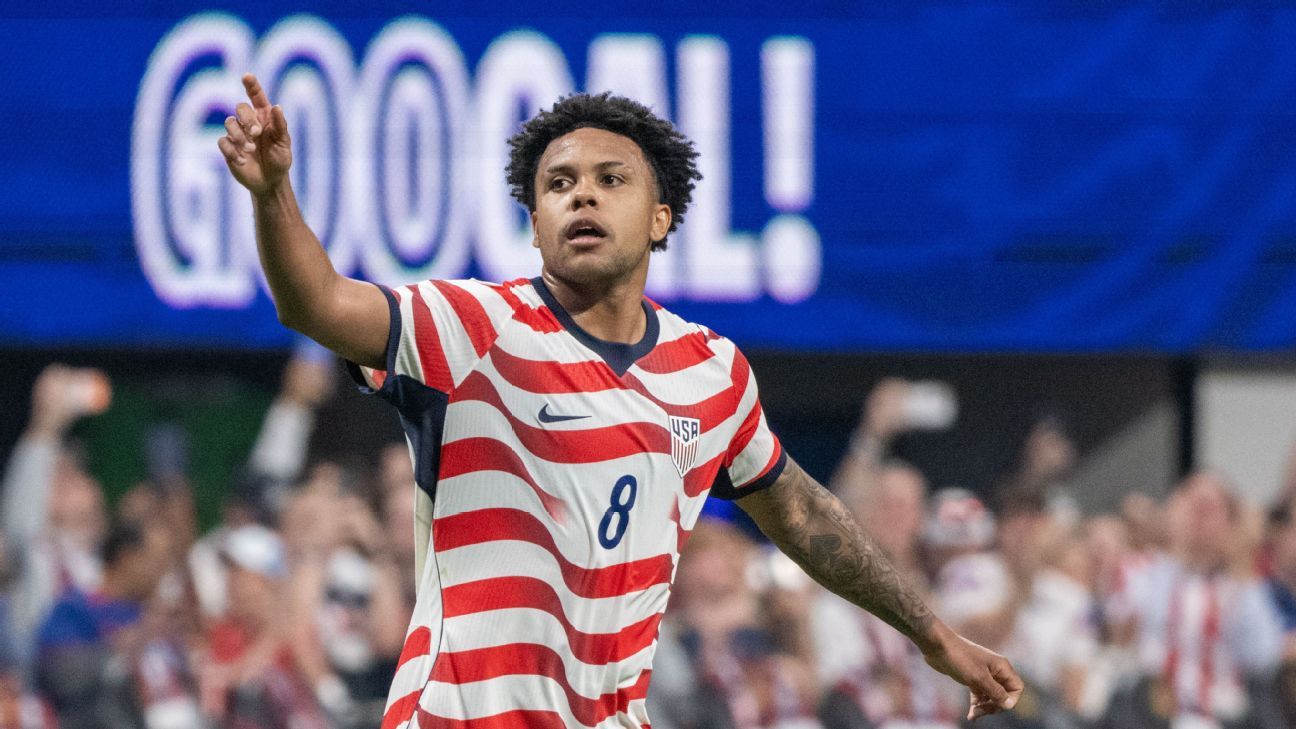
In the hyper-fluid landscape of elite European football, there is a specific type of player who exists as a 'tactical ghost.' They are indispensable to the functional success of a squad, yet they are the first sacrificed when a manager desires a new aesthetic. Weston McKennie, the Texan engine room for both Juventus and the United States Men’s National Team (USMNT), has become the quintessential case study for this phenomenon. Despite a trophy cabinet and a resume that places him in the top percentile of American soccer history, McKennie resides in a strange limbo: he is perpetually starting, yet consistently viewed as replaceable.
The Architecture of the Unappreciated
To understand why McKennie is constantly fighting for a spot he has arguably already earned, one must look at the specific history of Juventus—the 'Old Lady' of Italian soccer. Juve is a club defined by *lo stile*, a specific type of disciplined grace. McKennie, by contrast, is a chaotic neutral force. He is an agent of entropy who thrives on second balls, aerial duels, and late-arriving lunges into the penalty area. To the traditional Italian scout, his game can occasionally look untidy. However, the data tells a different story. Whether under Massimiliano Allegri or the transition to a more possession-heavy era, McKennie’s underlying metrics in progressive carries and defensive interventions consistently outperform the high-priced newcomers brought in to replace him. It is a recurring cycle: a new marquee midfielder is signed, McKennie is benched or rumored for move, the team loses its balance, and eventually, the manager realizes the squad simply functions better with the American’s restless energy.
The American Ceiling in European Perception
There is an undeniable, albeit subtle, bias that persists in the upper echelons of Serie A and the Premier League regarding the technical ceiling of American players. For decades, the stereotype of the American soccer player was 'all hustle, no touch.' McKennie has inadvertently become the poster child for fighting this prejudice. Because his greatest assets are his durability and his work rate, critics often overlook his elite spatial awareness. This skepticism follow him to the national team as well. Whenever a new generation of dual-national prospects or flashy young wingers emerges, the discourse suggests that the USMNT should 'move past' McKennie to find a more sophisticated passer. Yet, time and again, in the qualifying trenches of CONCACAF or the high-pressure knockout rounds of the World Cup, it is McKennie’s grit that sets the temperature for the entire roster.
Tactical Versatility as a Curse
One of the primary reasons McKennie is constantly shuffled in and out of the 'preferred' XI is his own versatility—the double-edged sword of the modern utility man. He has been deployed as a wing-back, a traditional number eight, a deep-lying defensive screen, and even a makeshift wide midfielder. In the eyes of a manager, a specialist is a building block, but a versatile player is a tool. When a coach needs to fit a new tactical puzzle together, the specialist keeps their spot, and the versatile player is moved to fill a hole. This has led to a perceived lack of permanence in his role. For McKennie to finally shed the 'provisional' tag, he must continue to lean into the goal-scoring threat he provides from the midfield, a rare commodity that eventually forces a manager's hand regardless of the tactical system.
The Cultural Resonance of the Grind
Ultimately, McKennie’s career trajectory mimics the trajectory of American soccer itself: constantly performing at a level that demands respect, but still fighting for a seat at the head of the table. His resilience is his brand. While other stars might crumble under the weight of being told they are surplus to requirements—as McKennie was during his brief loan spell in England or during the recent summer transfer windows at Juve—he chooses to stay and fight. This 'outsider' mentality is exactly what makes him the heartbeat of the USMNT. He plays with the chip on his shoulder of a player who knows his name was the one crossed out on the whiteboard during the first week of training camp.
Future Outlook: Breaking the Cycle
As the 2026 World Cup looms, the narrative surrounding McKennie will likely shift from whether he belongs in the starting lineup to how the team can survive without him. For Juventus, the math is becoming harder to ignore. Every time they attempt to upgrade from McKennie, they find that his specific blend of aerial dominance and recovery speed is nearly impossible to replicate without spending €50 million or more. The 'battle' for his starting spot isn't actually a reflection of his quality, but rather a reflection of a footballing world that is still learning how to value a player whose greatest strength is making everyone around him look more composed. McKennie isn't just fighting for a jersey; he’s fighting for the recognition that the 'chaos' he brings is, in fact, the most vital order a team can have.
FAQ
- Why does Weston McKennie always seem to be on the transfer block?
- European clubs often view McKennie as a high-value asset that can be sold to balance books, frequently underestimating his tactical importance until he is actually out of the lineup.
- How does his performance for Juventus compare to his USMNT role?
- At Juventus, he is often a disciplined 'shuttler,' while for the USMNT, he is given more freedom to attack the box and act as a primary playmaker in the final third.
- Is McKennie's playing style unique among American midfielders?
- Yes; his combination of elite aerial ability and box-to-box stamina makes him a more traditional 'No. 8' compared to the technical passing profiles of teammates like Yunus Musah or Tyler Adams.
Comments
Loading comments…