
Ian Montone: The Music Industry Confuses Followers With Community
Monotone founder Ian Montone, manager for artists like Jack White and LCD Soundsystem, discusses the music industry's cultural shifts, the catalog gold rush, AI's impact, and humanity's search for meaning.
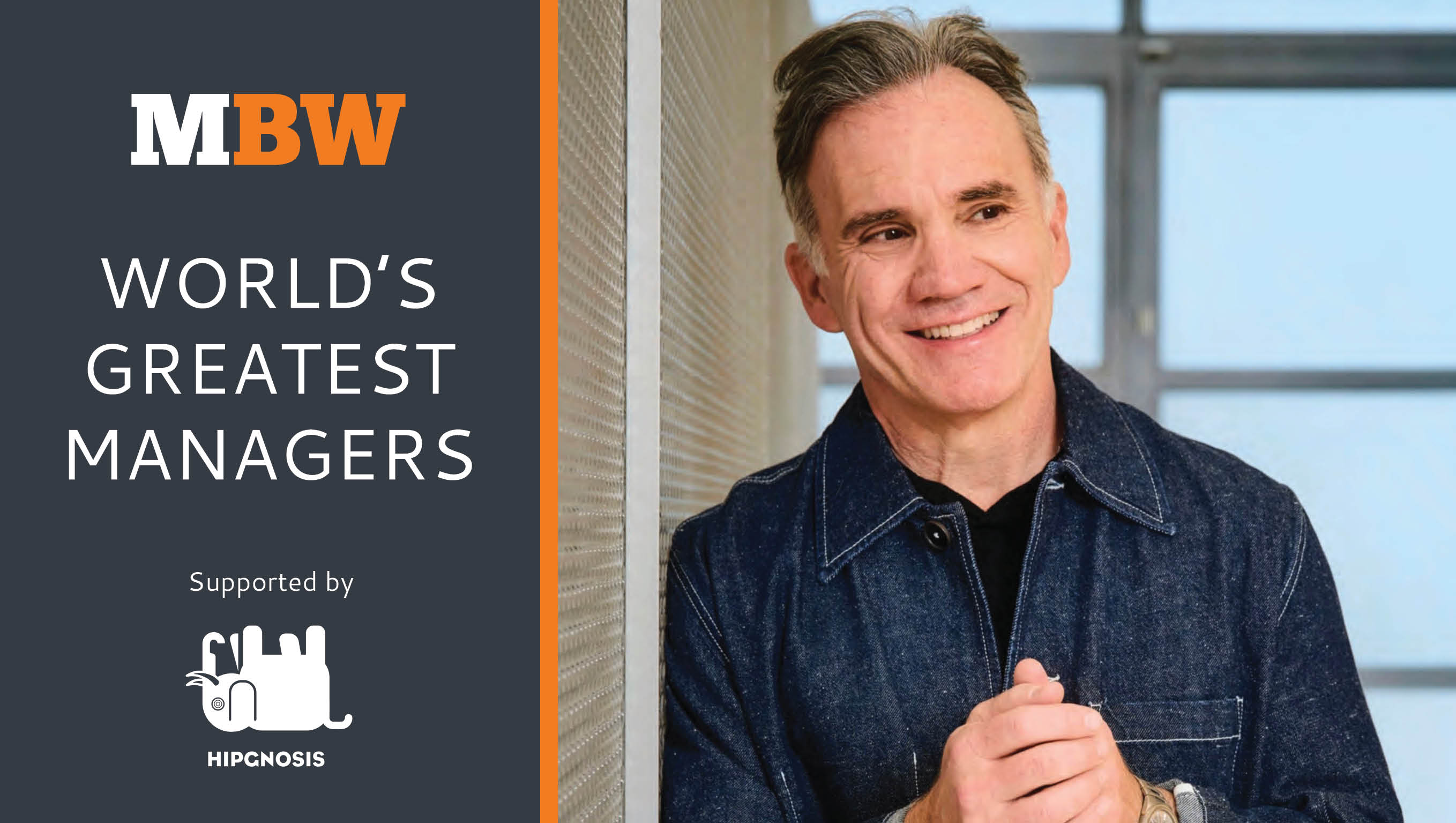
‘As an industry, we’ve confused followers with community.’
September 23, 2026 By Tim Ingham MBW’s World’s Greatest Managers series profiles some of the best artist managers working in today's global business. World’s Greatest Managers is supported by Hipgnosis Artist Partnerships . Continue to article...
Ian Montone has spent a quarter of a century building artists’ careers on his own terms.
The founder of Los Angeles management company Monotone (and a partner with Rick Yorn ’s film and TV shingle LBI Entertainment ) has stayed defiantly independent in a business that keeps trying to consolidate: no company website, no social media… answerable to no one but the artists he represents.
A former music lawyer turned Grammy-nominated producer, Montone’s company houses one of the industry’s most fiercely curated rosters: Jack White , Vampire Weekend , LCD Soundsystem , The Shins , Angie McMahon , Briston Maroney , Spacey Jane , This Is Lorelei , So!YoON! , The Kills , Still Woozy , Pete Yorn , Solomonophonic , and Chanel Beads among them.
A champion of artists owning their rights, Montone helped shift the paradigm away from traditional label ownership. He got started managing a two-piece from Detroit called The White Stripes ; he was later Jack White’s best man.
The last time MBW sat down with Montone, in 2019, he warned that the industry had started chasing “music for algorithms” at the expense of great artists – insisting that music was “fundamentally important to people… not disposable.”
Seven years on from that discussion, the majors are publicly listed, catalogs trade like commodities, and AI can spin up a passable sound-alike. The world around Montone has been rewired – but his principles have stayed exactly where they always were…
What’s the scariest thing about the music business in 2026?
Being honest, there’s nothing particularly scary about the music business. Most of us aren’t operating in war zones; we have what are essentially make-believe jobs. Often stressful, but a privilege. And for the artists we manage, there’s really no choice; this is their calling.
Industry-wise, it feels like we’ve been in a period where music has become too safe and conservative, a byproduct of algorithmic playlists. Artists, often unconsciously, began making music for algorithms; now algorithms are making music for algorithms, shaping an entire generation whether they realize it or not. Everything’s a bit too polished, too formulaic.
Lyrically, much of it isn’t really about anything. Call it the commoditization of culture or the industrialization of taste; the result is that everything gets safer and less interesting. There’s always been a cycle in music culture: pioneers, then artists who broaden the appeal, then copycats of copycats with one last commercial push… then imitators who kill the genre outright. That’s not new – what’s different now is the speed at which it happens.
> “We’ve been in a period where music became too safe, a byproduct of algorithmic playlists.”
Part of the conservatism I see is that few artists want to take a stand, fearing cancellation, demonetization, or alienating fans. Nearly everyone plays it safe – not just in music, but in comedy, journalism, and news. There are exceptions, but there’s been a real chilling effect on art. I’m not saying all music should be protest music – of course not – it’s just noticeably harder to find.
What’s the good news?
Plenty of interesting artists are filling the void – artists who aren’t making decisions based on streams or algorithms, but by making really distinctive work and doing their own thing: Cameron Winter , Dijon , SAULT , Caroline Polachek , YHWH Nailgun , King Gizzard & the Lizard Wizard , and Saya Gray , to name a few. There’s many more and that’s really exciting – this is the space [Monotone] lives in with our artists.
Artists also seem to be re-embracing craft and musicianship and focusing on their live shows. That’s exciting; every city has a real scene of real players. Maybe it’s part of a broader hunger for what’s authentic? Maybe it’s a human need to physically interact with a tangible instrument. Nobody wants to see anyone at a party pick up a computer and “prompt”.
I don’t think the younger generation’s rediscovery of music from the past is simply nostalgia. It’s because it’s genuinely good, and these artists can play . I see more and more new artists moving this way – honing their craft, being great live, and using that to build what people are actually yearning for: community.
Plenty of managers will tell you privately that streaming matters less to their artists’ livelihoods than it did five years ago. Where does streaming rank for your artists now?
Streaming matters less for our clients’ businesses, but we don’t ignore it; it’s still a rough gauge of who’s listening, and if you’re in a label deal where your partner only participates in royalties, you can’t afford to ignore it. No one complains when a song takes off! But I don’t really think of it as streaming versus everything else.
Our job is to build careers that sustain over decades, and the shape of that is different for every artist. Touring is something our artists, and this company, happen to be very good at, and it’s often the foundation. But we’re just as deliberate about merch, sync, vinyl and physical, and finding new ways for an artist to reach the people who actually care.
What runs through all of it is building a meaningful connection with a fanbase. Anyone willing to hire a babysitter, pay for parking, buy a ticket, and give an artist a few hours of attention – that’s a real fan. That’s a genuine time and financial commitment. Fostering that relationship is hard work, but it’s far more important than pre-saves and clicks.
> “It’s not ‘labels versus managers’. It’s about building the best team around any artist.”
As an industry, we’ve confused followers with community. They’re not the same thing. Music is supposed to bring people together, and that’s gotten harder. Virgin Records started as a record store; people went there to discover music and connect.
Third Man still builds that kind of universe; so do the great independent record stores. Live music can do it too, especially once people put their phones away for a couple of hours. We’ve convinced ourselves that real community exists online; I don’t buy it. It’s the difference between texting and talking, between data transfer and communication.
Online is less about community and more about being a target group – one being sold to, and ultimately having its data sold. To feed that, distraction has been monetized. But people are catching on, and that’s a good thing.
Just as important for us is who’s paying attention to our artists – not whether they’re on SNL , but whether they’re becoming part of the cultural conversation. That’s hard to quantify. Sometimes you just feel it. And when we feel it, even before others do, we go to work making others believe it too. That’s the essence of management: we believe in what our artists believe, and we amplify it.
You built Monotone with in-house radio, DSP, touring, licensing, and production teams – a ‘label services’ infrastructure before that phrase was fashionable. Where does that leave the traditional label in 2026?
I built it this way because I more or less had to. Part of it is the artists we work with, and what I touched on earlier – making people believe. That takes people and resources.
In the early White Stripes days, I had a map of the US and Europe with pushpins, working out city-to-city distances – “van tour or bus tour?” That’s crucial stuff, but I’m not great at it; other people are, and I’m better used elsewhere. So we built an in-house touring and production team. Same with radio. I realized I needed my own ‘translator’ [for that corner of the industry], so I hired my own team, and their role now goes well beyond radio and streaming.
I never wanted to be dependent on someone with a different agenda, or for our artists to live or die by label politics. Our artists were never going to be priorities at a major, and most independents didn’t have the resources. So we built what made sense for us, because moving culture toward our artists’ vision requires it.
There’s an advantage: working across touring, marketing, licensing, DSPs, and development gives us an unusually broad view of what’s happening – not just in music, but in the world. I just see us as a comprehensive, well-resourced company.
Good labels also do a lot of what we do – but everyone knowing their lane is paramount.
The best music companies now are “everything companies.” It depends on the label and the team around a given artist, especially where there’s trust on both sides. Interscope can effectively manage some of its artists because they’re that close to them – no surprise, given the caliber and tenure of its senior staff, which is rare.
John Janick used to manage artists at a high level; we’ve actually both managed M.I.A. at different points. Rob Stringer has impeccable taste and artists value his opinion. He’s not afraid to have a hard conversation with an artist – they trust him.
All the best label and publishing people have that in common. When there’s trust all around and everyone has the artist’s best interests in mind, you’re all pushing in the same direction.
At that point, I don’t really care what someone’s title is or where the traditional lines are. I welcome the help and interaction; I’m not threatened by it. Best case, we plug into each other and play to each other’s strengths – sometimes leading, sometimes following, but working as a team. Where there’s crossover, labels generally welcome the extra resources. It’s not ‘labels versus managers’ anymore. It’s about building the best team around any artist.
Live Nation [810 articles]" href=https://www.musicbusinessworldwide.com/companies/live-nation/ Live Nation and Firebird have been rolling up management companies – Firebird with investment from Raine Group, Ares, and Goldman Sachs [327 articles]" href=https://www.musicbusinessworldwide.com/companies/goldman-sachs/ Goldman Sachs . You’ve stayed proudly independent. When you see a company acquiring management firms at scale, what does that tell you about where the industry’s heading?
The first thing it tells you is that good managers have real value and play a crucial role in orchestrating success. Funds can allocate capital wherever they want, so it’s no surprise they’re interested in buying management companies – if we’re doing our jobs well, we’re often at the center of an artist’s career. It also tells you that very few companies are truly independent, whether they admit it or not. Look under the hood: eventually, somebody is reporting to somebody else, and usually expected to generate a return on someone’s investment.
I don’t want to be in that position for the artists we represent. I don’t want to report to anyone but our artists – let alone explain to a banker why an artist is taking another year to make a record, or, especially, why a two-piece band with a guitarist and a drummer doesn’t need to add a bass player.
> “I don’t want to explain to a banker why an artist is taking another year to make a record.”
This is a broader trend across lots of industries. Roll up businesses, create scale, and hope scale creates better service. Maybe it does, maybe it doesn’t. Personally, I’m not convinced bigger means better. [Monotone has] all the scale and culture we need – and culture takes time to build. Artists don’t hire us because we’re the biggest; we aren’t, and don’t want to be.
They hire us because they know exactly who they’re getting. Could a much bigger company have more leverage? Of course. But that also creates priorities and agendas – somebody must decide which artists get more attention and more resources, or offer a better return. An artist who’d be the biggest client at a smalle
_Originally reported by [Music Business Worldwide](https://www.musicbusinessworldwide.com/ian-montone-manager-of-jack-white-vampire-weekend-lcd-soundsystem-as-an-industry-weve-confused-followers-with-community/)._
This story is summarized from coverage by Music Business Worldwide.
Read full story →Comments
Loading comments…