
MLB Season Nears End: Reviewing Trends in Hitting, Cubs' Power, and Cavalli's Rise
The 2026 MLB regular season is concluding its final week, with playoffs on the horizon. This season saw a decline in .300 hitters, a surge in home runs for the Cubs, and the emergence of Cade Cavalli.
Only five days remain in the 2026 MLB regular season and several postseason berths remain up for grabs, including multiple division titles. These last five days could also swing awards races. There is not much time remaining in the regular season but there is still much to be decided. Here now are three trends to keep an eye on as the season winds down.
The home run-happy Cubs
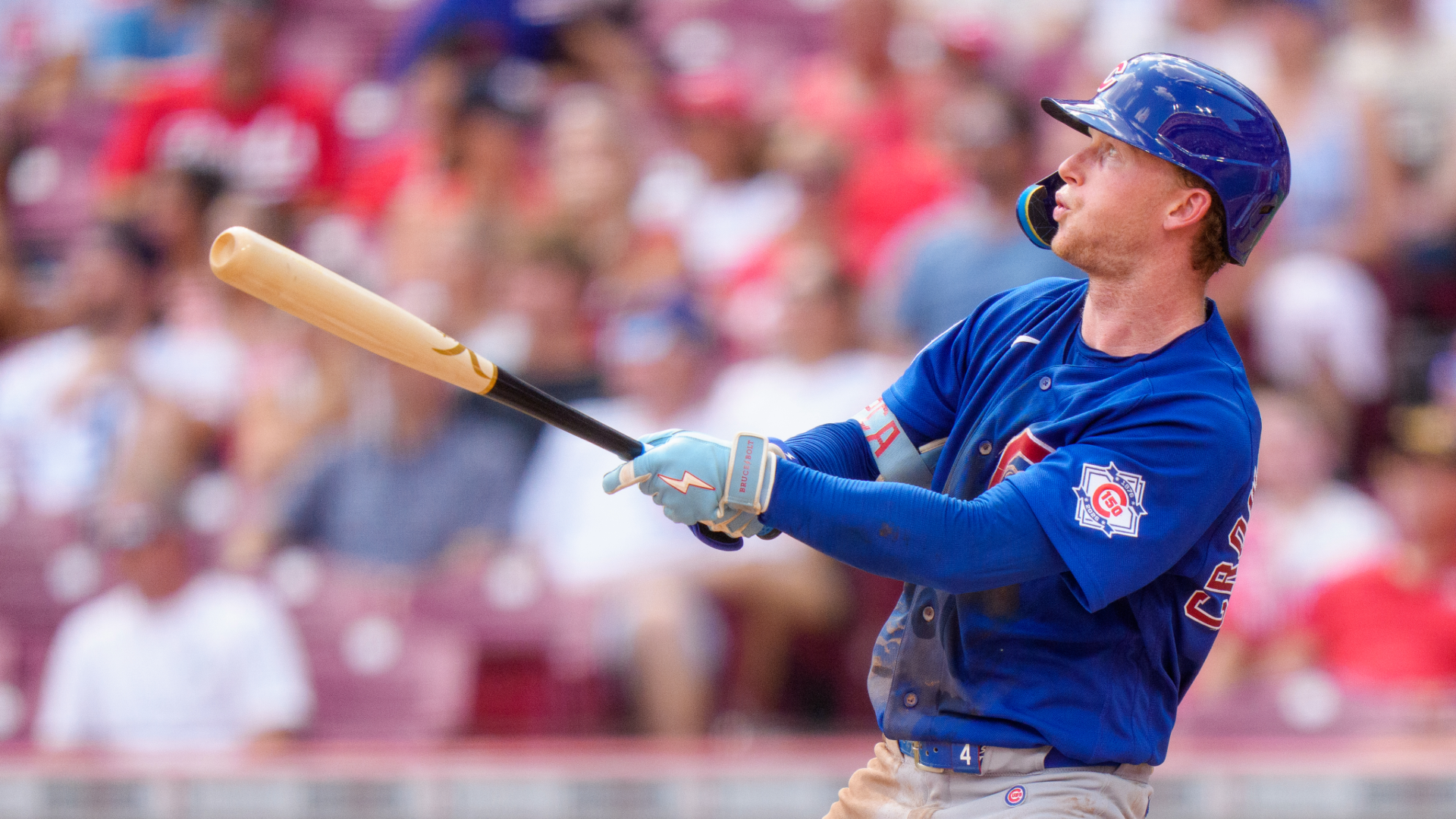
If you like home runs, the 2026 Cubs are the team for you. Going into play on Tuesday, the Cubs led baseball with 217 homers, one more than the Yankees and 13 more than any other National League team. The Cubs also ranked second with 228 homers allowed, three behind the Athletics , a team that has basically zero pitching and plays home games in a launching pad in Sacramento.
Several teams have come close, particularly those late-1990s/early 2000s Rockies teams, but no team has ever led baseball in home runs hit and home runs allowed in the same season. The Cubs might do that this year. It's both a good thing and a bad thing, obviously. Home runs win in October. You have to be able to hit the ball out of the park in the postseason. It is a must.
At the same time, allowing a lot of home runs is a bad omen heading into October. Here are the numbers just to drive home the point. More runs are scored via home run in the postseason than in the regular season, every year, year after year:
Regular season runs on homers Postseason runs on homers
2022
39.9%
47.1%
2023
41.1%
49.1%
2024
40.8%
47.0%
2025
41.1%
45.4%
Runs per game goes down in the postseason, too. Fewer runs are scored in the postseason overall, but a higher percentage of the runs that are scored come on homers. Chicago's offense is well-built for October, in that sense. The pitching staff, though? Not so much. The Cubs have baseball's best defense , but you can't defend a ball that's hit over the fence.
Trade deadline additions Kevin Gausman , Clay Holmes , and Ryan Zeferjahn have not improved Chicago's home run prevention. The Cubs have allowed 1.42 home runs per nine innings since the trade deadline. It was 1.49 before the deadline. The difference is one fewer home run every 128 innings or so, which is negligible. The pitching staff is as home run-prone as ever.
Shota Imanaga (1.82 HR/9) has baseball's highest home run rate and there's a chance he won't make a start in the postseason, either because he's not in the rotation or because the Cubs get eliminated before he can start. Edward Cabrera has the exact same home run rate as Imanaga, albeit in way fewer innings. It's not certain he'll even be on the postseason roster.
Injuries and ineffectiveness have made Chicago's pitching staff a liability for long stretches this season. Their offense is great. They are the highest-scoring team in the sport, and also the best defensive team. The pitching staff, though, particularly its ability to keep the ball in the park, is a major question. The home run ball could carry the Cubs in October, or it could send them home.
How Cade Cavalli leveled up
Cade Cavalli WAS • SP • #24
ERA 3.02 WHIP 1.16 IP 169.2 BB 48 K 200 View Profile
Although they missed the postseason, this has been the Nationals ' best and most promising season since their 2019 World Series title. CJ Abrams and James Wood continued their ascent into stardom, cheap pickups Foster Griffin and Curtis Mead were coached up and flipped for a bounty of young players at the deadline, and the farm system emerged as one of the game's best.
Right-hander Cade Cavalli , the No. 22 overall pick in the 2020 Draft, also arrived as a frontline starter in his first full season as a big leaguer. He'll take a 3.02 ERA and 28.3% strikeout rate in Wednesday's start, both top 15 numbers among qualified pitchers. The Nationals believe in Cavalli so much that they signed him to a four-year, $47 million extension with a club option last week.
"(It was) like, 'Hey, let's do the longest deal possible because I want to be here truly forever.' I really love this organization," Cavalli told MLB.com . "... Nothing's gonna change. My contract changed, but nothing's gonna change. Still make the next best choice, whatever that is, and keep being a great friend and great teammate to all these guys, and just keep working hard."
Cavalli, 28, has never lacked talent. He was a deserving first-round pick who spent the last few years of his career stuck with a team that, to be frank, wasn't very good at developing players. Washington's new front office has brought the team out of the Stone Age in every way, and Cavalli's breakout is an example of that. Here's how Cavalli leveled up in 2026:
1. He got healthy. We might as well start here. Cavalli missed more than a month with a shoulder issue in 2022 and then blew out his elbow in spring training 2023 and had Tommy John surgery. He returned in May 2024, missed more time with arm trouble, then used 2025 essentially as a rehab year. This season is Cavalli's first fully healthy season since 2021. That's where his success starts.
2. He added a sweeper. Cavalli's superpower is his ability to supinate, which, in English, means his hand rotates to the outside of the baseball upon release. That makes him a breaking ball monster and the Nationals leaned into that by giving Cavalli a sweeper this year. It is now his third-most-used pitch behind his four-seamer and curveball, and it has an excellent whiff rate of close to 40%.
3. He reshaped his cutter in-season. To further lean into his supination skills, Cavalli tweaked his cutter this summer and came up with a version that has a tighter, nastier shape. He threw 20 cutters total in his first 17 starts. In the 15 starts since, Cavalli's thrown more than 10 cutters per start on average. The cutter was a total non-factor earlier this year. Now it's a feature pitch.
Cavalli also moved to the third base side of the rubber to start this season, though that hasn't fully stuck, and he's gradually made his way back toward the middle of the rubber. That's an example of an adjustment that maybe wasn't working as intended, so the player pulled back on it and went back to what he's done previously. It's a trial-and-error sport.
The Nationals are an arrow-up team and organization. Abrams, Cavalli, and Wood (and others) give them an excellent core at the MLB level. The farm system is robust. The front office and player development systems are caught up with the times. Cavalli's emergence is one of Washington's biggest wins in 2026. All indications are that more wins are on the way.
The decline of the .300 hitter
Never before in baseball history has it been harder to hit than it is right now. The league is hitting .244 this season, the third straight year and fifth time in six years at .245 or below. Excluding 2020, the league has hit under .250 in a season nine times since the mound was lowered in 1969. Seven of those nine seasons under .250 are the last seven seasons.
You can blame hitters and launch angle if you want, but the two biggest reasons batting average is down are the pitchers and the defenses. Pitchers are so, so good now. They all throw hard and have nasty breaking balls, matchups and usage (i.e. no third time through the order, etc.) are optimized, and everyone is well-rested because relievers don't pitch three days in a row anymore.
Defenders too have never been better. The athleticism and overall skill we see every night is outrageous. Positioning is so good as well. How many times a game do you see a line drive right at a defender? It's not (always) bad luck or a coincidence. Front offices put their defenders in the best position, and if the ball isn't right at them, they have the speed and skill to go get it.
As league batting averages have come down, so too has the number of .300 hitters. Going into Tuesday, seven hitters with enough plate appearances to qualify for the batting title were hitting .300, and one of the seven was right at .300. Last year, seven qualified hitters hit .300 and again, one was right at .300. Here are the number of qualified hitters by decade:
.300 hitters .320 hitters .340 hitters
1970s
235
61
12
1980s
247
61
18
1990s
383
132
33
2000s
397
136
33
2010s
221
53
8
2020s
78
21
4
Just to be clear, this tells us that players combined for 12 seasons with a .340 batting average during the 1970s (Rod Carew had four of the seven), not that 12 players hit .340 for the entirety of the 1970s. Also, you can thank two rounds of expansion and pre-humidor Coors Field for the explosion of .300 (and .320 and .340) hitters during the 1990s and 2000s as much as anything.
You can see where this is going, though. The 2020s aren't over yet, but barring something unexpected, there won't be much more than 100 or so .300 hitters this decade. And by the way, three of those four .340 hitters and 23 of the 78 .300 hitters this decade came in 2020, which was the bizarre 60-game season. That 2020 season makes the 2020s look better than they are.
Other than pitchers, I don't think anyone likes this low batting average era. Base hits drive offense and, historically, offense drives attendance. What's the fix? I'm not sure anyone knows. I'd start by limiting the number of pitchers teams can carry, which could force more turns through the order, but I don't know if that'll work. Batting average is down, though, and .300 hitters are going away.
Add CBS Sports on Google Join the Conversation comments
_Originally reported by [CBS Sports](https://www.cbssports.com/mlb/news/mlb-trends-cubs-home-runs-nationals-cade-cavalli-300-hitters/)._
Comments
Loading comments…