
Reeperbahn Festival 2026: Celebrating Global Music with 45,000 Attendees
The 21st Reeperbahn Festival wrapped up on Saturday, September 19, attracting approximately 45,000 visitors over four days. Attendees enjoyed an international program featuring about 540 concerts by roughly 425 acts from 44 countries across
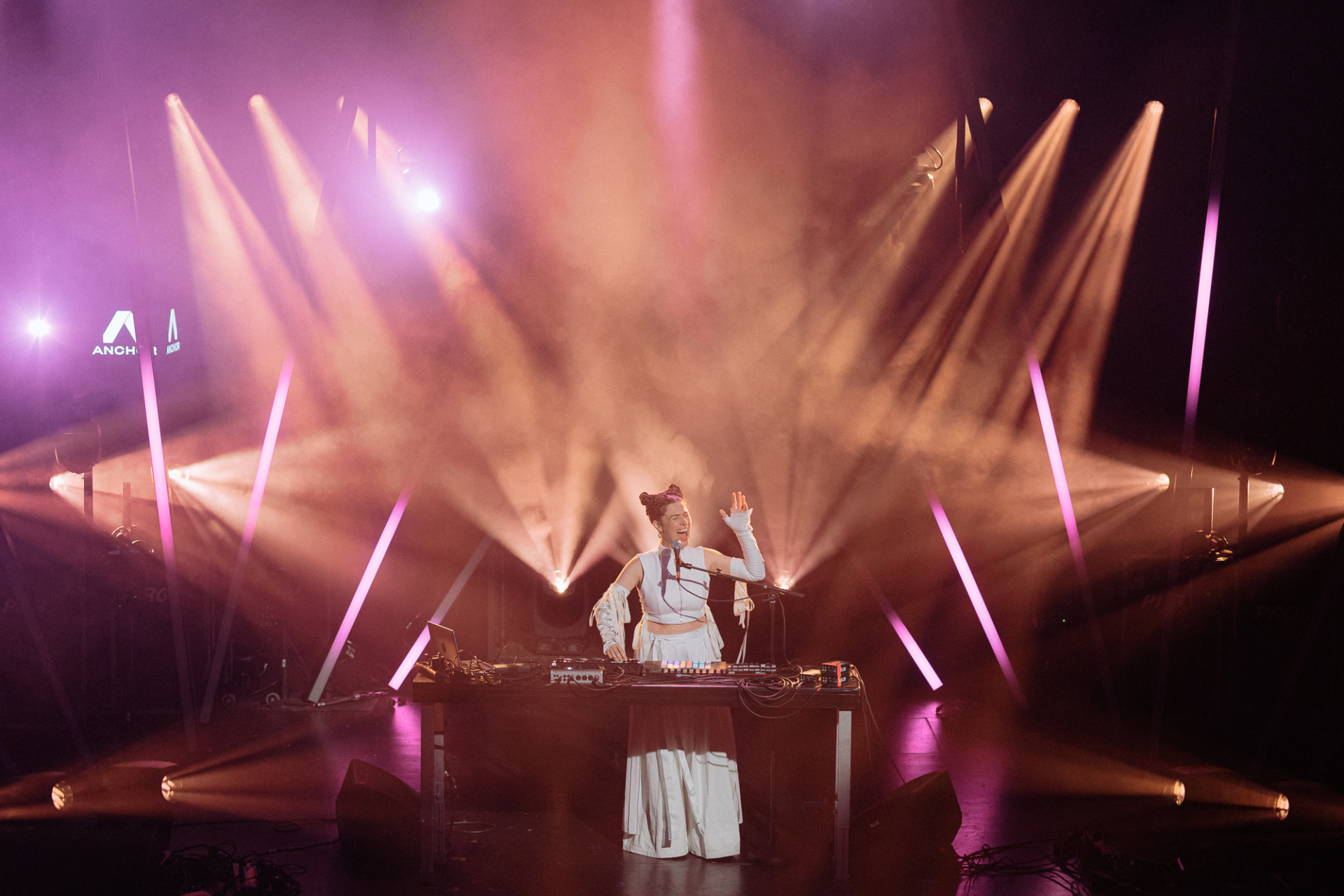
The 21st Reeperbahn Festival concluded Saturday night, Sept. 19. Across four days, around 45,000 visitors experienced an international program featuring approximately 540 concerts (260 of them curated) by around 425 acts (231 curated) from 44 countries across more than 40 venues. The music program was complemented by the Arts & Words program, which presented around 30 events, including readings, live podcasts, art exhibitions, and guided tours.
This year’s Reeperbahn conference program featured approximately 120 sessions with around 420 international speakers from 31 countries, welcoming roughly 5,500 industry participants from 52 nations.
Those are the cold, hard numbers. Facts. But no matter how impressive they read, they don’t do an event like Reeperbahn Festival justice. The real value of these types of showcase festivals cannot be quantified. The real magic happens inside the venues that host this lineup of young and often incredibly talented artists.
Is The Live Biz Still Legit? Tackling The Tough Questions With Reeperbahn Festival Director Detlef Schwarte
Provided you’re willing to step inside, which brings us to the number one problem the live industry is faced with right now: the struggle of the grassroots; the dying of clubs; the slow but steady erosion of that part of the biz which should be the fertile grounds where young artists – and live professionals for that matter – are able to hone their skills. Hamburg’s Reeperbahn features dozens of clubs as well as theaters, some dingy, some cosy, some iconic, some ugly, some beautiful, which all host concerts during the festival.
It’s hard to say whether it’s an over-saturation with blockbuster stadium productions, or a general weariness of scale, spectacle and sensory overload, but roaming around Hamburg’s famous red light district for three days, popping in and out of these venues at random, and seeing and listening to some great music has never felt more fulfilling than in 2026.
The Reeperbahn itself is a sensory overload, especially during the festival, with all the pop-ups, food stalls and open-air stages joining the regular array of kiosks, neon-lit erotic stores and densely stacked pubs, clubs and restaurants vying for people’s attention.
But the moment you step into Prinzenbar, Molotow, Schmittchen, UWE, Mojo Club, Nochtspeicher – you name the venue – it all fades away and you’re focus is drawn to just a few things: a stage, a performance; a bar; an audience. That’s it. If you’re early, and the performance hasn’t started yet, you have time to take in the surroundings, and notice quirky details, cool artwork, elaborate ornaments, awesome architectural details. You may even witness a band’s soundcheck before they go on stage.
Arriving early is only ever necessary for the most-hyped shows. Usually, you’re going to have the best time hopping from gig to gig, entering and exiting mid-performance, or staying right until the end if it captivates you. Finding artists that do that may take a while, it may not happen at all, but that’s part of the adventure.
When it does, the venue, the other guests, the funny smell from behind the bar – it all becomes irrelevant in light of the act on stage. You’re sucked into their world for the duration of their set, and you can be sure that those around are experiencing the exact same thing. Because of that look in their eyes; those tears flowing down their cheeks; their gentle swaying, manic jumping, mechanic head-bobbing, easy two-stepping that matches your own rhythm.
There were several such moments during Reeperbahn Festival 2026, like KOYOT playing at UWE on the Friday, a band whose music goes down so easily despite being so serious in terms of the topics it tackles. There’s this one song about the kidnapping of indigenous women in Canada, which is a real crisis. It had everybody tapping their feet until they realized what frontman Calling Rivers was actually singing about.
There was another moment, a free concert taking place inside the tiny Haspa Trailer on Heiligengeistfeld, by sould artist Robine, who somehow managed to squeeze enough of her live band into this tiny trailer to deliver an uncompromising concert that wouldn’t have sounded better on any of the big stages.
And then there’s Ganna, the Ukrainian artist who won this year’s Anchor Award. The jury couldn’t have chosen better. Her Anchor performance, where each artist only gets one song, was enough to move half the room to tears. Imagine the atomsphere in the room during her full set at Mojo Club the day before.
Ganna sings Urkanian folk songs over her own electronic and analogue compositions, while taking the use of loop machines to a whole new level. The technology only complements her incredible voice and vocal range, which sounds angelic and ethereal in one instance and outright haunting the next. Ganna is the complete package. A “genius” as one of this year’s Anchor Award jurors said. “Divine” would have been accurate as well. It’s artists like her for whom stages are made.
Just three examples of why Reeperbahn Festival is so important. And why it seems outrageous that Germany’s minister for culture wants to cut the festival’s funding and instead give more money to the Bayreuth Festival, which already receives tons of state subsidies. It’s another outgrowth of a peculiar way of looking at culture in Germany, and other parts of Europe, where traditional, classical music is considered “serious music” worthy of public funding, while pop and rock culture is still branded as something less.
Proving that it’s not, year after year – that’s the real value of Reeperbahn Festival. Sure, the conference tackles a lot of issue faced by the wider industry, including the funding issue just mentioned. And that’s important as well.
But the real issue is that people aren’t going to clubs anymore – including apparently the politicians making these funding decisions. It’s the only way to explain how they could not realize how incredibly serious many of these up-and-coming musicians take their art; that they often display serious skills on their instruments of choice; and that their music is often seriously captivating, uplifting, sometimes even healing.
To not recognize clubs, the people running them, the artists performing in them as the very foundation of this industry, seems foolish. These are places where young and old gather in public and share real moments, instead of suffocating inside echo chambers at home.
There was one moment during a concert, when the bassist of KOYOT addressed the audience and casually asked everybody to turn around and say hello to a stranger, and then asked everybody to yell out the name of the friend they’d just made. Even if you hate crowd work you couldn’t help but feel that this was a genuine and warm moment, a reminder that we’re really all brothers and sisters in spirit.
Reeperbahn Festival 2026 made one feel like it wasn’t too late to prevent a complete split of this business into a lucrative premium segment at the top, and an undervalued, underfunded small- and mid-size market, where everybody involved in a show struggles. But we’re quite far down that road, Reeperbahn Festival made that clear, as well.
Several club operators, and promoters Pollstar has been speaking with confirmed that people are buying tickets increasingly late. After all, the audience’s spending power is limited by the current economy. Often times, they’ll not know whether they’ll be able to afford a show until the last moment. And, as show day approaches, they increasingly seem to conclude that they can’t. Those who continue to spend good money on live tend to pick the guaranteed experience of a major show over the club-hopping adventure a talent festival promises.
One solution to the problem would be to realize that the latter can be so much more rewarding than the former. It just depends on your mindset. Do you want to be where everybody is, and where everybody has their phones out to document that they’ve indeed been where everybody was?
Or do you want to be where hardly anybody is, and potentially discover the next big stadium act at a point in time when they are performing to just 100 people, and get properly invested in the show because there aren’t thousands of phone screens blocking your view. No one’s really bothered recording it, there’s no claim to fame to being at that show. Yet. But there’ll be a claim to fame when that act makes it to arena level and you can say with pride: “I’ve seen them in Hamburg when they were playing to 50 people.”
What is more, people who like to hunt for something new and special don’t tend to talk during the gig. They sit or stand and listen. Compare that with the atmosphere inside an arena, stadium or major festival these days, where people just can’t seem to zip it even for an hour.
It’s easy to object that it’s all a matter of taste. That some simply prefer the comfortable and structured modern arena or stadium experience and others the uncertain, full-of-promise club experience.
Some of the professionals Pollstar has been speaking with present a different theory, though. They say that younger generations have been spending a lot of their time in virtual worlds, whether that’s gaming, social media, or Netflix. There seems a general anxiety of being exposed to difficult scenarios or strangers in a public setting, exceptions confirm the rule.
Add two year’s of lockdowns, during which a certain generation never left the house to go see a show during what would have been their crucial gig- and festival-going years, and you get what we see today: a whole generation of young individuals, who’d rather ask their parents for hundreds of dollars for a ticket to go see a pop star inside some gigantic concert buidling, because it’s a safe, guaranteed experience, rather than spending that money on dozens of club shows across the month.
If they only knew how cool and rewarding that experience can be, and started talking about it and sharing it on social media, and creating FOMO moments around club-hopping and the discovery of new artists before they become global superstars – it would end the entire grassroots struggle overnight. It’s up to us parents of children not yet in their gig-going prime to introduce them to grassroots music and the club circuit. So they end up with that spirit of adventure and stop being anxious about everything that’s not padded, pre-planned or picture perfect premium.
And even if they are anxious there can be merit to immersing themselves in the grassroots world, because that’s where they’ll find artists galore who are dealing with the same anxieties through their performance on stage, and address it in their lyrics. And that’s when they’ll find that a small dark room doesn’t have to be threatening or scary, but can actually be the safest place on earth.
Subscribe to Pollstar HERE
_Originally reported by [Pollstar](https://news.pollstar.com/2026/09/21/reeperbahn-festival-2026-a-reminder-of-what-matters/)._
Comments
Loading comments…