
Believe and TuneCore Implement Artist Opt-In for Suno Music Submissions
Believe and TuneCore will not submit music to Suno unless artists explicitly opt in. Denis Ladegaillerie outlined a two-stage consent process, emphasizing that artist permission is mandatory.
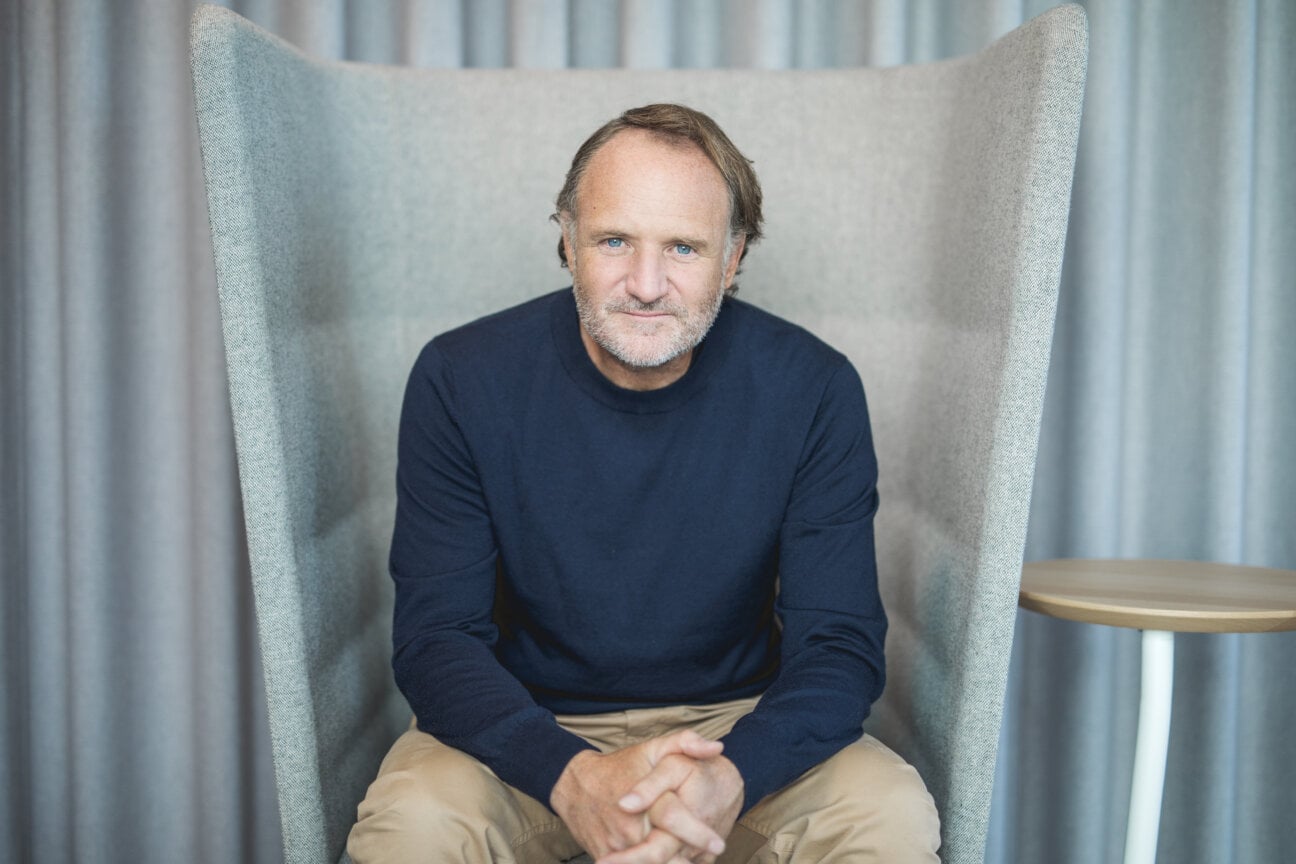
Believe and TuneCore won’t feed music to Suno without giving artists choice to opt in: ‘The artist must consent first, period.’
September 16, 2026 By Tim Ingham
It’s been a big couple of weeks for Suno.
Continue to article...
Last Tuesday (September 8), the gen-AI firm announced a new licensing agreement with Believe , adding to existing deals with Warner Music Group and BMG .
The next day, Suno introduced its V6 models , which the firm says were trained from scratch on a collection of copyrights from licensed partners.
One major question raised by this news: how much say individual artists will have over whether their music gets absorbed into Suno ‘s V6 mainframe.
That’s a particularly acute question for Believe and its subsidiary TuneCore , given the global volume and diversity of the artists and labels they distribute.
The answer from Believe Founder and CEO Denis Ladegaillerie is emphatic.
Before any Believe / TuneCore music is uploaded to the training corpus of any AI model, he says: “The artist must consent first, period.”
Speaking to MBW in the wake of the Suno deal announcement, Ladegaillerie explains that a dual-stage consent process stands between Believe ‘s artists and any AI partner.
“Whether you’re a TuneCore artist or Believe artist, we have two layers of consent,” he says.
“The first, via an opt-in mechanism , asks whether you want your music to be considered in AI-type programs. If an artist opts in to that first layer, they will then be presented with different individual opportunities – whether with Spotify , YouTube , Suno, or another service – and they can opt out of [each of these] if they are not willing to participate.
> “We will contact all artists who opted in for their music to be considered in our AI programs and tell them: ‘Here’s the Suno deal, do you want to participate or opt out?’ And if it’s the [latter], we’ll opt them out.” Denis Ladegaillerie, Believe
“We will contact all artists who opted in for their music to be considered in our AI programs and tell them: ‘Here’s the Suno deal, do you want to participate or opt out?’ And if it’s the [latter], we’ll opt them out.”
For the sake of clarity: If a Believe/TuneCore artist chooses not to participate in the company’s Suno deal, that artist’s music will be expressly excluded from training Suno’s models.
Nor, then, will it feed any subsequent outputs from those models.
Believe ‘s long-held ‘responsible AI framework’ rests on four principles: consent, control, compensation , and transparency .
These four principles, Ladegaillerie tells MBW , were the “non-negotiable drivers” of its approach to the Suno partnership.
Ladegaillerie adds: “Artist sensitivity is rightly very high over AI, and our view is there’s no compromise. The artist must consent first, period.
“If that means there are fewer artists [in the training data], so be it. Artists need to be able to make their own decisions.”
> “Artist sensitivity is rightly very high over AI, and our view is there’s no compromise. The artist must consent first, period.” Denis Ladegaillerie, Believe
On the face of it, Believe ‘s new agreement with Suno was a surprise.
This is the same Believe , remember, that announced a new policy in April : blocking the distribution of any track it detected as being created with Suno models trained on unlicensed content.
Yet when you dig into the details of Believe’s new Suno deal, that policy actually remains unchanged.
Participating repertoire from Believe/TuneCore may be included in Suno’s new licensed models (V6 onwards). Tracks generated by Suno’s V6 models (and future industry-partnered models) are eligible for distribution from Believe and TuneCore, too.
However, music from Suno’s earlier models remains blocked from distribution by both Believe and TuneCore.
Crucially, Suno says V6 was trained from scratch on a different dataset from its previous models – one which, copyright-wise, excludes any repertoire it hasn’t licensed.
“Our standard is straightforward: protected material used to train the new model must be licensed or otherwise expressly authorized,” Ladegaillerie tells MBW .
He adds: “That is the standard we have applied consistently, and Suno’s new model meets it.”
> “We’ve seen a fundamental change in its understanding that it needs to create value for everyone: its users, the music ecosystem, and the artists.” Denis Ladegaillerie, Believe
Believe has been encouraged by the guardrails Suno has committed to in recent months, including audio fingerprinting, watermarking tracks, and monthly caps on the number of songs subscribers can download.
The French company is also reassured by Suno’s decision to retire all previous models after the launch of V6.
Ladegaillerie says: “We felt in the past two or three months the level of controls at Suno has significantly increased.”
He adds: “We’ve seen a fundamental change in its understanding that it needs to create value for everyone: its users, the music ecosystem, and the artists.”
Suno said in February that it had reached $300 million in annual recurring revenue and 2 million paid subscribers.
“We now have an opportunity to capture a meaningful percentage of Suno’s subscriber revenue,” says Ladegaillerie .
Even so, Ladegaillerie is not forecasting a vast reshaping of Believe’s economics – nor the music business’s – from gen-AI music.
“AI revenues for us next year are likely to remain a small share of [Believe’s total turnover],” he says.
“I stand by what I’ve said in the past: Generative AI represents a marginal revenue opportunity , and a marginal revenue threat for the music industry.
“AI revenues will grow, but I don’t expect it to become a substantial proportion of our overall digital revenues.”
> “I stand by what I’ve said in the past: Generative AI represents a marginal revenue opportunity , and a marginal revenue threat for the music industry.” Denis Ladegaillerie, Believe
The precise details of how Suno plans to calculate royalty payouts to the music industry remain unclear, though the company has suggested it will adopt some kind of revenue-share model with licensor partners.
The likelihood is that companies licensing Suno will be paid on two fronts: the music licensed for Suno’s training data (i.e. the ‘inputs’), and the music produced by the platform’s licensed models (i.e. the ‘outputs’).
Nothing is confirmed, but the outputs of Suno V6 could, for example, be mined by detection technology to ascertain the percentage of ‘input’ that came from each copyright holder’s music – creating a framework for royalty distributions.
And now, the obligatory reminder: while Suno has inked partnerships with Believe, BMG, and Warner for its V6 model and future iterations, other large music companies have not licensed the service.
The two biggest non-licensors, Universal Music Group and Sony Music Group , remain in active litigation against Suno , alleging mass copyright infringement in the training of its pre-V6 models.
Announcing Believe’s Suno partnership on September 8 , Ladegaillerie struck an optimistic note on what the platform can provide for his company’s artists.
“For 20 years , we have been helping artists and labels reach their full potential,” said Ladegaillerie, “and increasingly that means working with new technology like AI, while ensuring that responsible innovation translates into greater opportunities and value-generation for artists.
“The partnership we worked on with Suno for Believe and Tune Core unlocks powerful tools for all artists and labels.
“It now gives them a meaningful choice over how they can participate, protect their rights and enables them to share the value created by innovative responsible AI technologies.” Music Business Worldwide
_Originally reported by [Music Business Worldwide](https://www.musicbusinessworldwide.com/believe-and-tunecore-suno-consent/)._
This story is summarized from coverage by Music Business Worldwide.
Read full story →Comments
Loading comments…