
CeCe Winans Reflects on 40 Years of Faith, Fame, and Gospel Music's Future
Gospel icon CeCe Winans, the most awarded female gospel artist with 18 Grammy Awards, shares insights from her four-decade career and discusses the evolving landscape of praise and worship music in this exclusive interview.
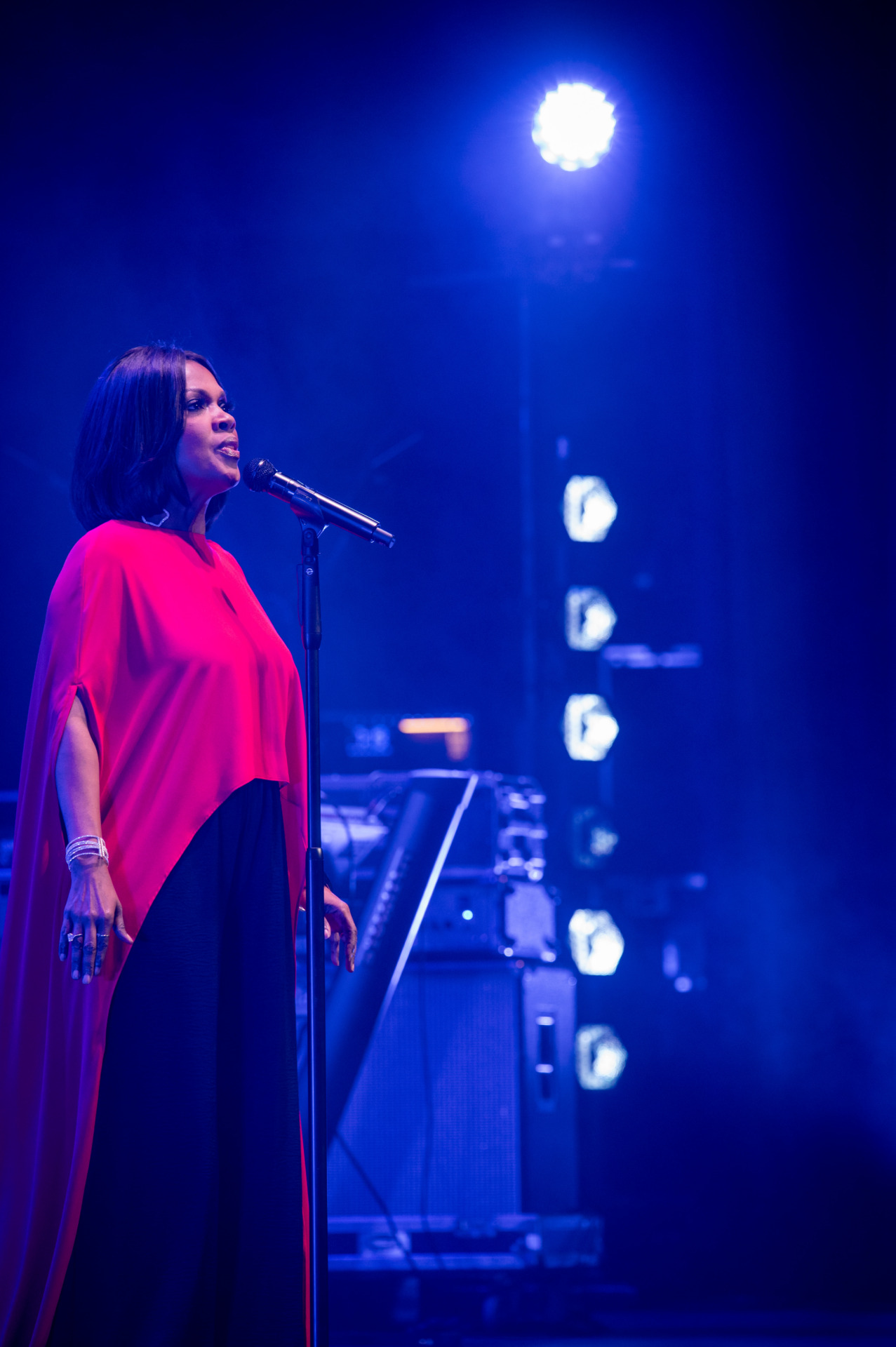
CeCe Winans is the Queen. The legendary Gospel artist is also the most awarded female gospel artist in history, holding 18 Grammy Awards across a storied career of praise and worship music.
As Winans will admit, the journey through the music business wasn’t always the easiest to navigate. But through it all, the iconic singer has prided herself on staying true to her purpose: making music to spread God’s word. A commitment that is both introducing her to a new generation of Gospel music fans, as the genre explodes, and satisfying her dedicated core fan base. And the numbers agree. According to Pollstar Boxoffice Reports, Winans has landed at No. 9 (out of 50) on the 2026 Q3 Chart Year Christian & Gospel artists, grossing $3,910,589.70 across 61,67878 tickets sold. Furthermore, Winans is also leading female artists with seven nominations, including one for artist of the year, at the 57th Annual GMA Dove Awards, scheduled to take place on Oct. 6, 2026 at the Bridgestone Arena in Nashville, Tennessee.
Now, with four decades under her belt and CCM/Gospel music in the middle of a popularity boom, Winans sits down with Pollstar/VenuesNow for an exclusive conversation. In this Q&A, CeCe Winans discusses how these genres have evolved, both commercially and thematically, her career, and how she’s kept the main thing the main thing throughout her journey.
Pollstar: You’ve had a career spanning five decades in Gospel and Christian music. What would you say the culture and the music in these genres look like and feel like today when compared with the situation at the beginning of your career, especially in terms of scale, staging, and the way fans discover new artists?
CeCe Winans: Well, I’m not quite at five decades yet, but I have been blessed to have a career that has spanned more than forty years, and that’s still a long time! When I look back, so much has changed, and a lot of it has to do with technology and the way people experience music today. Concert production has certainly grown. Sound has always been important, but years ago we weren’t thinking about staging, video screens, lighting and all of the visual elements to the degree that artists do today. Now, audiences are experiencing Gospel and Christian music on a much larger scale, and I think it’s wonderful to see the excellence and creativity that has come into the live experience.
I love that Gospel and Christian music are reaching broader and more diverse audiences. But what I’m most grateful for is that, even with all of the changes, the heart of the music has remained the same. For me, it has always been about pointing people to Jesus, and I pray that never changes.
Let me know something about your journey: how did you end up getting involved in Gospel music? At what point, when you were a young girl, did you realize that this was the kind of message you wanted to promote using your talents? Has there ever been a moment when you felt disillusioned about Gospel music or Christian music as a business or in terms of belief?
I grew up listening to Gospel and Christian music because that was the only music allowed in our home. Now, growing up in Detroit, there was music everywhere, so of course we heard other kinds of music at school and around the city. But when we came home, my parents made sure Gospel music was what filled our house. Music was also a part of our family. I started singing with my brothers and sisters at home, and my parents were singers themselves. In fact, they met as teenagers while singing with the Lemon Gospel Chorus.
I sang in front of an audience for the first time at church when I was eight years old, and I can tell you, it wasn’t willingly! I was scared. But my parents recognized the gift in me before I really understood it myself. What stayed with me was seeing how the song touched people. Even as a young girl, I began to understand that singing wasn’t just something I could do, it was something God could use.
As far as business is concerned, yes, there can be disappointing moments because the business is made up of people, and people are imperfect. But one of the most important things I’ve learned is not to confuse the business of Gospel music with the God I’m singing about. My faith has never been built on the music industry. It’s built on Jesus. My identity is not wrapped up in awards, charts, sales or whether somebody opens a door for me. Those things can change overnight. But when you know who you are, whose you are and why God called you, you can walk through disappointments without allowing them to take away your joy or your purpose. I’ve had challenging moments in the business, but I’ve never been disillusioned about the message. If anything, the longer I’ve been doing this, the more convinced I am that the message of hope we carry is needed.
What is the biggest difference now in worship music compared to when your Grammy-winning debut solo album, Alone in His Presence , was released? Do you think the worship aspect of Gospel and CCM has been raised or neglected as the genre has become more popular?
I think the biggest difference is how widespread worship music has become. Technology and all of the different platforms available today allow music to reach people around the world in ways we couldn’t have imagined when Alone in His Presence was released. I believe the worship aspect has grown along with the genre, but we have to be intentional about keeping God at the center of it. As artists, we’re called to share the good news through song. When the music remains about Him and not about us, that’s when worship is at its most powerful and truly connects with people.
When did you first notice the increased demand for CCM and Gospel music? Has your audience started to consist of younger people, or does it still comprise your original fans?
I think we’ve seen it building for quite some time, but over the last several years it has become impossible to ignore. Gospel and Christian music have always had a faithful audience, but now we’re seeing people discover this music in places where they may not have encountered it before. Streaming and social media opened doors that simply weren’t there when I started. A song can reach someone anywhere in the world without them necessarily hearing it first on Gospel or Christian radio. And I think during and after the pandemic, people were searching for hope, encouragement, and something they could hold on to. Music that speaks to faith has become even more important.
For me, the biggest indication has been seeing the response when we go out on tour. People are coming, they’re bringing their families, and in many cities, we’re seeing sold-out venues. That tells you there is a real hunger for this music and, more importantly, for the message behind it.
People like Forrest Frank, who are younger, are reaching huge audiences entirely via streaming and social platforms, having no radio or label support behind them. You are a legend, the most awarded and highest-selling Black woman gospel singer of all time and STILL pulling in as much as ticket sales, if not more, than other newer acts. In the beginning, you did it with radio, label support, TV appearances…a clear change in strategy. So, from your point of view, does this change mean the genre is different in effect, or is it the same audience discovering new ways to show their affection for this powerful music? And have you managed to adapt your show and artistry to all of these changes?
It’s really both, and that has been one of the greatest blessings for me. I’ll look out into the audience and see people who have been listening to me since the BeBe & CeCe days, but then I’ll also see their children and sometimes their grandchildren. I’m seeing a lot more young people at the concerts, and they know the music. They are not just coming because their parents brought them. They’re singing “Believe For It,” “Goodness of God,” “That’s My King,” “Holy Forever,” and songs from different seasons of my career. That means a lot to me because I’ve always believed that faith should be passed from generation to generation. So, when I see several generations worshipping together in the same room, that is bigger to me than simply reaching a new demographic. It tells me the message is continuing.
Yes, my show has adapted to the change, but I think you have to know what should change and what shouldn’t. We’ve grown in terms of production, technology, and how we communicate with audiences. Social media allows us to stay connected with people between albums and tours in ways we couldn’t years ago. And when we’re putting a show together, we understand that audiences today have experienced incredible productions and expect excellence. But I never want the production to become bigger than the purpose. At the center of what I do is still the music, the message, and worship.
I’ve never felt pressure to become something I’m not just because the industry changes. I believe longevity comes from being willing to grow while remaining authentic to who God called you to be. So yes, we evolve, but the foundation stays the same.
The pipelines of Gospel and CCM have always been quite distinct from one another having different radio formats, different church networks, and different audiences. Are those separate channels still remaining, or are they beginning to merge as the number of tours increases?
Those distinctions still exist, but I definitely think the walls are coming down. For many years, Gospel and CCM could feel like two separate worlds. We were singing about the same God and sharing many of the same messages, but the radio stations were different, the audiences were different, the churches were different, and sometimes even the industry events were different.
Today people have much more control over what they listen to. A playlist doesn’t necessarily care what category a song belongs in. If somebody loves the song, they add it. I’ve experienced that personally. My audience today is very diverse, of different ages, races, denominations, and backgrounds. When we come together in concert, nobody is asking whether something belongs in Gospel or CCM. They’re responding to the song. I think touring is helping that happen as well because once people experience this music live, some of those industry labels become much less important. Music has a wonderful way of bringing people together.
Could an artist nowadays establish a full touring career, reaching arenas and stadiums, without ever having passed through the conventional Gospel or CCM industry channels that you yourself moved through? Is there something being lost in this approach, or is it simply a different kind of valid route?
I absolutely believe it’s possible today. We’re already seeing artists build audiences in ways that would have been very difficult when I started. Again, technology has given artists the ability to go directly to people. You don’t necessarily have to wait for someone at a record company or radio station to tell you that you have permission to have an audience. If the music connects, people will find it, share it, and support it. I think that is a wonderful thing.
At the same time, there is something valuable about development. When BeBe and I were coming up, we had opportunities to learn from people who had been doing this longer than we had. You learned how to perform, how to handle business, how to treat people, and how to sustain a career. So, I wouldn’t say the traditional route is the only right route, because clearly it isn’t anymore. But whatever route you take, you still need wisdom, discipline, accountability, and people around you who can help you grow. Getting people’s attention quickly and building a career that lasts are two different things.
As someone who’s watched the genre’s institutions such as radio, awards shows, and church networks evolve, do you think those institutions still hold the same gatekeeping power the
_Originally reported by [Pollstar](https://news.pollstar.com/2026/09/30/cece-winans-on-four-decades-of-faith-fame-the-future-of-gospel-music-exclusive/)._
Comments
Loading comments…