
College Stadium Concessions Evolve from Basics to Premium Dining
Universities nationwide are transforming stadium concessions from traditional hot dogs to upscale cuisine, enhancing VIP and premium offerings to boost revenue and satisfy evolving guest expectations. Hospitality firms are actively redefini
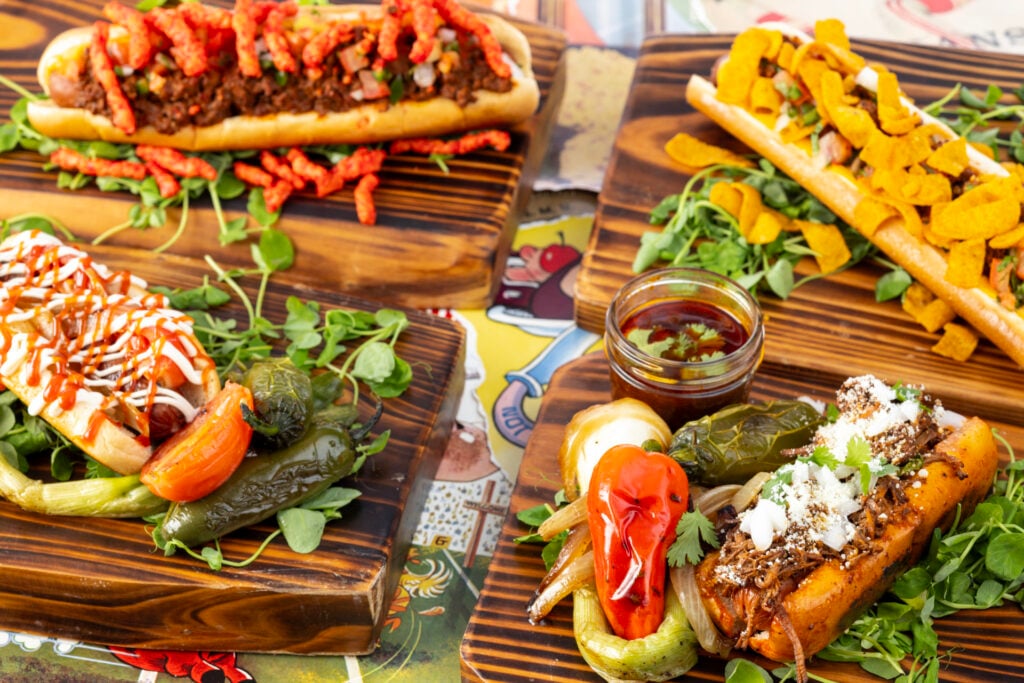
College stadium concessions have gone from hot dogs to haute cuisine as universities across the country expand VIP and premium amenities to generate added revenue and meet growing guest expectations.
Hospitality companies are aggressively setting a new F&B bar with services that span high-volume concessions, premium suites and clubs, donor areas, catering and special events.
“I’ve been in this business for decades and the biggest change is the role that food and beverage play on game day,” says Kevin Mitchell, Senior Vice President Sodexo Live! “You came to watch football and you grabbed a hot dog and a soda along the way, but today, hospitality is an inherent part of the experience. Fans still want the hot dog, but they also expect variety, quality, local flavor and an experience that feels specific to their school and community.”
The F&B evolution has hit a new level of urgency with the expansion of NIL opportunities and the arrival of direct revenue sharing with athletes adding pressure on college athletic departments to develop new revenue streams. Many are turning to premium suites, seating and gathering spaces along with multiple tiers of food and beverage.
“It’s been an evolution rather than something that happened overnight, but it’s accelerated considerably over the last decade,” offers Mitchell. “Fans have become much more sophisticated about food and hospitality in their everyday lives, and naturally those expectations follow them into a stadium.”
It was beer that brought hospitality to a head, according to Ken Graber, President of OVG Hospitality, which has programs at Penn State, the University of Illinois, Texas Tech, Colorado State, Vanderbilt University and UNLV at Allegiant Stadium.
“If you look back, there were a lot of universities for the longest time that wouldn’t even allow alcohol,” says Graber. “Most universities now allow alcohol to be sold within general concessions and premium. That was the first inroad: When they started seeing that they could actually make a good sum of money related to it and also keep the fans happy and meet expectations of what it’s like going to professional events, like the NFL.”
With NFL stadiums as the standard, college facilities are quickly closing the gap.
“The comparison isn’t necessarily university to university anymore, rather fans are comparing their experience to professional games, concerts, or any major event,” says Mitchell. “In Miami, the Hurricanes play their games at Hard Rock Stadium, so they really look for the same great game day experience they’d get at a Dolphins game or any other event at Hard Rock Stadium.”
Many universities are transforming underutilized areas into bustling hospitality spaces.
“What you’re seeing as part of the renovations is more clubs, more all-inclusive, more suites, more loge boxes,” explains Graber. “There are different levels of premium, like you see in professional sports. They’re trying to mimic because there’s a lot of revenue that needs to be generated due to NIL.
“If you look at Penn State, they went through a $700 million renovation. If you look at Northwestern, what they’re doing with their brand new facility: lots of premium, lots of accessibility to different food and beverage products, name chefs, a lot of grab-and-go, speed of service, quality all-inclusives. Those are all things that everybody’s looking at on a daily basis in collegiate because the expectations of fans have changed and the expectations of revenue has changed as well.”
Modernizing aging facilities presents operational challenges. More than two dozen college football stadiums are at least 100 years old including Bobby Dodd Stadium at Georgia Tech, Neyland Stadium at the University of Tennessee, the Buckeye’s Ohio Stadium and Spartan Stadium at Michigan State.
Older venues often lack the storage and kitchen infrastructure required by modern foodservice operations.
“One, is storage. Two, is kitchens,” says Graber of the modern hurdles faced by historic stadiums. “A huge part of the renovations is putting state-of-the-art kitchens in with the expectation that the food quality is going to improve.”
Stadium foodservice is increasingly using compact, ventless cooking equipment to decentralize food production. EVO’s EVent griddles allow operators to grill and cook in locations that previously would have required expensive hood and exhaust systems, while multi-cook convection and combi ovens provide high-volume, programmable cooking in a small footprint. The result is greater flexibility in concession design, more cooking capacity and the ability to move food preparation closer to the fan.
“You can cook in front of people,” adds Graber. “You’re not cooking behind a wall. You’re having more showcase kitchens at a lot of our facilities because people want to see where the food is being made.”
Premium ticket buyers expect an equally elevated culinary experience at their seat. Hospitality providers are leaning into what makes each university and the surrounding community unique, including designing menus with local flavor.
“For example, at the University of Texas we have partnerships with celebrity chefs who have designed game-day offerings that are still familiar to a stadium dining experience, but with a higher-caliber twist,” offers Mitchell.
In addition to guest chefs, universities are partnering with local restaurants to expand offerings and support the surrounding community.
“You can see that across our college athletics partners, whether it’s University of Florida, Texas, Miami, Cincinnati or Ole Miss,” continues Mitchell. “We’re bringing local restaurants and flavors into stadiums, creating menus specifically for premium spaces, introducing more chef-driven offerings and thinking about everything from speed of service to presentation.”
With 100,000+ fans at some stadiums, scalability for local restaurant partners is crucial.
OVG Hospitality will often start a local restaurant with a point-of-sale cart before the big league. They also offer restauranteurs access to their concession stands to produce food, collaborate on recipes and help with training.
“As they grow, we grow with them in a sense because they start understanding the volume, the capacity, and the needs,” explains Graber. “Sometimes they can handle it. Sometimes they can’t handle it. But we know that in advance, and we know how to work with them.”
Proof in the Pudding, which provides F&B for Auburn, Duke, Georgia Tech, Mississippi State, Rice, Wake Forest, the University of Alabama and the University of Georgia, combines scratch-made food and venue-specific concepts with the planning and operational precision required for major game days.
Each program is tailored to the university and may include concessions, premium hospitality, specialty menu concepts and partnerships with local restaurants and businesses.
“Today’s college hospitality programs require much more than great food,” says Jeremy Campbell, Executive Vice President of Operations for Proof in the Pudding. “You’re managing everything from high-volume concessions and premium spaces to custom concepts and local partnerships, all within the same venue. Our job is to bring those pieces together in a way that feels specific to each university while delivering the operational consistency needed on game day.”
Gone are the days of a single level of bleacher seating with a mid-field section for boosters. Personalization and flexibility are increasingly important as universities migrate thousands of fans from GA to premium spaces.
Part of that is finding ways to make premium more affordable. For example, at Duke University in North Carolina, Proof in the Pudding is offering single-game tickets to the Devils Deck, which allows up to 1,500 fans a place to enjoy elevated food, drinks and service without committing to a full-season premium package.
Technology has been a driver reducing friction and lines.
“Technology has also changed what’s possible,” says Mitchell. “Grab-and-go, frictionless concepts and other service innovations allow us to spend less time thinking about the traditional concession line and more time thinking about the overall experience. For more than 20 years we’ve partnered with the University of Florida and our Grab ’N’ Go Gators stores at Ben Hill Griffin Stadium have maximized the guest experience in recent years with improved concourse flow and a greater variety of quick options, resulting in four times increased revenue.”
That’s not to say the traditional concession stand is gone.
“I don’t think the concession stand ever goes away,” says Graber. “What I do think is that, as you see in a lot of our buildings, they’re moving more towards marketplaces. You’re able to get through lines faster. …If we can cut out a few seconds, that’s going to help the customer experience because it’s much faster, as well as helping us serve more food.”
Community involvement is another priority. Many universities have relationships with nonprofit organizations, school groups and other community partners, including participation in game-day operations and hospitality programs.
“Typically, the nonprofits are more front of house based, more service based, talking to the customer directly, and then we usually back up with our culinary and our supervisory support,” explains Graber.
Even with carving stations and curated wine lists, hot dogs and chicken tenders are still the dominant choice among fans.
“The basics sell really well and those will always be the top ones,” says Graber. “What you’re seeing now, though, is different styles of pizza, different styles of tacos, burritos, bowls. You’re seeing ‘wow’ items like the two-foot-long hot dog or a big bucket of chicken served with caviar. These are all things that have adapted to customer expectations and what they are looking for. The number one thing, if we’re going to serve it, has to taste really, really good, especially for the price point we’re serving.”
Universities are also turning to their stadiums to generate revenue in the off season.
Proof of the Pudding provides premium dining beyond game-day operations. These events can support athletic department priorities such as donor and alumni relationships, NIL initiatives and year-round fan engagement. Examples include a restaurant-style experience held on Duke’s basketball court and Wake Forest University’s annual President’s Ball, which illustrate how collegiate venues are becoming distinctive hospitality settings.
“Food and hospitality have become an important part of how athletic programs engage people year-round,” says Campbell. “Whether it’s a donor event, a university celebration or a premium experience for fans, there are endless opportunities to use hospitality to create meaningful connections well beyond game day.”
All of these nuances are what make college athletics such an exciting hospitality space right now. It’s about taking the traditions and the sense of community and finding new ways to make all of it part of the modern college football hospitality experience.
“This is ever changing. What we’re doing today isn’t the same thing that we’re going to be doing tomorrow. Isn’t the same thing we’re doing the next day,” says Graber. “There’s a lot of change that’s happening within collegiate sports; it’s adapting to what’s next, which is the exciting part because don’t think anybody has 100 percent vision of what’s going to happen in the future, but we’re all ready to adapt and to look at ways to do things differently.”
But what does it mean for the future of the hot dog?
“The hot dog isn’t going anywhere, but I think we’ll see more restaurant-quality options, local partnerships, premium experiences and technology that make getting what you want easier and faster,” says Mitchell.
_Originally reported by [Pollstar](https://news.pollstar.com/2026/10/01/college-stadium-concessions-reach-new-heights/)._
Comments
Loading comments…