
Live Nation CFO Berchtold Discusses Global Expansion at Goldman Sachs Event
Live Nation President and CFO Joe Berchtold highlighted the significant growth potential in the global live events business during his presentation at the Goldman Sachs Communacopia + Technology Conference.
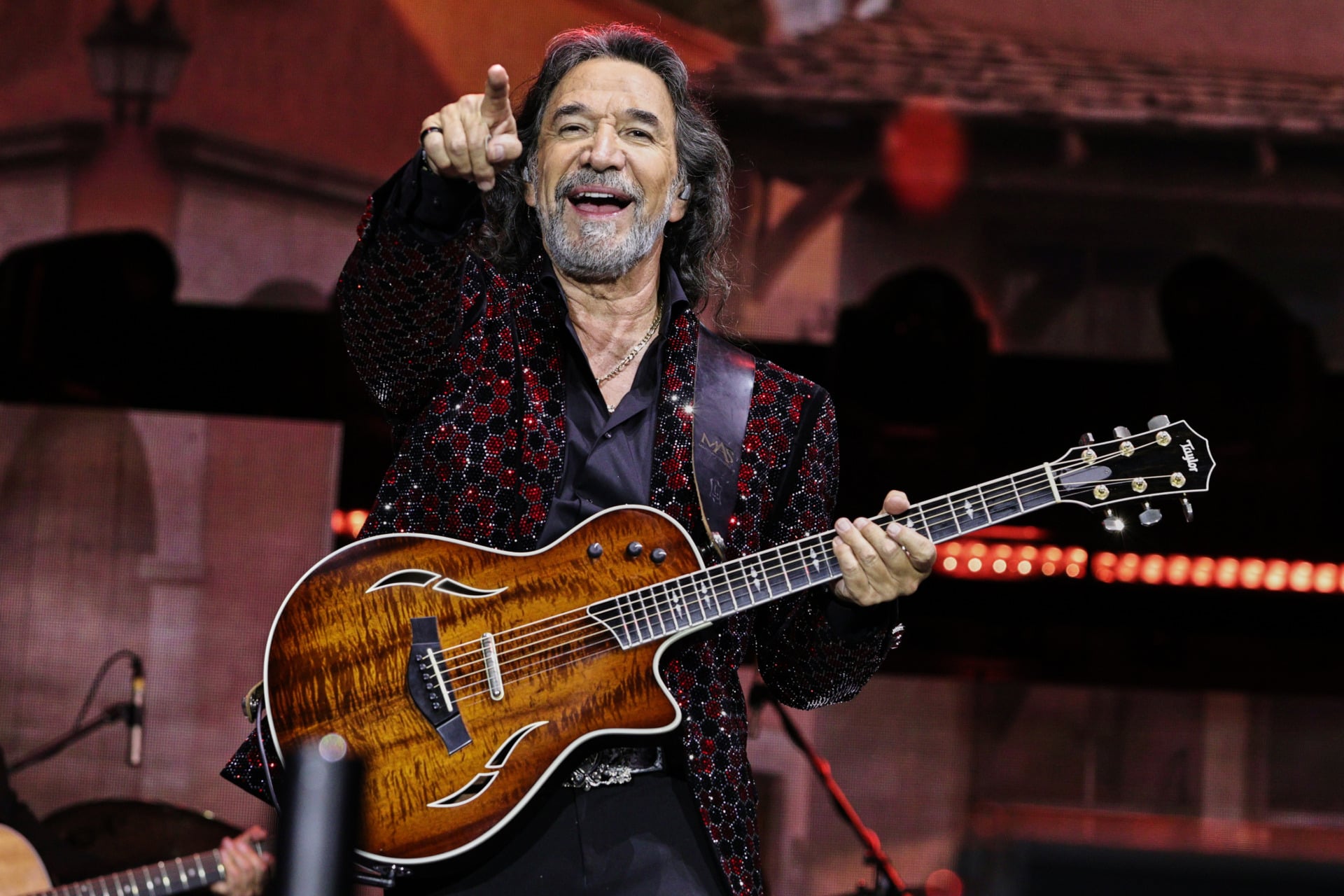
Speaking at the Goldman Sachs Communacopia + Technology Conference, Live Nation President and CFO Joe Berchtold said global expansion means there’s a “tremendous runway” of growth for the live business.
Perhaps as a reflection of a potential new regulatory landscape (see below), Berchtold’s comments demonstrated clearly that Live Nation sees it future as increasingly international and increasingly venues-based
“The U.S. is 5% of the global population, but still has half of our business. Latin America is up for us 15 times in the past 10 years. It is still one-tenth the level of activity as the U.S. is. Japan, huge market, is 40% of the activity level of the U.S. on a per capita basis. Even Western Europe can grow another 25%. So, I think as we focus on this as a truly global business, it has tremendous runway,” he said.
Berchtold said the rise of social media and streaming has allowed artists to break out of their traditional territories to become viable touring acts globally. Of course, anecdotally, that’s been obvious for awhile, but now it’s reflected in data.
“Number one artist post-COVID has been Bad Bunny, selling out stadiums globally. K-pop has been a huge phenomenon, as has Latin in general. The No. 2 genre in Brazil is country music. So you’re seeing the explosion of artists. What used to be a local or regional genre is now truly global. Pre-COVID, 8% of our top 50 tours were by non-English speaking artists. Today, it’s 30%,” he said. “It’s not going to be that long where I’m sitting here saying over half of our artists are not English speaking artists.”
There are still infrastructure challenges for touring internationally. Berchtold said building out “arenas or things like arenas” internationally is a focus for Live Nation’s venues arm, whereas in the U.S., there’s an increased focus on larger-cap theaters on existing arena campuses, a trend that’s become popular with projects like OC Vibe at Anaheim’s Honda Center and The 1901 Project recently announced for Chicago’s United Center (see page 206).
“Particularly in Europe and Asia, Latin America, you have some of these venues that are more like a Estadio GNP Seguros, that maybe a hybrid amphitheater-stadium that works well in those markets,” he said. “We’re also continuing to do large theaters, particularly in the U.S., and those particularly in conjunction with team owners that are looking to have a broader real estate play around their stadium or around their arena.”
LN Competitors Object To Settlement
Berchtold’s appearance came just days after the public comment period on the company’s settlement with the Department of Justice — required by the Nixon-era Tunney Act — closed.
“As you would expect, all of our competitors came out and said, ‘No, we would like you to cripple them more so that we can have an easier time competing,’” he said.
That’s not an entirely unfair reading.
AEG claimed in its filing that the proposed settlement “does not break Ticketmaster’s grip; it tightens it” because under its reading of the settlement, the requirement that Ticketmaster allow venues to rebid their deals still allows Ticketmaster to keep 85% of the market and only opens up about 170 events to bid and that the requirement that Ticketmaster open up its backend to rivals still allows Ticketmaster to collect fees.
Louis Messina, in a filing for Messing Touring, said he was unable to get Live Nation to return his calls starting in 2024 and was unable to book his artists in LN-owned amps, though he said LN did begin working with him again after the settlement was filed. He says the provisions in the settlement related to amps don’t solve the problem, because the sheds LN agreed to divest from represent too small a segment of the touring market, adding that without a break-up of Ticketmaster, Live Nation will continue to dominate the touring market.
NIVA also urged Subramanian to reject the settlement and proposed that when Subramanian sets penalties — a separate process from the Tunney review necessitated by the states that pushed forward with a trial and ultimately won a jury verdict that Live Nation and Ticketmaster did in fact operate as an illegal monopoly — he should restrict Live Nation from promoting more than half of a tour’s domestic dates; divest Ticketmaster and Live Nation’s artist management division; and ensure than penalties paid to the states by LN be at least partially earmarked for independent venues.
In his Goldman Sachs comments, Berchtold said the case could end up before the Supreme Court.
“Given that this case involves some fairly novel interpretations of antitrust law,” he said, “then it might be one that could be a reasonable candidate.”
_Originally reported by [Pollstar](https://news.pollstar.com/2026/09/22/the-biz-berchtold-talks-globally-at-goldman-sachs-ln-competitors-object-to-settlement-more/)._
Comments
Loading comments…