
Messi: How He Transcended Maradona Comparison and Redefined Argentina Football
Lionel Messi, an Argentinian football icon, will play his final match with the national team against Benin on October 6. This marks the end of an era where he surpassed comparisons to Maradona and forged Argentina's football identity in his
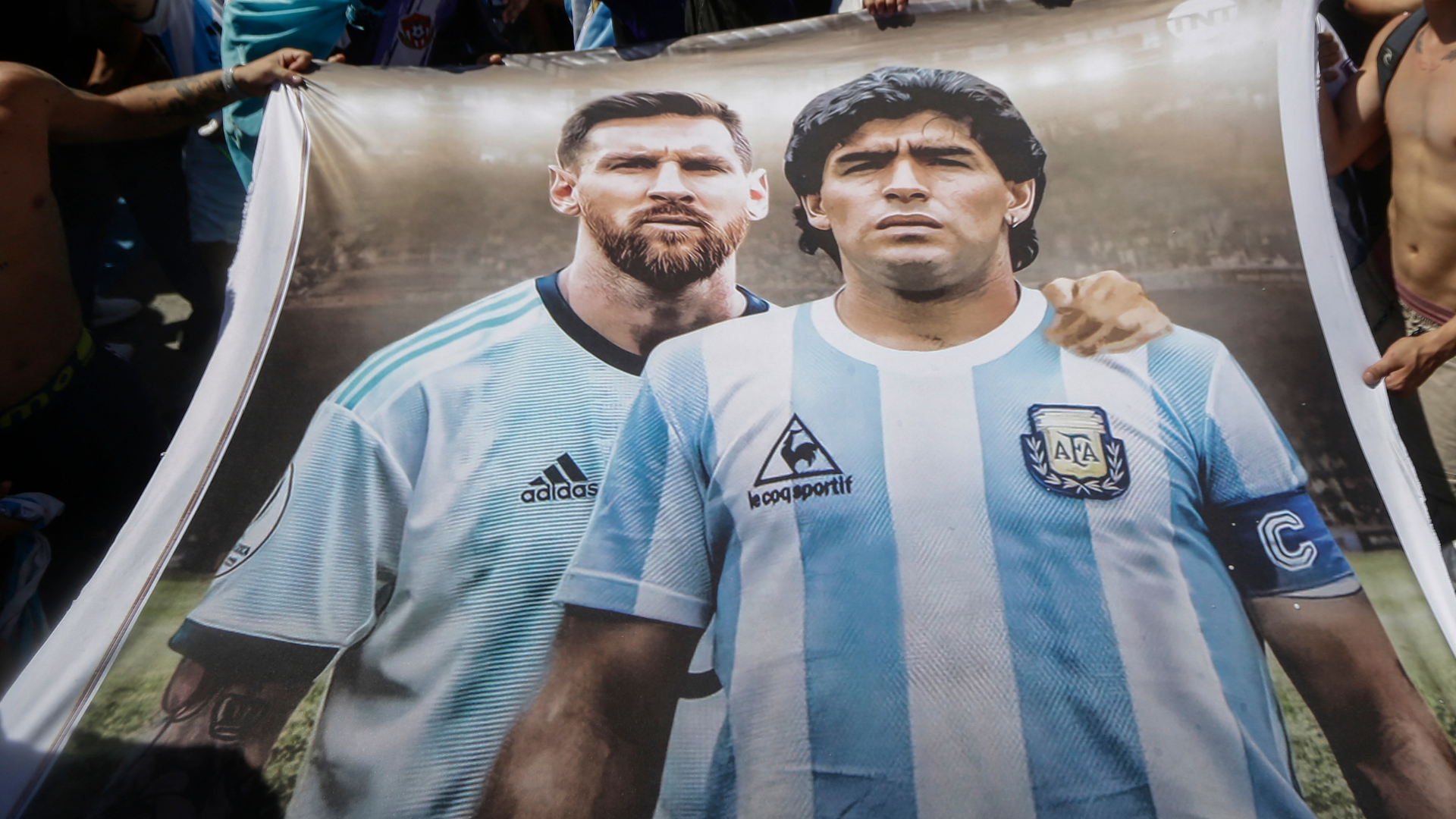
The day has come. On Tuesday, October 6, Lionel Messi will play his last ever match in an Argentina jersey , and it's hard to even begin to wrap your brain around the end of one of the most incredible soccer legacies in the history of the sport. After winning the 2022 World Cup , Messi achieved the last milestone his career was missing and changed his legacy with the national team he represented since 2005, when he made his name known in the world at the 2005 Under-20 World Cup. Then he stuck around for four more years and finished second in 2026 just for good measure.
Since he made his debut with Argentina and with Barcelona in Spain, Messi was considered one of the most promising talents around, but being from Argentina also meant that he faced eternal comparison with the legend of legends, Diego Armando Maradona.
Despite winning everything he could with Barcelona, his first decade with the Argentinian national team was challenging and ultimately led to his initial decision to retire from the national team after losing two Copa America finals in a row in 2015 and 2016. The ongoing comparison with his idol definitely touched him, as he couldn't bring the same joy that Maradona brought to the millions of Argentinian fans in 1986, when Argentina won the World Cup in Mexico. Eventually, his nation coaxed him back, and by 2021 things started to change for the better. Messi won his first-ever Copa America, followed by the success of the 2022 World Cup.
Lionel Messi's Argentina career timeline: Two retirements, years of struggle and redemption at 2022 World Cup Francesco Porzio
In that World Cup, Messi scored seven goals, won the World Cup, and was named player of the tournament before also winning his last Ballon d'Or in 2023. In 2024, he won another Copa America, beating Colombia in the final, marking one of the greatest cycles in the history of Argentinian soccer. Amazingly that run was almost topped with the 2026 World Cup, but Argentina lost in the final to Spain. Only a few weeks after the defeat in the final, Messi announced his retirement, which followed the news of the death of his father, Jorge.
Chasing Maradona: Argentina's one-of-a-kind icon
From the moment Messi debuted, there was always a comparison with his idol and the most iconic Argentine player in history, Maradona. Would Messi become the new Maradona? That was the question everyone seemed to be asking, a question that quickly evolved into a bigger one: Is Messi better than Maradona? The debate only intensified after Messi led Argentina to World Cup glory in 2022, and it's still a topic today, and probably will be for a long time.
Before answering that question, we should reflect on what Maradona meant for Argentina in the 1980's. Maradona embodied the soccer player's mentality of those years, and was an unapologetic public figure, no small thing given the political context of those years. Argentina were emerging from a period of dictatorship that lasted from 1976 to 1983, years where thousands of Argentinians had to face the challenges of the military government, and thousands of them were killed as well. It all changed in 1982, when Argentina's defeat in the Falklands War led to the collapse of the military dictatorship that had ruled the country. The junta, regarded as one of the most brutal regimes in Latin American history, waged the so-called "Dirty War" against suspected opponents. The military surrendered power in 1983 and Argentina returned to democracy.
Maradona's exploits at the 1986 World Cup, especially in the quarterfinal against England, in the "Hand of God" match when Maradona scored the opening goal with his hand , followed by the "Goal of the Century" were seen as a political act, more than a soccer game. Maradona was perfect to embody that role model for the fans, and when he was suspended at the 1994 World Cup after failing to pass a drug test, the whole country backed him. He was a national hero, more than a soccer player, and he did something similar at Napoli where he played from 1984 to 1991, winning the first two Serie A titles in the history of the club. The fans were so devoted to him that, during the 1990 World Cup semifinals between Italy and Argentina in Naples, where the stadium is now named after Maradona, the majority of the home crowd cheered for him.
The man was more than a football player for Argentina, he was a national hero, and that was what Messi was always compared to.
Why Messi is different
Maradona met Messi multiple times and seemed to be happy about him becoming a popular player among the younger generations. When Messi made his World Cup debut in 2006 with Argentina, Maradona was in the crowd cheering him and smiling. Four years later, at the 2010 World Cup with Maradona as coach, Messi failed to score a single goal as Argentina were eliminated by Germany in the quarterfinals, suffering a heavy 4–0 defeat. The result also brought an end to Maradona's tenure as national team coach. A partnership that, sadly, didn't work out.
> 20 years of Messi magic. 🥹 16 June 2006. The day Lionel Messi made his #FIFAWorldCup debut. 🏆 pic.twitter.com/bGlqKT2WiB — FIFA World Cup (@FIFAWorldCup) August 31, 2026
Messi has a completely different personality on and off the pitch to the one of Maradona, and whereas Maradona was larger than life. Messi's life has been, to all appearances, entirely devoted to the sport. Consequently, he has been judged only by his results on the pitch. This is why, when things were not working at all between him and the national team, he was criticised wildly, and probably too much. He was simply dependent on the results, so by 2022, with Messi already 35 and seemingly past his prime, the comparison seemed pretty much settled. Then he started to win. Trophy after trophy, the 2022 World Cup finally brought a sense of relief for Messi. Sadly, Maradona was not able to witness another triumph for his beloved national team, as he had passed away two years earlier.
Though, despite their differences, there is one point of cominality in their career. During the summer of 2020, Messi gave an interview to La Sexta anticipated about the possibility of leaving Barcelona at the end of the 2020-2021 season, something that did eventually come to pass, despite his desire to stay. Just as Maradona left Napoli overnight without ever having the chance to say goodbye to his fans, Messi found himself in the same situation. They both left the clubs they loved the most, without a proper farewell. On Tuesday the Argentinian national team will make sure that won't be the case again.
Ultimately though, as Messi rides off into the sunset, it's impossible to say who was better between the two, but there is one thing that is certain. Lionel Messi wasn't the new Maradona. He won on his own terms, leaving his mark on the history of the game.
Add CBS Sports on Google Join the Conversation comments
_Originally reported by [CBS Sports](https://www.cbssports.com/soccer/news/lionel-messi-next-maradona-argentina/)._
Comments
Loading comments…