
New 'American Daughter' Production Highlights Wendy Wasserstein's Impact
A fresh staging of Wendy Wasserstein’s ‘An American Daughter’ provides a timely opportunity to appreciate her significant contributions to American theatre and culture, even if it’s not considered her best play.
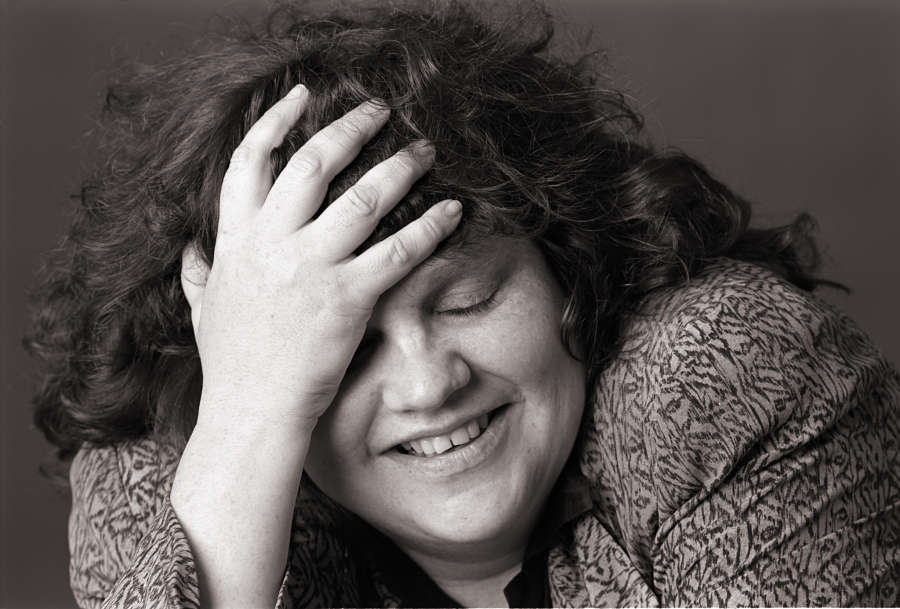
Wendy Wasserstein.
Critic's Notebook
September 18, 2026 Eve Bromberg Leave a comment
O Wendy! My Wendy!
Though it’s hardly her finest work, a new production of ‘An American Daughter’ offers a welcome chance to consider Wendy Wasserstein’s unique contributions to American theatre and beyond.
By Eve Bromberg
I knew of Wendy Wasserstein before I ever read her. You could argue this awareness goes back as far as my birth, as Dr. Michele K. Silverstein—the doctor who famously delivered Lucy Wasserstein, the daughter Wendy gave birth to at the age of 48, as described lovingly in Wendy’s 2000 New Yorker essay “Late Motherhood, Premature Baby” —was also my own mother’s obstetrician.
But really, Wendy began first as a metonymy, a stand-in for the culture of New York City intelligentsia: a Donna Karan-wearing, Century Club member—perhaps more Colony Club, where she was known to dine with André Bishop’s mother, Fay—with friends in high places, a woman who could hold her own in any conversation, industrial or intellectual. A woman whose femininity was secondary to her power, but who still engaged in regular grooming rituals typical of a sophisticated Manhattanite.
The origin of this association in my mind comes from an episode of Sex and the City (Season 3, episode 3, “Attack of the Five Foot Ten Woman”), in which Carrie Bradshaw, arriving at a Women in the Arts luncheon, notes that she sees “Gloria Steinem and Wendy Wasserstein,” pegging them as cultural diplomats of New York City.
But Wendy truly began for me one evening outside Symphony Space on 95th and Broadway. I had just come from a dinner with friends where the majority of the evening’s discussions surrounded men, marriage, and children —not the objects and entities themselves so much as the trappings of domestic success—in a way that seemed far removed from any emotional connection or fulfillment. As one of the few single women present, I’d spent much of the meal silently pouting, the lyrics of Peggy Lee’s “Is That All There Is” running through my head, annoyed that no one seemed to care about the very in-depth interview I’d just finished on a theatrical adaptation of Hannah Arendt’s Eichmann in Jerusalem . I was also aware that my frustration lay in my own seeming inability to succeed in these personal ways—that romance and long-term family planning seemed so far out of reach.
After that dinner, I happened to run into a friend and her husband, both of them quirky and unconventional people, which emboldened me to recount the entirety of my dinner and my feelings about it. In response, my friend invoked the monologue from The Heidi Chronicles , Wendy’s 1998 play, which won her both the Pulitzer and the Tony.
It wasn’t until months later that I actually sat down to read the play. I confess I’d been delayed by a niggling fear that Wasserstein, despite her demonstrated fabulosity, might be easy to dismiss as a second-wave feminist, and that her writing might be strong but ultimately stale. But on a random day in October, during the first semester of my MFA, I read The Heidi Chronicles . What I encountered was beyond what could be explained. Here was the decades-long story of a woman attempting to lead a life of significance: Heidi Holland, an art historian wrestling with domestic expectations and ultimately deciding to raise a child on her own. I understood Heidi’s pangs of frustration at the flimsiness of collective memory and the inability for social change to penetrate, as when her most radical friend, Denise, ultimately becomes a Hollywood producer.
When I reached Heidi’s monologue, the one I’d been told to find, I was amazed that the character’s cries were more about the omnipresence of competition in daily life, having almost a cry of anti-capitalism in them, than about the unfulfilled promises of feminism’s second wave.
Where moments of romance were concerned, the conflict between Heidi and Scoop , in which their deep mutual love and affection founders on his eventual rejection of her for someone “less complicated,” felt more complicated than a simple conflict over female power. The relationship, instead, offers an intimate portrait of a woman building her own future, unwilling to give up her eccentric ways. Feminist, yes—but much more existentially rendered than a mere recitation of ideological talking points.
Beyond the characters and plot, I realized I was, in Heidi , discovering a writer unable to do anything but put her whole self onto the page. I felt the warmth of Wendy’s character in her breathing portrait of a woman shaped, like her, by viewing the culture from a slight remove. Heidi’s constant teetering toward, but not quite full embrace of, the in-crowd resembled a kind of cultural belonging that I both understood well and that characterized Wendy’s own life. Despite great acclaim—Wendy’s obituary appeared on the front page of The New York Times in 2006 —she never gave up the feeling of alienation from having once been on the outside. In short, I hadn’t just read a play but been introduced to a person I saw myself in. Wendy became someone I wished I could have tea with. I wanted to speak to her. Hello, Wendy. I am like you. Will my life turn out all right, and might it look similar to yours ? I might’ve asked.
With The Heidi Chronicles under my belt, my ensuing study of Wasserstein felt less like research and more like hypothesis-testing. Beyond the plays, I immersed myself in Wendy’s essays for magazines, and especially footage of her appearances on The Charlie Rose Show , the perfect epitomization of Wendy’s insider-outsider status. Seated across from Rose, for a time the high-culture gatekeeper of America, Wendy supplies quips about the very context in which she lives and writes, but with a kind of obtuseness—as when she refers to her daughter being discharged from the hospital “summa cum Sinai”—that seems to arise from a certain social anxiety.
This neurotic hum rests in Wendy’s biography. Born in Flatbush, the daughter of a textile manufacturer, she moved to the Upper East Side after her family’s fortunes changed dramatically. Despite this upgrade, the family still existed only in proximity to pedigree. Wendy attended the Calhoun School, which lacked the cachet of Dalton, which she didn’t get into, or Brearley, to which she didn’t even apply. She imagined the latter school as “a Wasp enclave, filled with thin, blond, beautiful girls, floating effortlessly through life,” according to Wendy’s biographer Julie Solomon, in Wendy and the Lost Boys.
Wendy’s perpetual positioning is observable in the rest of her educational trajectory. A plausible student at Calhoun, though without a work ethic to match her intellectual ambitions, she attended her first choice college, Mount Holyoke, one of the Seven Sister schools. She graduated without honors or much of a plan. She hadn’t studied writing in college—she was a history major—but went on to pursue a masters at City College, based on a friend’s suggestion. There she studied with Joseph Heller and Israel Horovitz, and started to write plays. Her application to the Yale School of Drama—she called it “the Yale School of Trauma”—was done alongside an application to Columbia Business School. Yale offered her the moment of self-declaration of being a writer after years of passively assuming she’d shape up and go to law school.
Wendy’s education only reinforced her feelings of unbelonging. At Yale, her work was dismissed by both Richard Gilman and Robert Brustein as sociological portraiture, especially compared to works by classmates like Christopher Durang, with whom Wendy forged one of her most important personal, and at times professional, relationships. Despite such discouragement, Wendy fought on.
Wendy had staged a reading of a play before attending Yale, which was the basis of her eventual professional relationship with Playwrights Horizons (via its founder Robert Moss) and its then-artistic director, André Bishop. In ensuing years, Wendy’s plays continued to grow in structural sophistication. Though her work’s reputation since has continued to be closely associated with second-wave feminism, their examination of female alienation is far more evergreen than they’ve been given credit for.
Yet it is in the somewhat frustrating context of second-wave feminism that Wendy has been brought back into public conversation. When Bess Wohl won the Best Play Tony for Liberation in June, she referenced Wendy in her acceptance speech, noting that her play is only the second by a woman to win the award since Wendy won it in 1989. In addition to the sheer insanity that exactly two women have ever won this award, it’s notable that the frequent dismissal of Wasserstein’s work as dated or hollow might more appropriately be leveled at Liberation , a play I found to be a surface-level portrayal of Women’s Lib that lacks specificity of character, especially compared to Wendy’s best work. Wendy created portraits of people who happen to find themselves living in a time period, but, because of her verve, they were never stuck there.
The current revival of Wendy’s 1998 play, An American Daughter —a play closer to Liberation than the rest of the Wasserstein oeuvre—by La Femme Theatre Productions has prolonged the Wasserstein conversation that started at the Tonys. (It runs through Sept. 20 .) Inspired by the nomination of Zoë Baird for Attorney General and her eventual withdrawal (she had hired an undocumented woman as her children’s nanny), as well as similar political scandals around high-powered political women in the ’90s, An American Daughter recounts, in a Georgetown living room, the nomination of Dr. Lyssa Dent Hughes—not only an accomplished doctor, but a daughter of a long-serving conservative senator, and a distant relative of Ulysses S. Grant—to Surgeon General. Hughes’s nomination seems fairly certain until, during interviews for a television segment, it’s revealed that she once forgot to respond to a jury duty summons. Hughes dismisses the infraction as minor, which, in addition to her commentary about stay-at-home mothers and “ice box cakes”—a reference to Hilary Clinton’s infamous Cookiegate kerfuffle —leads to accusations of inaccessibility and elitism. The reaction becomes extreme enough that there’s no other option than for Hughes to withdraw from consideration of the role.
In addition to following the central conflict of Hughes’s nomination, the play attempts to capture the changing of the guard from Wendy’s generation of high-powered glass ceiling smashers to the next generation of theory-embroiled feminists, and to use individual characters as demonstrations of cultural change and political tension. But, in lacking all the qualities that make a Wassertein play sing, An American Daughter , despite the very well-intentioned attempts of the La Femme production (which features a previously un-performed script with a heftier second act—Wendy was an incessant re-writer) fails to amount to much.
That’s chiefly because the play’s political points are a bit obvious, banal, and unfocused. As Ben Brantley noted of the play’s 1997 premiere, writing in The New York Times , “Neither Dan Sullivan’s chipper, keep-it-moving direction nor Ms. Wasserstein’s justly famed ear for dialogue and bone-deep sense of craft can conceal the feeling that she doesn’t know entirely where she’s heading or how to get there.” Unlike Heidi , whose episodic structure spans 24 years, An American Daughter offers too minute a time-frame for Wendy’s bird’s-eye analysis. Written only a few years after the events the play captures, the play is overwhelmed by an uncertainty about their implications. It feels like Wendy herself didn’t know what to make of the changing world before her, or how it might relate to the concerns of her previous work.
The biggest problem with An American Daughter , though, is that the protagonist is the least interesting, and Wendy-like character. Wendy appears
_Originally reported by [American Theatre](https://www.americantheatre.org/2026/09/18/o-wendy-my-wendy/)._
Comments
Loading comments…