
Novid Parsi Discusses His Intriguing Meta-Play ‘The Life You Gave Me’
Novid Parsi, author of the meta-play ‘The Life You Gave Me,’ delves into the inspirations and unique structure of his work, featured in its entirety in our Fall 2026 issue.
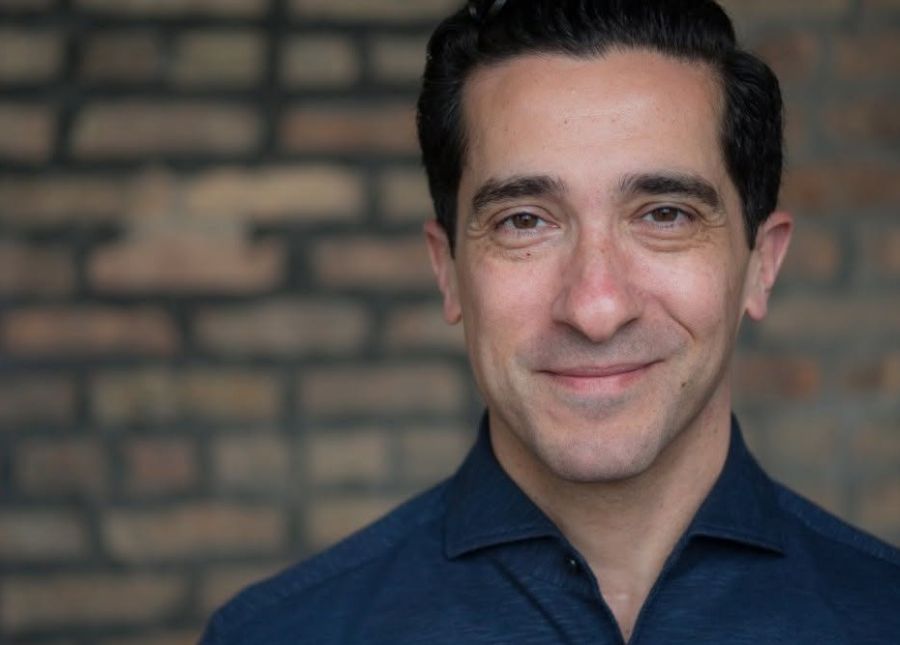
Novid Parsi.
Fall 2026 | Playscript Interview
October 5, 2026 Kimberly Senior Leave a comment
Novid Parsi on ‘The Life You Gave Me’: If Only
The author of this intriguing meta-play, the full script of which appears in our Fall 2026 issue, talks about its inspirations and its unique form.
By Kimberly Senior
In Novid Parsi’s witty, moving The Life You Gave Me —which had its world premiere in 2025 at Idaho’s Boise Contemporary Theatre , and which appears in full exclusively in our Fall 2026 print edition —an Iranian American man tries to get his mother to leave and repudiate her abusive husband, his father. But the truth proves more complicated, in part thanks to two outside voices who interject with questions about the son’s right to tell his mother’s story, and about the narrative’s problematic representational politics. Parsi spoke with director Kimberly Senior (Ayad Akhtar’s Disgraced and The Who and the What ) about the inspiration and artistry behind the play.
KIMBERLY SENIOR: Tell me about the genesis of this play.
NOVID PARSI: I started thinking about it five years ago, in 2021. It had been about a year since my mother had passed, and I found myself really wanting and needing to write a play that captured, not the entirety of our relationship, but a certain dynamic that became fictionalized and dramatized into the mother-son dynamic that we see in The Life You Gave Me , where the son, an adult gay Iranian American man, tries to understand why his mother, an immigrant Iranian woman, remains within this unhealthy, abusive marriage, and tries over many years to get her out of it. She, for her own part, has very complicated reasons for her life decisions, including her marriage, and variously rejects her son’s interpretations and attempts, and also at times accepts them. So it’s about that cyclical dynamic. But before I could get there, before I could find my way to writing about that relationship, I kept hearing these critical voices that I anticipated looking at this story I was trying to write, and basically just telling me, “What the heck are you doing?”
Are they your editors? Are they the world? Who are they?
They’re kind of all the voices I’ve heard in other earlier theatrical experiences, in plays that I’ve written where I tried to deal with similar topics, but also just voices that are in the theatre industry and in the broader American culture that I imagined, who are reasonably asking me: Why would you create Iranian American characters who are dealing with domestic abuse and violence? Why would you create an abusive Iranian man, given all the representations that we constantly see within the U.S. of Middle Easterners, and in specific ways of Iranians, as inherently violent? Why would you perpetuate those stereotypes? Why would you add fuel to that fire? I didn’t know how to get past that, because those concerns are absolutely valid. I felt really stymied by them, and yet really wanting to tell the story. I just felt torn between what felt like competing, opposing forces, until it occurred to me in 2021 that instead of trying to expel those voices, I needed to invite them into the world of the play. It wasn’t just about this intimate domestic drama between the mother and son; it was also this meta-theatrical play, this comedy, and at times absurd comedy, involving these two outside observers who are watching the son trying to tell this story and commenting on it and interacting with it. I was able to write the play once I understood that’s what it was.
You just said so many things that are so rich that I want to touch on. I want to start with the autobiographical aspects. Obviously there are things in there that are true, that are probably words your mother has said and words that you have said. I know this is such a fraught conversation that writers are having all the time, but what do you feel is your obligation to the truth with a play like this? How much fiction are you allowed to create?
Those are great questions, and they’re questions that this play is addressing directly. This play isn’t a simple autobiography, in the sense that there are as many similarities as there are differences between me and the protagonist. But I think what people are asking, or what I’m asking, when we want to know how a story is connected to the writer’s life is, how true is it? Is it coming from a truthful, lived place? I’m not necessarily interested in how much of the events of the story match the events of the writer’s life.
I think of the Mark Twain quote, “Never let the truth get in the way of a good story.” In some ways that’s what the man and woman are doing in the play, where they’re like, “Okay, but the story would be better if…”
Exactly.
If your mother were here to represent herself, I’m sure she would say, “That’s not how it happened; that’s not how I felt.” I mean, she does get her agency toward the end of the play. There are narrative truths that are our own, right? The way we remember things is not necessarily how they happened anyway.
This is the active question that the play is exploring and intentionally doesn’t really resolve. It’s the meta-theatrical element of the play: The son is presenting a story. And then we hear these voices start to comment on the story we’re watching, and that leads to all the questions you’re very aptly raising: What is the real story here? How much of this is memory? How much of this is the story the son wants to tell about himself? Which—spoiler—becomes very much the question toward the end of the play, when we are presented with all these versions. Then, after being in this very abstract space throughout the entire play, where the stories are being written and rewritten and revised in response to what the two commentators are saying, we get a version at the mother’s prompting—I don’t want to say the truth, but a certain truth that the son was trying to ignore, where he’s not ultimately the hero. And the abstraction becomes more real, with more props and objects that enter the stage.
Is he trying to get the play produced?
He’s trying to create a story that is palatable for these critical voices—a story they will accept, and is a palatable story, a satisfying story for us as a Western audience. When I was drafting this play over a few years, and as it went through several development programs, I was thinking about, what are the stories of domestic violence that resonate with me personally? I came to think of what I call the three Rs: resolution, redemption, and revenge. Resolution is about the woman getting out; she finds a way to leave this predicament. Another is redemption, and that focuses on the man, where he sees the error of his ways, and he changes. You see both of those in different ways in The Color Purple . The third R is perhaps less common, but I think just as satisfying in a different way, where the woman exacts revenge on the man. You see that in Stephen King’s Dolores Claiborne , or if you remember, as I do, the ’80s TV flick The Burning Bed with Farrah Fawcett.
So those are the stories we tell. But what is perhaps a less palatable, less satisfying story, but the story I wanted to tell that resonated with my experience—and I think resonates with other people’s experiences, judging from how people respond to this play when they speak to me about it—is a fourth R. That is resilience. It doesn’t give you an out, but it does speak to the way I think many people who live in violent, abusive homes endure it, because that is perhaps the only option, or the best option. I think we see this in The Life You Gave Me with the mother’s character. It’s not because she’s weak or meek, which is our common perception, but because of her strength of character that she is able to endure what she endures. And the son doesn’t, right? He’s like, “I’m out of here, I can’t do this.” He cannot understand why and how she can. But that’s a stickier story.
The reason I asked about if he’s trying to get the play produced is because it’s a question I’m often asking: What does it take to get a play to join the American canon written by someone from the Middle Eastern diaspora? What do we have to do to join this canon? I think there are many other diasporic cultures who are also asking that question, which I cannot speak to. But it’s like, if we do one thing, it’s this stereotype, or it’s this stereotype. And there is so much in there about how we have to perform goodness, but the minute we stop being good, whatever goodness means—devout as a child, or performing straightness, or being a doctor, whatever—then suddenly these editorial voices are coming in, whether these are the voices of our ancestors or the voices of the critics. Like, when are we just gonna get to tell a story about some people just doing things and living their lives? Why can’t a son just write a story about looking back on a year of grief, on the nature of his relationship with his mother, who was in an abusive relationship, and all the ways in which he did or did not fail her, and the complexity of their relationship? Like, why can’t that son just write that story? Part of me felt like that obstacle was because you are Iranian. That kept getting in the way. I’m interested in your take on that, and if my read on that is correct.
That certainly is something that I, and I think other writers of Middle Eastern descent, feel about the politics of representation. I don’t just write characters of Iranian descent, but I do want to write them, partly because they’re underrepresented, but mostly because they resonate with my own personal experience. But I also am very aware of what happens when they’re not the “good” immigrant or the “good” child of an immigrant. I am very aware that everything they do and say will be viewed through the lens of their ethnicity. But I’ve never watched a play by Tennessee Williams or Sam Shepard or David Mamet and thought, “I wonder what it is about those guys’ whiteness that is making them violent. I wonder what it is about white Americans…”
Right, why are we okay with the fact that they’re drunk and beating people up, and it doesn’t bother us?
Or if it does bother us, we don’t explain it by their ethnicity. That doesn’t factor into how we understand their behavior. But I know that even if I were seeing an Iranian American character behave like that in a play, my mind would immediately make that connection: “I wonder what the playwright is trying to say about Iranian culture.”
When we did the first reading of The Who and the What , the Ayad Akhtar play, at La Jolla Playhouse—and there are some really challenging things that are said about the Prophet in that play—there was an imam in the audience. The imam was really upset about these things that were said and was getting into this debate with Ayad about it, and Ayad’s like, “You certainly know what I’m trying to say here,” and the imam said, “Oh, I know what you’re trying to say; I’m afraid of what she thinks,” and he pointed to this woman who clearly was not Muslim next to him. I think it’s less about our own perceptions and more about our fear of what other people might think.
Fear is definitely part of it.
What do you think would help move that needle or change that?
I think awareness of it. That’s one thing The Life You Gave Me is trying to do, to say: Let’s not pretend this isn’t happening. Let’s not pretend that writers like me aren’t making these calculations when they’re writing about how these characters are going to be received based on their ethnicity and culture. Fear is hard to get past, but fear, of course, is artistic kryptonite, so you have to find a way to not be fearful.
This moves me to the next thing I want to talk about, which is that the grief that runs through your play made me think about Anne Carson’s beautiful translations of Euripides plays. They are all bound together in this book called Grief Lessons . In her foreword to it, she talks about ho
_Originally reported by [American Theatre](https://www.americantheatre.org/2026/10/05/novid-parsi-on-the-life-you-gave-me-if-only/)._
Comments
Loading comments…