
Tokyo Court Grants Voice Publicity Rights in Landmark Japan Ruling
A Tokyo court has ruled that a person's voice can be protected by publicity rights, marking a historic first for Japan. This decision came after actor Kenjiro Tsuda's takedown claim against TikTok, establishing a new legal precedent.
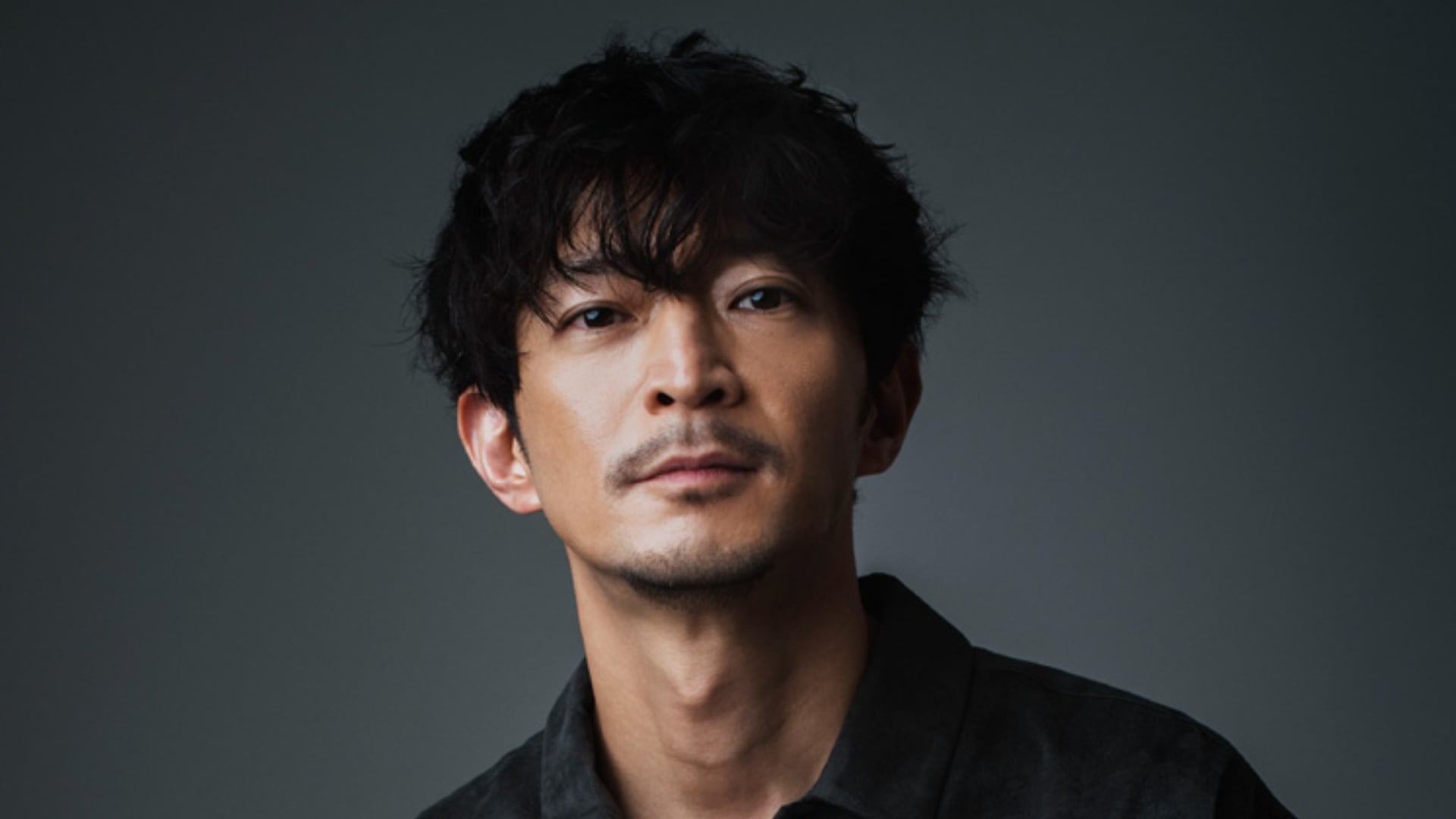
Tokyo court rules that a person’s voice can be protected by publicity rights – a first for Japan
October 1, 2026 By Mandy Dalugdug
A court in Tokyo has ruled that a person’s voice can be protected under publicity rights in Japan .
Continue to article...
The Tokyo District Court issued the decision on Wednesday ( September 30 ), in what is believed to be the first ruling of its kind in the country.
The case was brought by voice actor Kenjiro Tsuda against the operator of TikTok , over videos he says were narrated using an AI-generated copy of his voice.
It is believed to be the first lawsuit in Japan seeking to defend a person’s vocal identity against AI-generated copies, according to AFP .
Publicity rights govern how the commercial pull of a person’s identity may be exploited, and by whom.
The court found, as a general proposition, that a voice sits inside that protection where the sole purpose of the use is to exploit its commercial appeal, AFP reported. Presiding judge Aya Takahashi described a voice as a symbol of a person’s personality, in the same way a likeness is.
> “The unauthorized use of a performer’s voice … can be considered an infringement on publicity rights.” Aya Takahashi, Tokyo District Court judge
“The unauthorized use of a performer’s voice … can be considered an infringement on publicity rights,” Takahashi said.
Tsuda , 55 , voices Kento Nanami in Jujutsu Kaisen and Seto Kaiba in Yu-Gi-Oh! Duel Monsters . He filed the suit at the Tokyo District Court in November 2025 , citing both publicity rights and Japan ‘s Unfair Competition Prevention Act .
According to the ruling, an account posted at least 188 videos carrying narration with voice characteristics resembling his own between July 2024 and September 2025 .
The account had more than 210,000 followers, the ruling said. Tsuda ‘s lawyers told the court that the poster had earned between JPY ¥500,000 and JPY ¥750,000 a month from the videos – roughly USD $3,200 to USD $4,800 – an estimate drawn from TikTok ‘s view-based payouts to creators and an average of around 1.47 million views per video.
The videos paired images with AI narration covering urban legends, the occult, and conspiracy theories, while the account’s profile picture resembled a Jujutsu Kaisen character voiced by Tsuda , AFP reported.
TikTok told the court the narration was a “generic male voice,” and that any resemblance to Tsuda was subjective, according to court records reviewed by AFP . The operator also told the court that the account holder had said the voice data was trained on a friend’s voice.
The court nonetheless dismissed Tsuda ‘s demand that the videos be deleted. The anonymous poster had deleted the entire account at the end of May 2026 , while the case was still being heard, leaving TikTok with nothing left to take down.
The court did not rule on whether Tsuda ‘s own rights had been infringed.
The ruling “ended up making both sides look victorious,” said Takashi Hirano , Tsuda ‘s lawyer. He added that with the account gone, the case had achieved what it set out to do. Tsuda had never sought damages, and will not appeal.
“We will continue to sincerely work on the balance between technology development and rights protection,” TikTok told AFP , adding that it would study the judgment before deciding its next step.
> “We will continue to sincerely work on the balance between technology development and rights protection.” TikTok (via AFP )
No Japanese statute explicitly establishes a right in a person’s voice. Publicity rights themselves are judge-made in Japan , recognized by the country’s Supreme Court in 2012 .
An expert committee of Japan ‘s Justice Ministry signed off on its draft report on July 27 , finding that voices should fall under the right of publicity, and that individuals can demand compensation or the removal of online posts where infringement is confirmed, Jiji Press reported.
The ministry published the finished report on August 7 , and has asked lawyers, rightsholders, and companies to treat it as an interpretive guideline.
That guidance was aimed at music as squarely as it was at voice acting.
It assumed a scenario in which generative AI is used to build a recording that leads people to believe an actor or a singer is performing another person’s song, which is then posted on social media for profit, Jiji Press reported.
The report named “AI cover” tracks, in which the voices of singers and voice actors are used without permission, among the practices causing significant damage.
The ruling lands in the world’s second-largest recorded music market.
Japan returned to growth in 2025 , up 8.9% YoY, and held its position behind the USA , according to IFPI data analyzed by MBW .
Legislators in the United States have spent more than two years working on the same question.
Tennessee ‘s ELVIS Act , signed into law in March 2024 , was the first US state law to add voice to the protections of an existing right of publicity.
At the federal level, the NO FAKES Act would create an intellectual property right in a person’s voice and visual likeness, and cleared the US Senate Judiciary Committee by unanimous voice vote on June 18 this year .
On Wednesday, the same day as the Tokyo ruling, co-sponsor Marsha Blackburn sought to pass the bill on the Senate floor by unanimous consent, ahead of the chamber’s departure for the midterms. Ted Cruz , who voted for the bill in committee, objected, arguing that its carve-outs for satire and political commentary are not clear enough. The bill remains on the Senate calendar.
Back in Japan , voice actors have launched a campaign against the use of generative AI to copy them without permission, operating under a banner that translates roughly as “NOMORE Unauthorized Generative AI.” Yuko Sasaki , executive director of the Japan Actors Union and a voice actor herself, is among those behind it, AFP reported.
The campaign went live across social platforms on October 15, 2024 , with 26 voice actors taking part in its first video.
An actor’s voice “is the result of years of rigorous training and apprenticeship,” Sasaki said ahead of the ruling. Music Business Worldwide
_Originally reported by [Music Business Worldwide](https://www.musicbusinessworldwide.com/tokyo-court-rules-that-a-persons-voice-can-be-protected-by-publicity-rights-a-first-for-japan/)._
This story is summarized from coverage by Music Business Worldwide.
Read full story →Comments
Loading comments…