
‘Horsegirl & Cowdaddy’ Explores Queerness, Class, and Geography in Rural Appalachia
DJ Hills
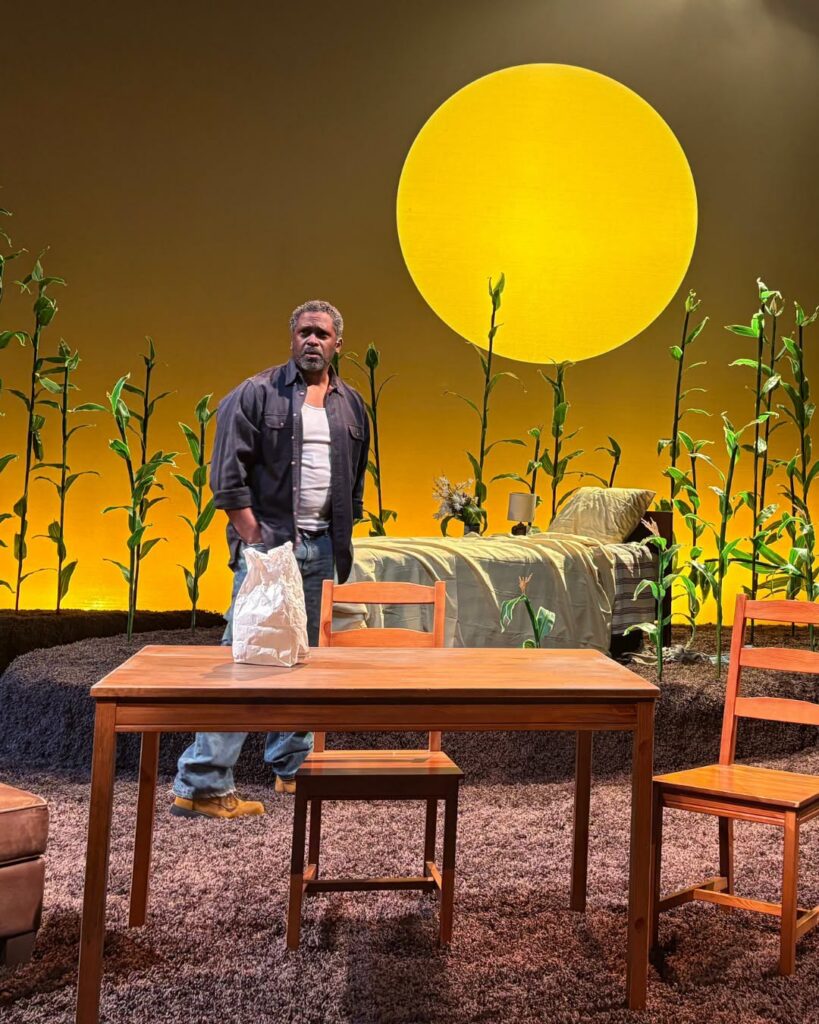
Lindsay Smiling in 'Horsegirl and Cowdaddy' at the Wilma Theater.
Fall 2026 | Front and Center
September 21, 2026 Eve Bromberg Leave a comment
Rural Tenderness in ‘Horsegirl & Cowdaddy’
DJ Hills takes inspiration from their own upbringing in rural Appalachia in this world premiere tackling the intersections among queerness, transness, class, and geography.
By Eve Bromberg
What if queerness weren’t confined to welcoming cities? What if it could be explored in less friendly territory? These are two of the questions at the heart of DJ Hills’s Horsegirl & Cowdaddy , in its world premiere Sept. 22-Oct. 4 at Philadelphia’s Wilma Theater (co-produced with Soho Rep in New York City, where it will run March 14-April 11, 2027).
“What happens if we had stayed?” wondered Pittsburgh-based director Adil Mansoor . “If queerness could live everywhere, what would that expansion mean? Lots of wonderful queer people stay in all kinds of places. There’s queer vibrancy everywhere.”
Inspired by Hills’s upbringing in Northern Appalachia, Horsegirl & Cowdaddy follows a 30-something trans woman, Horsegirl, who lives with her father, Cowdaddy, in a rural town in Western Pennsylvania. When a newcomer, Bethel, arrives in town to participate in a Teach for America-like program, Horsegirl falls for them and the two begin a relationship. In the exploration of this connection, Horsegirl is forced to examine what a realized self actually looks like.
The idea for the play came to Hills in 2021 during a trip home to Western Maryland. There they found themself reflecting on the 2020 election, and on the way rural environments were being discussed politically. Having already experienced the perspective of the “urban progressive” as a college student in Baltimore, Hills said they continued to be frustrated by the way that rural America was discussed “in this really disparaging way.”
On that same visit, while on a walk with their dad, Hills had the idea for a dialogue between a father and a child. They wrote something down and put it aside, until a few years later, while on a fellowship in Italy, when Hills—at this point a graduate student in UCLA’s MFA playwriting program —returned to the idea. In the resulting play, Cowdaddy, despite not fully understanding her identity, loves his daughter.
“The play showed up in my inbox out of nowhere and knocked me off my feet,” said Mansoor. “One of the things that drew me to it is the ways in which DJ is talking about class and place, especially in relation to queerness and transness. It doesn’t feel like anyone’s being talked down to. There’s no pity happening. There’s a simple reminder that class and geography intersect with queerness and transness in a very real way.”
The play eventually departs from realism—it might be a spoiler to say how—because there’s something that doesn’t sit right with Hills about giving audiences stories about queer trauma that are grounded in realism. “Overt theatricality reminds the audience we are seeing a play, and we are sharing the space together,” they said. “That’s what makes theatre so exciting.”
Eve Bromberg is a critic and writer from Brooklyn. She is currently working as part of American Theatre’s editorial team and completing an MFA in Dramaturgy at Columbia.
More From This Issue
‘John Proctor Is the Villain’ and August Wilson Top This Year’s Most-Produced Lists
_Originally reported by [American Theatre](https://www.americantheatre.org/2026/09/21/rural-tenderness-in-horsegirl-cowdaddy/)._
Comments
Loading comments…