
Seattle’s Iconic Crocodile Navigates Evolving Music Scene
The Crocodile, a cornerstone of Seattle's independent music landscape since 1991, faces the challenge of maintaining its identity amidst an influx of larger, corporate-backed venues. Its journey reflects the city's broader effort to preserv
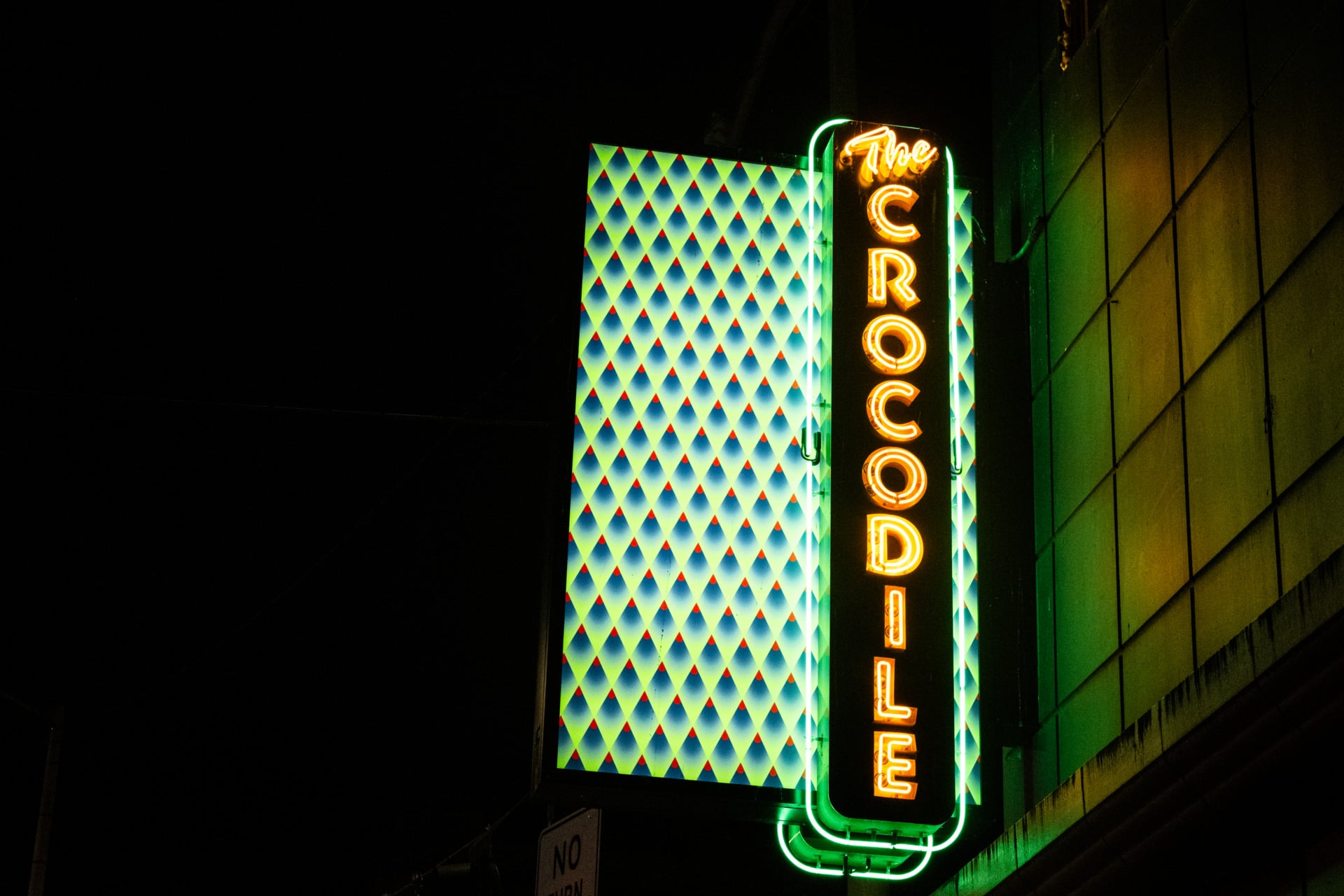
In a while, Crocodile.
The Crocodile – one of Seattle’s signature independent music institutions – is the current bellwether of how the city will keep its independent club ecosystem while adding larger corporate-backed venues.
The original Crocodile Café opened in 1991, just months before Nirvana’s Nevermind helped propel Seattle’s grunge scene onto the international stage. Love Battery and P.O.T. (members of the Posies) were among the first acts to play there. Over the years, the Crocodile became associated with a remarkable list of artists, including Nirvana, Pearl Jam, Soundgarden, R.E.M., Yoko Ono, Cheap Trick and later Billie Eilish and Lizzo.
The original club closed in December 2007, but rather than disappearing, it was revived by a group that included Alice in Chains drummer Sean Kinney, Alice in Chains manager Susan Silver, Peggy Curtis, Portugal. The Man guitarist Eric Howk and Capitol Hill Block Party co-founder Marcus Charles. It reopened as The Crocodile on March 19, 2009, following an extensive renovation.
In December 2021, The Crocodile moved a few blocks from its original home. The new Crocodile became a multi-venue entertainment complex, with a 750-capacity main showroom, a 300-capacity secondary venue, a 100-seat comedy club, a movie theater and a 17-room Hotel Crocodile.
“The lease for The Crocodile’s original location on 2nd and Blanchard was not renewed by the landlord, and the business found itself looking for a new building,” shares general manager Shaina Foley, who has since taken a new job. “Needless to say, moving during a pandemic was full of challenges, but we made it happen, moving into a larger multi-venue space with a connected hotel and staying in our beloved Belltown neighborhood.”
The expansion was intended to turn The Crocodile from a legendary club into a broader music, comedy, hospitality and entertainment destination. But The Crocodile entered receivership in January 2026 after accumulating approximately $1.6 million in debt.
“In the fourth quarter of 2025, it became clear that some of the challenges we were up against were insurmountable, and that led us to a tough decision: closing the doors of our two lower-floor venues, Madame Lou’s and Here-After,” says Foley. “This closure meant losing half our staff and the cultural hub those venues provided for local and touring artists and comedians. Making that decision and announcing it to our people was the most terrible and challenging moment of my career in music.”
The venue was acquired in June by Comedy Tent, an entertainment company led by Jimmy Miller, founder of talent management company Mosaic, and Mike McAvoy, former CEO of The Onion. Comedy Tent’s portfolio includes Upright Citizens Brigade, Abso Lutely Productions, and Bottlerocket Social Hall. The group is backed by Elysian Park Ventures.
“After much contemplation and effort, it became clear that the best way to ensure The Crocodile’s continued operation was to partner with an organization with greater access to assets, talent and industry knowledge,” explains Foley. “It was important that the new partners were completely aligned with The Crocodile’s values and understood its importance to the Seattle music scene.”
Miller and McAvoy fit the bill.
“Like our other venues, the Crocodile will continue to operate the way that it always has; independently, musician-driven, and as a beacon of Seattle’s creative community,” said Miller after the announcement in June. “The Crocodile will continue as its own brand and operation alongside UCB, Bottlerocket, and Abso; not under them.”
Miller added that Comedy Tent will provide “stability and infrastructure” while allowing The Crocodile to continue operating independently as a musician-driven brand.
One of the first major changes is the redevelopment of the basement venues. Madame Lou’s and the Here-After will be combined into a larger venue called Bottlerocket Social Hall, run by the Pittsburgh-based Bottlerocket Social Hall group. The new space is expected to open in 2027.
It is one of the more consequential independent-venue developments in the city this year.
“The live market continues to get more and more challenging as venues face steeply rising operating costs, lower ticket sales and less reliable drink/concession sales,” explains Foley. “Venues are not alone, as artists are dealing with sometimes untenable touring expenses, and successful local and emerging artists are having trouble supporting their careers on music alone. In Seattle, we are seeing a decline in show attendance, especially to the independent small venues and cultural institutions, and it’s tough. Frankly, people seem wiped out; fans, artists and venue workers need as much support as we can give right now.”
_Originally reported by [Pollstar](https://news.pollstar.com/2026/10/05/the-next-chapter-for-the-crocodile/)._
Comments
Loading comments…