
Summer Sonic Marks 25th Anniversary With Beyoncé, Blur, and B’z
Japan's innovative Summer Sonic music festival celebrates 25 years, featuring a diverse lineup including Beyoncé, Blur, and B’z, showcasing its unique multi-city format and wide array of stages.
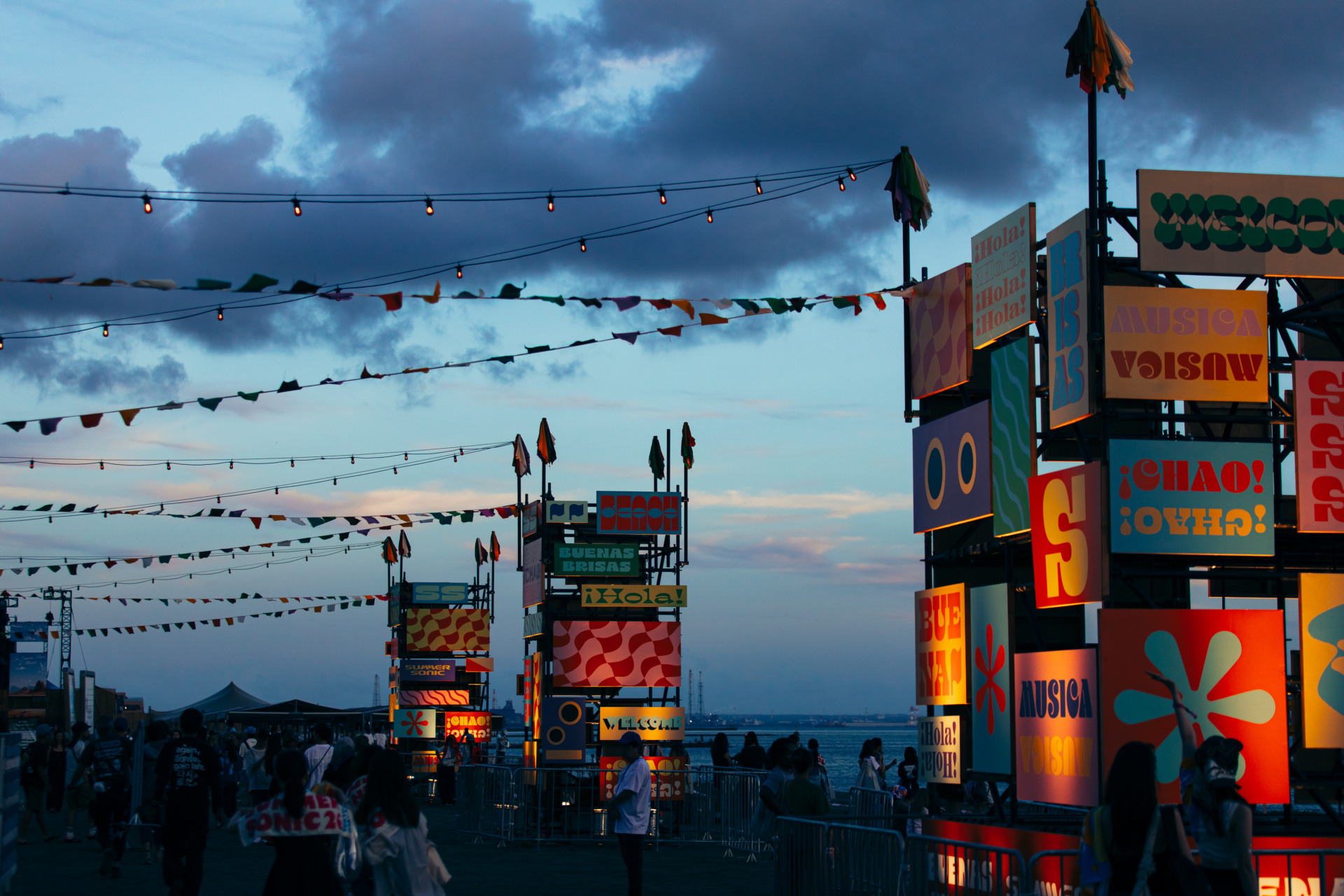
If you had to design a summer music festival what kind of inventive innovations would you come up with? Hold it in two cities simultaneously with bands traveling between venues ? Have enough stages to present music for every taste? Add other attractions that could keep fans entertained when they are not listening to music? Or perhaps make sure you have a giant food court so people don’t go hungry?
Well, the Summer Sonic music festival in Japan (held this year Aug. 14-16), which just celebrated its 25th anniversary, thought of all these things and more. It had auspicious beginnings at the Fuji-Q Highland amusement park outside Tokyo, and the WTC Open Air Stadium in Osaka on Aug. 5 and 6, 2000. The inaugural edition drew about 60,000 people and was headlined by none other than the Godfather of soul himself, James Brown. The event quickly became the premier, city-based, international music fest of Japan and matured over the years to average more than 250,000 total attendees. It’s now staged over either two or three days depending on the year, both near Tokyo (technically Chiba prefecture) at the ZOZO Marine Stadium, Makuhari Messe convention center, as well as a crucial satellite beach stage, and in Osaka at the Expo’70 Commemorative Park, historic for the important event in the site’s name.
Naoki Shimizu, the president of the fest’s promoter, Creativeman Productions, explains the position of the festival in Japan.
“Summer Sonic and Fuji Rock are regarded as the pinnacle of summer festivals, not only in Japan but across Asia. Summer Sonic, in particular, drew a crowd of 300,000 people this year, boasting a scale that is truly unrivaled.” Fuji Rock is promoted by SMASH.
The number of artists performing has grown quickly. In the first few years the tally was in the thirties, but by the 10th anniversary there were around 130 and it then jumped again to over 200, and at one point hit 350. The current versions regularly book around 300 artists. The Festival has the reputation of innovating, particularly with the dual-city idea. Shimizu relates, “The festival has achieved 25 years of success by accomplishing the mission of being the first in Japan to hold simultaneous events in Tokyo and Osaka—two of the world’s leading metropolises.” The sites are roughly 250 miles apart. He continues, “This creates an impact comparable to holding simultaneous events in New York and Los Angeles, or London and Manchester. Extensive promotional campaigns are rolled out in these major cities from January through the actual festival dates in August, delivering significant benefits to the performing artists.”
The idea was quite novel for the small but densely populated country of Japan and adds a benefit for international artists who travel a long way to perform there. It allows them to essentially play two festival gigs instead of one, to ensure the trip is worth the expense and distance. “We launched (the two-city) initiative that no one else in Japan was doing, and to this day, no one else has managed to replicate it. It was a challenge, but it has now become a brand unique to Summer Sonic,” Shimizu explains.
The festival has consistently been able to book the biggest international headliners in the game while also making room for many other artists, and of course Japanese superstars. In addition to James Brown, Stevie Wonder, Beyoncé, Rihanna, Taylor Swift, Lady Gaga, Linkin Park, Ariana Grande, Radiohead, Coldplay, Oasis, and Red Hot Chili Peppers, among others, have led the proceedings. Japanese mega-acts to headline include B’z, L’Arc-en-Ciel, and Babymetal. This year the fest featured David Byrne, The Strokes, and Jamiroquai.
Summer Sonic has pushed the envelope for rock fests in Japan in a number of ways. It has focused on female superstars, and booked hip-hop acts such as Jay-Z, Kendrick Lamar, Megan Thee Stallion, Pharrell, the Black Eyed Peas, Chance the Rapper and Post Malone to take the spotlight. It was also an early exponent of K-pop, bringing to the stage BIGBANG, Girls Generation, BTS, Blackpink, Seventeen, Le Sserafim, and I-dle, among others.
Hana Tabata, ex-SVP at Warner Music Japan, emphasizes this variety of programming benefits international repertoire in Japan. “One of the festival’s biggest successes is to book major mainstream international artists, especially K-pop, Japanese idols, and rap/hip-hop artists who enjoy commercial success,” Tabata says. “I think the international stars find their presence in Japan rapidly increases through appearances at the festival. This creates a good cycle of more mainstream artists wanting to come to Summer Sonic.” She notes the extended benefits for those who perform at the event. “These artists can reach Japanese music fans who would never normally attend a dedicated Western music concert.”
Tsuyoshi Tamura, President of K-Arena in Yokohama, concurs, “Summer Sonic has grown to become one of Japan’s leading music festivals. It has become a gateway for young Japanese music fans to discover international bands.”
The fest has become one of the key drivers of creating popularity for acts from outside Japan. Tabata explains, “Without Summer Sonic… I would say the number of international artists touring Japan would shrink. Summer Sonic and Fuji Rock remain the two main festivals that international artists can cultivate new fans.”
Robert Michael Poole, who ran a music management company in Tokyo for many years, gives a firsthand view of how effective the lineups are in finding new audiences. “The fest helped normalize the idea that international artists at very different stages of their careers could share the same Japanese festival bill. From a music discovery perspective, that was incredibly valuable. I discovered numerous artists at Summer Sonic simply because I walked into another room between the acts I had originally planned to see.”
One example of the wealth of choices was the Asian Calling stage, which the fest mounted for many years in the open air. It featured acts from Asian territories outside of Japan, with an emphasis on Chinese territories and Southeast Asia. A key booking for this stage was the groundbreaking Chinese hip-hop collective Higher Brothers, who brought killer rhymes in multiple languages. Tabata appreciates the diversity and its effect on the music industry in Japan. “Summer Sonic has enhanced its repertoire to idols, K-pop, and Thai boy groups, as well as hip-hop and rap on a great scale, reaching out to more younger audiences. With the festival playing in both Osaka and Tokyo, it offers them more broad mainstream exposure, and a chance to do individual shows in either area.”
In addition to Tokyo’s main stadium stage and multiple stages in Makuhari Messe convention center, the Beach stage, started in 2004, has offered more sun-drenched genres like Latin, reggae, pop rock, and funk. Being essential to feel the heat at a summer music fest, the Beach stage has been a fan favorite for dancing in the sand. In recent years, Creativeman has brought aboard artists like Latin stars Feid and Carín León to curate the entire lineup of the stage, another clever innovation by the promoter.
In addition to the myriad of music choices Summer Sonic has consistently offered entertainment outside of live music. The popular Silent Disco offered fans a place to dance to music from provided wireless headphones. Participants could choose from different DJs broadcasting simultaneously. Another pair of interesting offerings were the Kaidan and a haunted house. Kaidan (sometimes written “Kwaidan”) are scary stories told quietly, and for a number of years the fest set up a venue for this to take place during the fest. There was also a haunted house that proved enormously popular. One performer playing a ghost noted, “I thought people came for their favorite bands, but they waited in line 30 minutes to an hour for the haunted house.”
The first 25 years of Summer Sonic have established it as a landmark event in Japan. Poole suggests it has a crucial role to play. “I hope it continues to balance huge global names with discovery,” Poole says. “I would also love to see Summer Sonic continue expanding its role as a bridge between Japan and the wider Asian music market.” And Shimizu has a firm hand on the tiller, always looking to make the fest better.
He elucidates, “Over 30,000 people participated in this year’s survey, sharing a wealth of feedback regarding future expectations and areas for improvement. We believe our festival has earned trust precisely because we listen to our audience.”
_Originally reported by [Pollstar](https://news.pollstar.com/2026/10/07/from-beyonce-to-blur-to-bz-japans-summer-sonic-celebrates-25-years/)._
Comments
Loading comments…