
Mark Noone on The Slickee Boys’ Legacy and D.C.’s Enduring Music Scene
Mark Noone of The Slickee Boys, a legendary D.C. band known for their garage rock, psychedelia, and power pop sound, discusses the vibrant and "awesome" Washington, D.C. music scene. The band, featuring Noone's vocals, Marshall Keith on lea
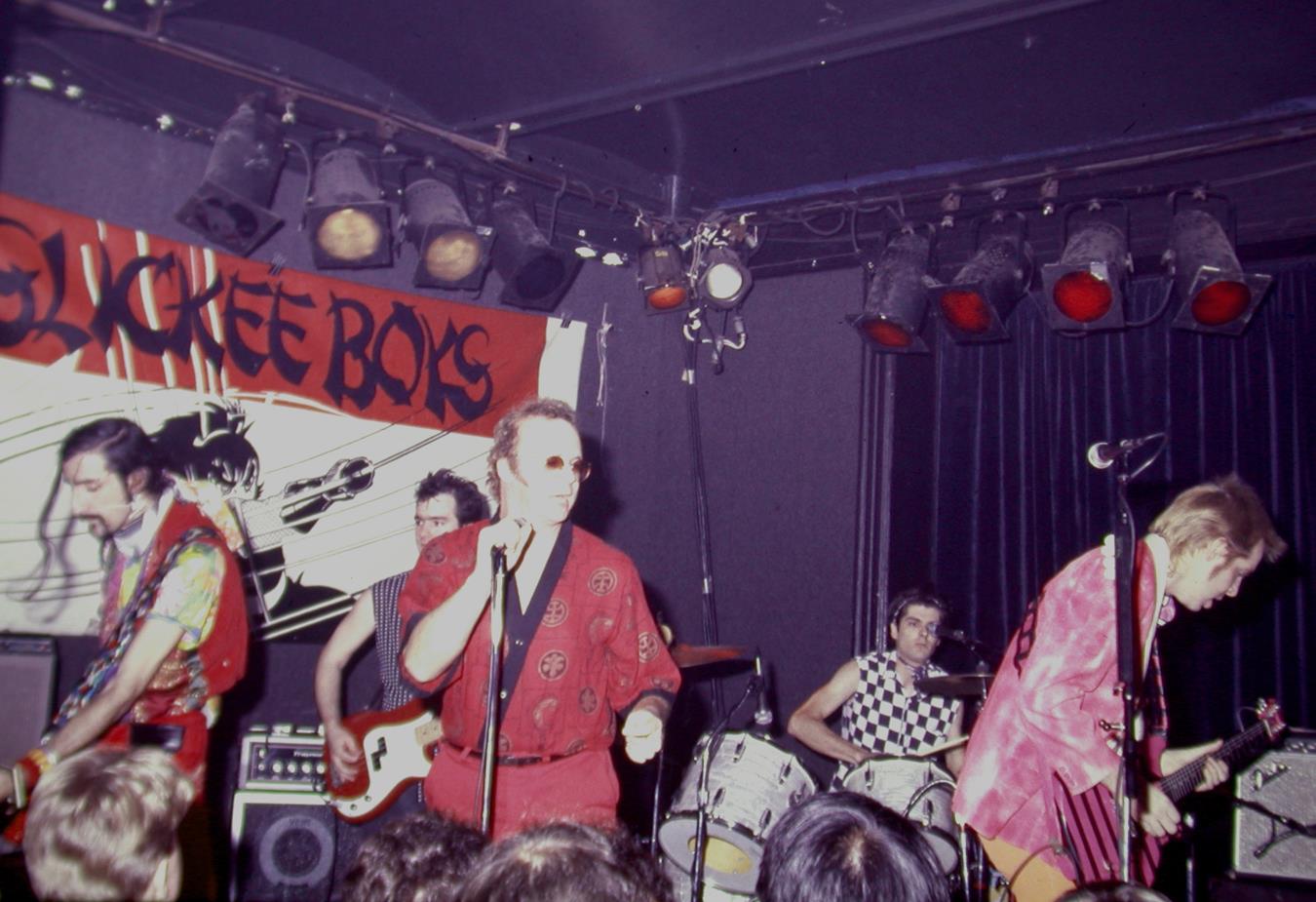
The Slickee Boys are one of Washington, D.C.’s all-time greatest bands with their mighty stew of garage rock, psychedelia and power pop. Led by Mark Noone’s power vocals, Marshall Keith’s incendiary lead guitar, Kim Kane’s art-damaged freakiness and pounding drummer Dan Palenski (drums) with past members including Martha Hull, John Chumbris, Giles Cook, John Hansen, Thomas Kane, Mike Maxwell, Emery Olexa, Chris Rounds, Andy von Brand and Howard Wuelfing. While the band never broke big, they were massive in the DMV while their 1983 song “When I Go to the Beach” reveived MTV airplay and their hit “Gotta Tell Me Why” was featured in HBO’s The Deuce . The band still endures and played their 50 th anniversary gig this past May at the 9:30 Club (where they’ve played a record 86 times). Noone, who today plays in King Soul , the Yachtsmen and FlyBoy, sat with Pollstar to help us better understand the foundations of The Slickees and the city’s dynamic live ecosystem.
Pollstar: The Slickee Boys are easily one of the greatest D.C. bands of all time, how did you start with them? Mark Noone : Thanks, it was such a stroke of luck getting in the band. They were just such a cool band and I’d seen them before when Martha Hull was the front person. She was a really great front person. I saw them at the Keg a couple of times and then at Georgetown University. It was really a classroom in Healy Hall, it was called something like The Georgetown Coffee House. You could bring your own beer and it was open to the public. Somebody mentioned on WGTB, the Georgetown radio station, that the Slickees were playing. Me and my buddies went and brought a cooler of beer. When I saw them in this room, I just fell over backwards. Marshall’s (Keith) guitar playing was killing me, he was on fire. And Kim Kane jumping around and Martha was a great front person. And the rhythm section at that time was Howard Wuelfing and Dan Palenski.
Market Focus Washington D.C: The DMV’s Expansive & Dynamic Live Market
Wasn’t Howard a big PR guy ? He’s done a bunch of things. I’m in touch with him from time to time. Not too long after that, the Fall of 1978, I saw an ad in The Unicorn Times that they were looking for a singer. I called the number and it was Kim Kane’s number. I met up with him. A buddy drove me out to Yesterday and Today Records and I met up with Kim. I had to go through like four or five auditions, learn three songs, then learn another three songs, then learn another three songs. After that, I was at a Ramones concert at the Varsity Grill Backroom in College Park, across the University of Maryland and Dan Palenski was there. Dan comes up to me and completely unceremoniously says, “Oh, yeah, we decided you’re going to be the singer.” Not even in conversation or whatever. It was just like this non-announcement. I was totally psyched. Then we got to work. We practiced in Dan’s basement a couple of times a week, just getting everything ready.
There’s so many micro scenes in DC, what scenes were you exposed to coming up? There was so much music going on in DC, there were all these clubs, but I was too young, but we went to dances. And there were also teen clubs. I went to a Catholic school and in the late-60s I played in all these Catholic churches. They were starting to do these weird things called folk masses. You have a Catholic church, but you have these folk song hymns with a guitar. It’s like a folk thing, like Woody Guthrie singing in church. It was a thing. So the school that I went to, in their vain attempt to be progressive, had these folk masses, and since I could play guitar I played in the folk masses.
Were they religious songs? Yeah, totally. The one that everybody knows about “Kumbaya” that’s the quintessential one, but they’re all religious, and they were all about Jesus in church and God and stuff like that. I did that for almost three years while I was at this boarding school every Sunday. So I could play, but I also wanted to learn other songs. There was a teen club coffeehouse circuit I would go to St. Albans Coffee House, play two or three songs in the coffeehouse. And then hitchhike up Wisconsin Avenue. There was another one at St. Anne’s Church in Tenley Circle that my friend Tommy and I started called the Purple Pit. We painted on the floor with a big purple peace sign. And then we had live bands that would play there. There was a place at the Chevy Chase Community Center that had a teen club.
DC contains multitudes. It really does. At the same time, we would go to dances at the Catholic Youth Organizations at schools like Blessed Sacrament, Little Flower, Our Lady of Victory and Good Counsel. We would just go to these dances and see bands all the time. I remember going to Alice Deal Junior High and seeing a band called the Fallen Angels. It was a great local band. Right around that time, this would have been in the summer of ’68, I saw Grin at Fort Reno. That was possibly the first Fort Reno concert. There must have been 1,000 people there. There was a place in Bethesda called The Wedge, which was a Bethesda Community Teen Center.
I never really saw original stuff besides Grin, that’s what set Grin apart from everybody. I remember knowing Grin and then finding out that it was this guy, Nils Lofgren (now in Bruce Springsteen’s E Street Band), who went to Walter Johnson or Whitman (High School) or something like that and lived in Bethesda, and he writes these songs. I remember saying, “Fuck, I can do that. I want to do that.” Nils and Grin was a big influence on me. I oversaw a show with Nils at the Unitarian Church in Kensington. That was Grin. I probably saw him there a handful of times.
Growing up in DC there was a lot of roots music, like rockabilly, blues and old-time rock and roll. Tex Rabinowitz, Danny Gatton, Billy Hancock, Nighthawks, old school. Most people know hardcore and go-go, but not that history. One of the big shows I wasn’t cool enough to go that seemed to have a big impact was the Cramps at Georgetown. A lot of rock kids who were into Ted Nugent or Skynyrd seemed to instantly become more DIY punk and hardcore. There’s a lot of truth to that. I was into KISS and Creedence Clearwater Revival—I still am a big Judas Priest fan—but I knew about some crazy rockabilly stuff we’d hear on WGTV, and WHFS which was Tex Rabinowitz, and Billy Hancock and those guys. I was also into Gene Vincent. That show at the Hall of Nations with The Cramps and the Urban Verbs changed everything. That changed a lot of people that went to that.
And again, because of WGTB and WHFS, that spawned things like Kim Kane putting out the first Slickee Boys record before I was in the band. It was total DIY on Kim Kane’s label that he started called Dacoit. It’s been documented as the first DIY punk rock new wave single. There were other DIY labels popping up like Discord, DSI and Skip Groff’s Limp Records changed a lot of people’s lives. That was a big part of it, having a record label that had independent bands. Nobody made money, people were just having fun and trying to get the music out there.
Was The City Paper around to help promote shows? I don’t think so. I wasn’t aware of it. Because when The Unicorn Times folded, we all kind of reverted to The City Paper. And then also WHFS had a rock and roll calendar. You could go to the old 9:30 Club just to see who was hanging out in the hall.
Did you go to Kemp Mill in Georgetown? Yeah, there was a branch of stores that started on Kemp Mill Road in Silver Spring. There was Penguin Feather. Both weren’t like Yesterday and Today, which was pretty much local and underground and some other stuff. When I was younger, there was a record store on Connecticut Avenue by the Hilton called The Disc Shop.
It’s incredible the wealth of artists D.C’s had: Marvin Gaye, Duke Ellington, the Clovers, Hot Tuna, Roberta Flack, Billy Taylor, Chuck Brown, Danny Gatton, Roy Clark, Billy Hancock, the Nighthawks, Nils Lofgren, Tina Weymouth, John Fahey, Trouble Funk, Starland Vocal Band, Bad Brains, Scream, Jaw Box, Deep Dish — just genre-wise it’s such a wide spectrum. Some of those names couldn’t be more different from each other. DC crowds, I have to admit, are really good. They’re very appreciative. So many bands come to DC to start their tour. You know The Beatles started their tours in DC because the crowds here are good, they’re appreciative, and it’s a good place to kick off your tour with a positive show.
Can you talk a bit about Fort Reno? That’s a really unique platform in this city that you don’t find in many places. You know Jake Flack (Big Soul), his mom took him to Fort Reno when he was at Deal Junior High to see The Slickee Boys. And he fell over backwards. And he learned our “Gotta Tell Me Why” and played it at the Deal Talent Show. And now I’m playing in bands with Jake for 25 years.
Every time I’m back I go to Fort Reno and amazed by how non-commercial and unique the bands are. Isn’t it booked by Ian MacKaye’s sister Amanda. Exactly. Amanda and I are buddies and she’s really good and wants to get cool, weird, different bands that are not trying to get a deal. They just want to rock. There’s a band called Birthday Girl, and I saw them there and I’m like, “Wow, man. They’re still really doing something different.” When Slickees did our 50th anniversary (May 30, 2026), we had Birthday Girl on the bill with the Beatnik Flies. And that’s because I saw them at Fort Reno. It’s pretty unique to DC.
What venues did The Slickee Boys play when you joined them? My first gig with them was at the Odd Fellows Hall in Towson, Maryland. It was supposed to be with the Bad Brains, but they didn’t show up. It was maybe four or five bands, a band from Annapolis called Judy’s Fixation, another called the Chumps, somebody in that band ended up in The Nurses with Howard Wuelfing. There was The Raisinettes. That was in February ’79, my first gig with Slickee Boys. It was such a positive experience, I was like, “Man, if this is what it’s going to be like, I am in 120%.” My next gig, I think, was at Psychedeli.
Oh yeah, in Bethesda Yeah, man, that was a great place. One cool thing about it, it was right across from WHFS, which was in an apartment complex called Triangle Towers and Weasel (famed WHFS DJ) lived there. So a lot of times, when people played the Psychedeli they’d go over to WHFS in the afternoon and do an interview. It was great promotion for a show. I was living near the Psychedeli and WHFS and Weasel was interviewing Peter Noone from Herman’s Hermits. I had met Peter before, and we kind of like joked about being related and having ancestors from the same part of Ireland. So I called up and Weasel and I’m like, “Weasel, Mark Noone from The Slickee Boys here, can I come up and join the interview?” He says, “Yeah, come on up.” So I went over and we talked and hung out afterwards.
Did you guys ever play Madam’s Organ, that squat in Adams Morgan? I was just getting ready to say. The next gig after that was Madams Organ. It was a squat by these guys who were Yippies. They were like hippies, but kind of radical hippies. They were these long-haired white dudes who put on these punk rock shows and we played there with Bad Brains. I’ll never forget that. That was the first time I saw Bad Brains.
That place changed my life. I went to Madam’s Organ in junior high and I think the Untouchables played. I couldn’t believe it existed, a squat where you could punch holes in walls and drink beer…it was magic. Did you play the Atlantis before it became the 9:30? The Slickees did, but I wasn’t in the band yet. I saw the John Foxx version of UltraVox. Not too long after that, we were playing at 9:30 pretty regularly.
9:30 is now considered an iconic club, but people don’t really know that back in the day it was kind of a shithole with a pillar in the way, really small and tight, rats, it was kind of gross, but amazing because of that. And The Slickees pl
_Originally reported by [Pollstar](https://news.pollstar.com/2026/10/06/here-to-stay-the-slickee-boys-mark-noone-on-why-d-c-s-music-scene-is-so-friggin-awesome/)._
Comments
Loading comments…