
Publisher Kelundra Smith: American Nonprofit Theatre Must Embrace Change
Publisher Kelundra Smith argues that the American nonprofit theatre movement is at a pivotal moment, urging the industry to embrace fundamental change rather than ignore the clear call for reimagination.
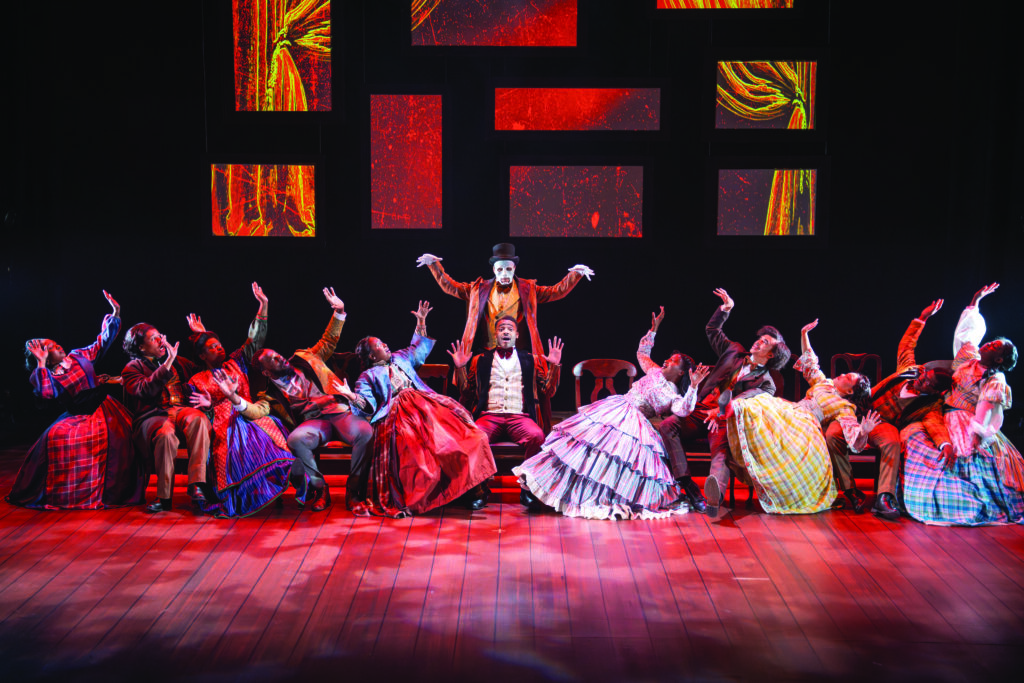
The cast of “Jubilee” by Tazewell Thompson at Karamu House. (Photo by Ben Giulivo)
Fall 2026 | From the Publications Director
September 23, 2026 Kelundra Smith Leave a comment
The American Nonprofit Theatre Movement Must Be Reimagined
The industry must not look away from a moment that is begging for it to change, writes publisher Kelundra Smith.
By Kelundra Smith
Growing up, I had a picture book of Aesop’s fables. I can still see so clearly the illustration of “The Boy Who Cried Wolf,” a story often used to teach children a lesson about the dangers of lying: If you say something too loud too many times and it doesn’t materialize, then people will stop believing you. I have read many of the same articles as colleagues and friends about how the theatre is at an inflection point. I heard all of the gasps when the Public Theater ’s outgoing producing artistic director, Oskar Eustis, told The New York Times that “the American nonprofit theatre movement is over.” And I couldn’t help but think that I’d heard similar declarations before.
Fourteen years ago (that’s the real gasp), when I started my first theatre administration job, there was already well-rehearsed panic about fickle funders, subscription model viability, and how much longer nonprofit theatre would have before the inevitable end. I can also recall lots of energy and time spent at conferences and at the watercooler discussing how the future depended upon new business models, diversifying the donor portfolio, and getting younger patrons in the door. So, for the better part of a decade, the industry has tried everything that feels comfortable: community engagement as a marketing strategy, pay-what-you-can nights, affinity nights, diversity statements, leaving the ghost light on, not saying “Macbeth” in the theatre, etc. But by and large, not much has actually changed about the way most nonprofit theatres do business.
Meanwhile the world in which theatre operates has changed. Funding from the National Endowment for the Arts and the National Endowment for the Humanities has dramatically decreased, and the disparate impact is very real. High school and university theatre programs have shuttered in the midst of rising anti-intellectualism, skyrocketing tuition, and predatory student loan policies. And much corporate, foundation, and individual giving has been redirected toward healthcare and scientific research. At the same time, theatre production costs have nearly doubled. Thus the conversation has been revived: Things must change. The question is how and when? Or are we just crying wolf again?
The Pixar model for storytelling is that the protagonist will try every possible way to solve the problem that doesn’t require them to change—until they are forced to change. In Jeffrey Hatcher’s The Art & Craft of Playwriting , he structures plays in terms of a character having three goals, coming up against three obstacles, and undertaking three solutions before taking a drastic action that requires them to change. It is the nature of being alive that there will never be a shortage of obstacles, but this industry must not yet again look away from a moment that is begging for it to change.
For myself, I don’t believe that the nonprofit theatre movement is dead. Indeed, if the stories in our Fall preview issue —in particular, reports from three major American theatre cities and my article on the state of Black theatre—tell us anything, it is that the American theatre hasn’t reached its climax. But it is in need of reimagining. The days of crying wolf are done. Indeed, I could sing with the force of Florence + The Machine: The dog days are over .
My hope for the nonprofit theatre as it emerges from yet another inflection point is that it actually emerges. I hope that it looks like the diversity, equity, inclusion, and accessibility we’ve been promising people for the past 20 years. I pray that we play with form, genre, and space in the way that theatre students do. I want smart real estate investments, better salaries for artists and administrators that are also kind to organizational budgets, boards that have functional relationships with staff, marketing plans that start more than two weeks before opening, and, for the love of God, the end of 10 out of 12s. I want our commitment to a humane and dynamic theatre to be unmovable by the whims of millionaires.
So let’s actually build it this time. It won’t look the same for everyone, and the process will be scary, but I believe it will be worth it. The impulse to create is powerful, so let’s harness that energy for a future whose vitality we believe in.
Kelundra Smith (she/her) is the publisher of this magazine and an award-winning playwright. Kelundra.com
More From This Issue
Rural Tenderness in ‘Horsegirl & Cowdaddy’
_Originally reported by [American Theatre](https://www.americantheatre.org/2026/09/23/the-american-nonprofit-theatre-movement-must-be-reimagined/)._
Comments
Loading comments…